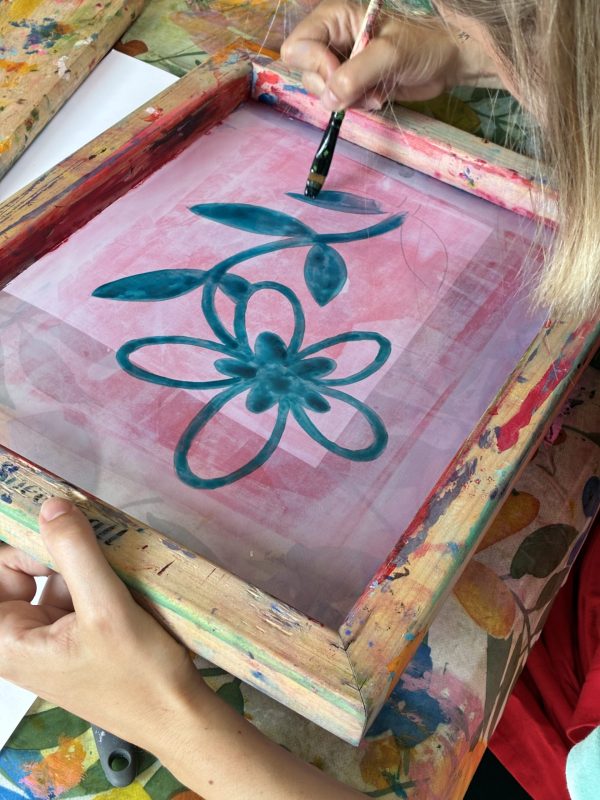
In the screen printing workshop Draw & Print, you’ll playfully dive into creating your own design — either on A4 format or in two layers on A5 format. You’ll draw directly onto a blank silkscreen frame. Using a special emulsion layer, your design is rinsed out with water, opening up the stencil in the screen. This allows you to print your design in, for example, two layers of ink on paper and/or textiles. If you like, you can even bring your own shirt or sweater to print on.
You’ll go home with a series of experimental prints of your own creation, plus a goodie bag.
Screen printing is a graphic stencil technique suitable for printing on a wide range of materials including textiles, paper, cardboard, glass, wood, and plastics. A handmade stencil or light-sensitive emulsion is transferred onto a mesh screen. Ink is then pressed through the stencil onto the chosen surface using a squeegee.
Michael van Kekem works as an illustrative designer and printmaker. Within the fields of illustration, graphic design, and printmaking, he creates editorial illustrations, prints, visual identities, zines, and a variety of other products. He regularly teaches workshops in printmaking (screen printing, etching, and linocut) at events, for companies, and for individuals of all ages. Michael also frequently exhibits his personal work.
Practical information
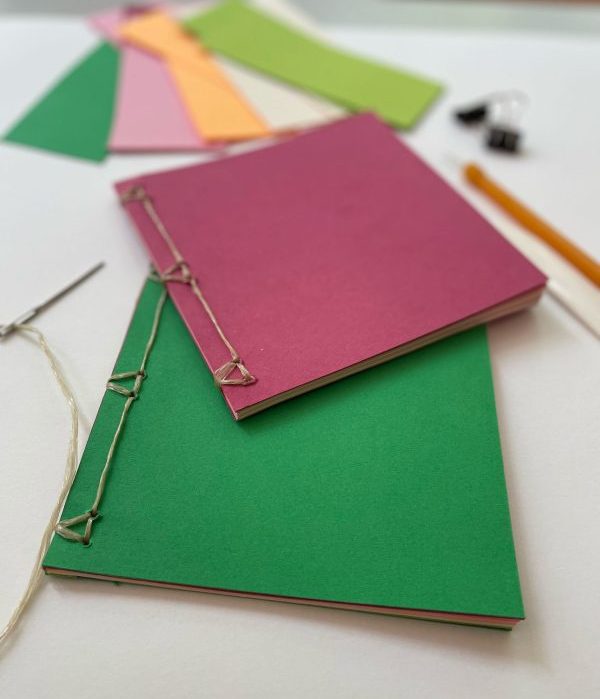
During this workshop for young and old, you will get started with making and binding a booklet in the Japanese style. This binding method was used for the famous Amsterdam School art and architecture magazine Wendingen. In it, artists shared their ideas, inspiration, and work.
You begin by selecting paper: which colours go well together, and which type of paper will you use for the cover? Then you start folding and binding. Using a bone folder, needle, and thread, and guided by instructions on binding, you assemble a booklet. If you have extra time, get inspired by the Amsterdam School artists and personalize your booklet.
You will go home with your very own booklet.
The artists of the Amsterdam School excelled in crafts. In response to industrialization over 100 years ago, they returned to making art objects entirely by hand, often from natural materials. This happened across many disciplines: there were sculptors associated with the movement, as well as ceramic and stained-glass artists, woodcarvers, bookbinders, and many graphic artists. The total product was important, often meaning that multiple artists from different disciplines collaborated on, for example, a building or interior.
Museum Het Schip is located in a whimsical working-class housing complex in Amsterdam West, designed by architect Michel de Klerk. This expressionist housing block was built in 1919 for the housing corporation Eigen Haard. Because of its shape, the building is colloquially called Het Schip (The Ship). It is considered one of the top examples of the Amsterdam School, a movement in architecture and decorative arts that spread throughout the Netherlands and is closely linked to the rise of good social housing through housing corporations.


Print your own poster with wooden letters? Yes, you can!
GWA – Grafische Werkplaats Amsterdam is bringing a small printing press, antique wooden letters, and ink again to the Ambacht in Beeld Festival. With these, you can design and print your very own personal poster.
GWA’s workshop, located nearby in the NDSM Loods, has an extensive collection of traditional graphic materials: printing presses, wooden letters, lead type, and everything you need for linocut, woodcut, and bookbinding. The foundation offers courses and workshops to anyone who wants to work with traditional printing techniques school classes, graphic students, artists, and lovers of handcrafted printwork. Step away from the computer!
This workshop is open to everyone from 8 years and older. You will work together with one other participant to create your own poster. The poster won’t be dry immediately; it’s best to let it hang as long as possible before taking it home, or you can pick it up later at the workshop.


Artists Lindsay van Vliet and Daan Wille have joined forces as Team Blazin. Both have mastered calligraffiti, a fusion of calligraphy and graffiti.
Inspired by the renowned graffiti artist Shoe, they are versatile workshop leaders, offering sessions ranging from Stencil like Banksy and Doodle like Keith Haring to, of course, calligraffiti. Together, they also regularly create large-scale murals.
In this workshop you will learn how to create your own artwork with your name on it.
This workshop was first offered in 2015 in collaboration with the Street Art Museum Amsterdam. Daan also taught workshops at Craft in Focus New York in 2017 and 2019, and Lindsay led the workshop at Ambacht in Beeld Brussels in 2024. Due to its popularity, it’s back again this year in Amsterdam!
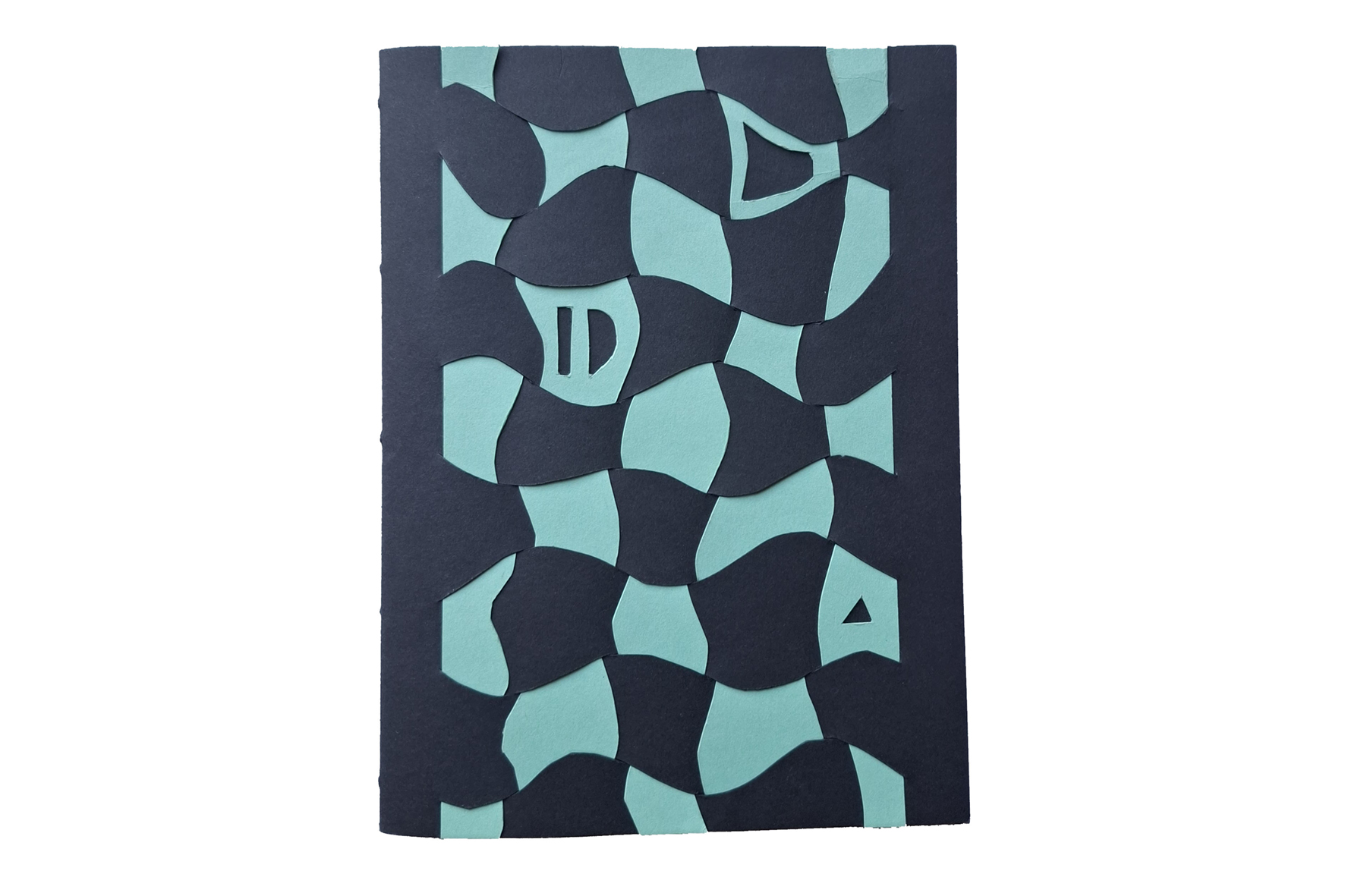
In this workshop, you will learn how to create a unique woven cover using colourful strips of paper.
Next, you will bind two sections into it using a simple, decorative binding. Under the guidance of Tanja Rakic, you will discover the art of paper weaving, inspired by the work of American paper artist Helen Hiebert.
You will go home with a special, handmade booklet.
At Boektotaal in Echten, you can find bookbinding supplies, workshops, courses, and services for repairing and/or binding books.
Practical information


Under the guidance of Aaldert de Lange, you will make a booklet bound in the traditional Japanese style. For the cover of this booklet, Chiyogami paper will be used.
Chiyogami is made from the fibers of the mulberry tree, after which it is traditionally screen-printed in multiple layers to create beautiful colors and designs; each sheet is screen-printed individually.
The word Chiyogami refers to the graphic, repetitive patterns applied to paper during Japan’s Edo period. Originally, these patterns were block-printed for use in making paper dolls and small accessories. In the 20th century, these patterns also began to be used for screen printing.
You will go home with a unique, handmade booklet.
At Boektotaal in Echten, you can purchase bookbinding supplies, take workshops and courses, and have books repaired and/or bound.
Practical information

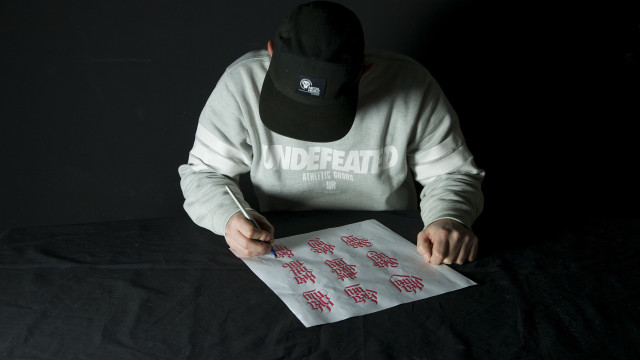
Discover how the use of brushes, ink, and rice paper creates the distinct aesthetic characteristic of calligraphy as it was adopted into Korea from China.
Participants in this workshop will go home with a self-written kanji, signed with their name and stamped with a vermilion seal as a keepsake.
Owen Tjon Sie Fat studied Japanese and Korean language and culture at Leiden University and was trained in calligraphy by both Chinese and Japanese calligraphers. He is currently researching various Korean calligraphic techniques. Owen teaches biweekly Japanese calligraphy courses at the Japanese Cultural Center Shofukan in Rotterdam.
Practical Information

The exhibition Made in China features the work of Chinese artist Yang Yongliang. From a distance, his artwork looks like a traditional Chinese shanshui (“mountains and water”) landscape painting done with ink on paper. But when you look closer, you don’t see mountains — instead, you see a photo collage of skyscrapers! And what appear to be trees from afar are actually construction cranes.
During the workshop, you’ll be inspired by this artwork and create your own landscape using stamps on a roll of paper.
You’ll go home with your very own handmade scroll painting.
Made in China is on display from October 17 at the Wereldmuseum Amsterdam. The Wereldmuseum uses China as a case study for a fresh perspective on craftsmanship. The exhibition presents China’s making culture—a tradition that is both centuries old and vibrantly alive—through a mix of objects, art, fashion, photographs, and videos. It also explores the diverse meanings of “making” among contemporary artists and designers such as Cao Fei, Susan Fang, Jing He, Ma Ke, and Yang Yongliang.
Practical information:


In this workshop, the Wereldmuseum introduces you to the technique of Chinese paper carving.
You’ll learn about the history and origins of this traditional craft. Artist Hoi-Shan Mak will teach you the basic techniques:
you’ll start with cutting and then move on to carving a design from red paper.
You’ll go home with your own creations.
The oldest piece of paper is more than 2,000 years old and was found in a Chinese tomb. Paper cutting is almost as old as the invention of paper itself. Designs are cut or carved from a single sheet of paper. In the past, people created decorative patterns with specific meanings to adorn their homes—especially important in times when many couldn’t read. Over time, the practice shifted toward cutting symbols of good fortune.
Made in China is on display from October 17 at the Wereldmuseum Amsterdam. The Wereldmuseum uses China as a case study to offer a fresh perspective on craftsmanship. The exhibition features a rich mix of objects, art, fashion, photography, and video, showcasing China’s maker culture, which is both ancient and vibrantly alive today. It also explores the many meanings of “making” through the work of contemporary artists and designers such as Cao Fei, Susan Fang, Jing He, Ma Ke, and Yang Yongliang.
Practical information
• The workshop will be conducted in Dutch and English
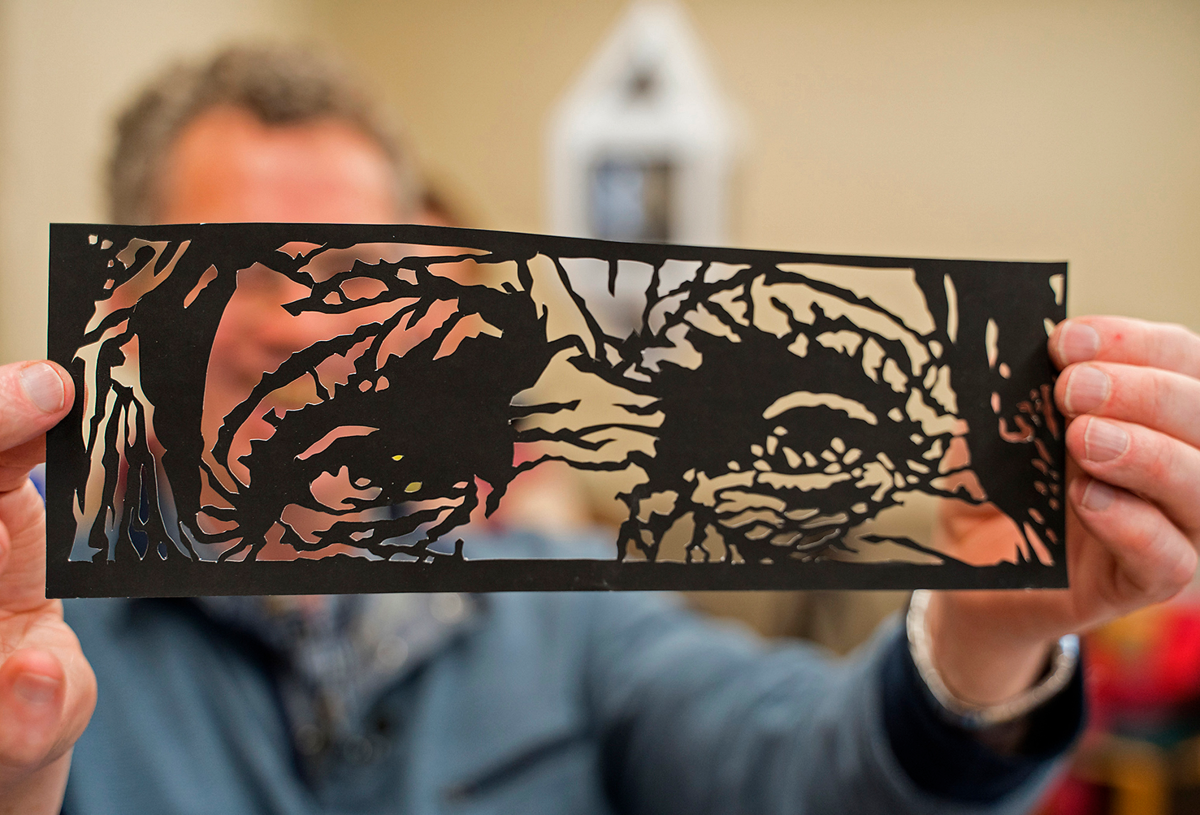
Everyone has cut into a piece of paper with scissors at some point, but in this workshop, you’ll take it a step further. After a short introduction to the art of paper cutting, you’ll learn the basic techniques from an experienced paper artist. Then, you’ll apply these techniques to create your own design using silhouette paper. You’ll also learn how to carefully mount your finished piece.
For centuries, thousands of people around the world have enjoyed the art of paper cutting. It’s fun and relaxing, and people of all ages create beautiful works of art with it. Paper cutting is essentially drawing with scissors—your scissors release your design, decorations, and letters from the paper. And with so many cutters, there are countless styles and variations.
You’ll go home with a framed piece of artwork. Better reserve a spot on your wall already!
The Dutch Association for Paper Art is the meeting place for both hobbyists and professional artists. The workshop instructors are members of this association and are specially trained to teach others the tricks of the trade. Most of them regularly exhibit their work. Since 2013, the art of paper cutting has been officially listed in the Inventory of Intangible Cultural Heritage in the Netherlands.
Practical information
• The workshop will be conducted in Dutch
• Price includes materials and VAT

Festival address:
NDSM Loods
NDSM-Plein 85
1033 WC Amsterdam
Postal address:
Stichting Ambacht in Beeld
Kalf 158
1509AH Zaandam
The Netherlands