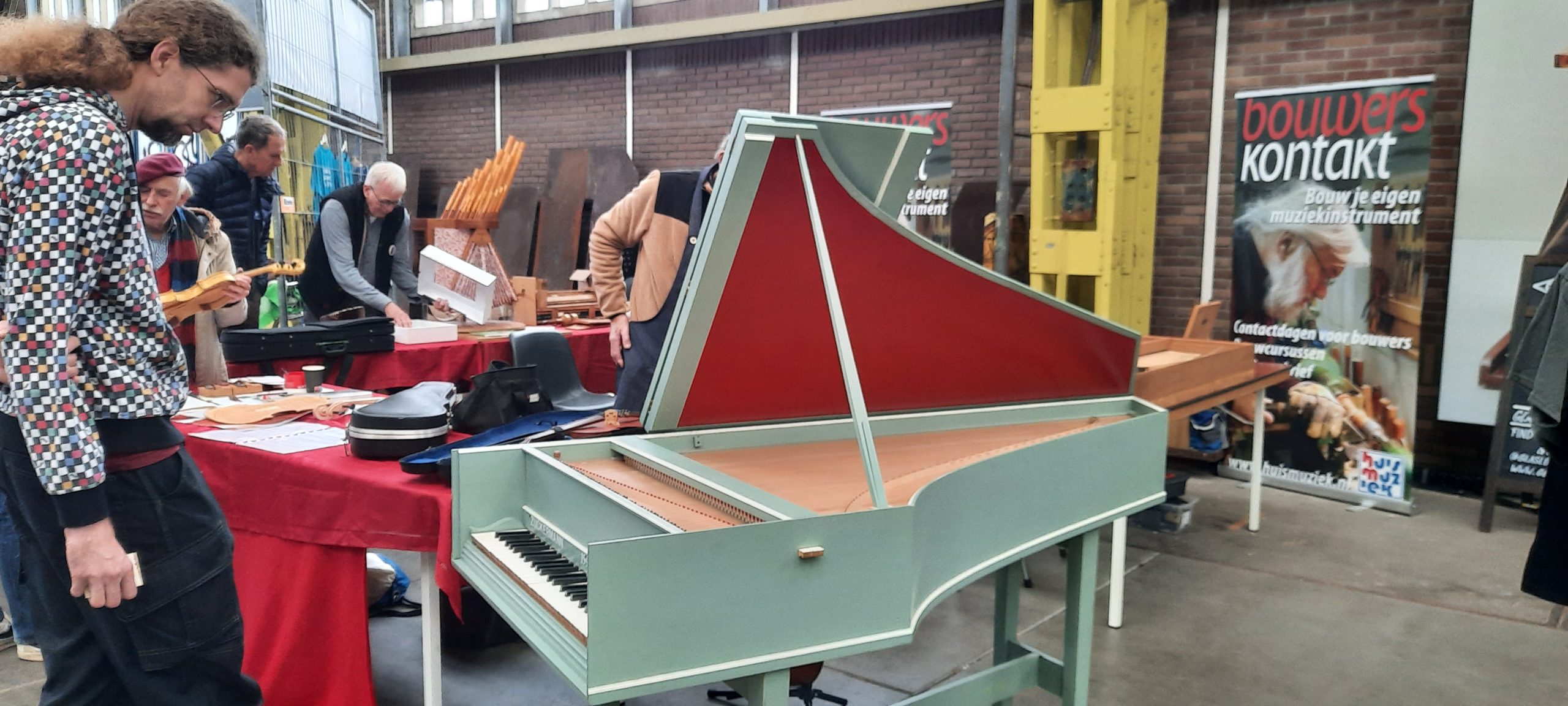
Bring your bowed instrument, guitar, or ukulele for a check-up or minor maintenance to the Bouwerskontakt repair shop stand!
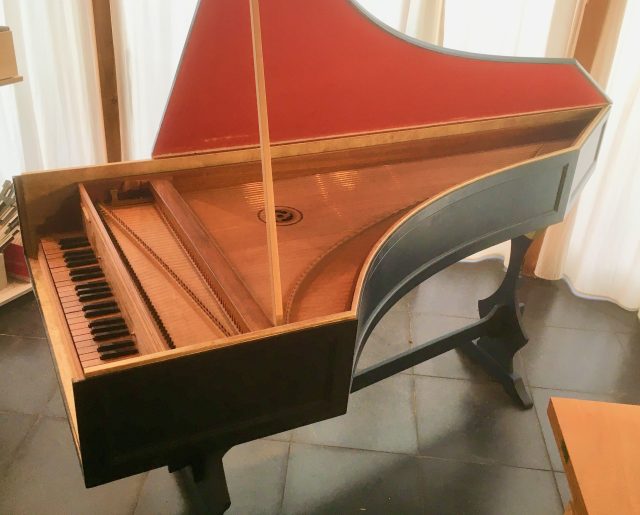
Of course, you can also get information about courses, maintenance, and repairs. The instrument-building groups for bowed instruments, guitar building, harpsichord building, and barrel organ building will all be present.
Do you want to learn a new skill yourself? During the festival, Bouwerskontakt is also offering workshops in bending wood with a bending iron and violin making: carving an f-hole.
If you are interested in building a musical instrument, at Bouwerskontakt, you can learn how. Of course, building a complete instrument by hand takes time. During the workshops at the Ambacht in Beeld Festival, you can learn to make a part and get acquainted with some of the skills and techniques.
Bouwerskontakt is part of Huismuziek, an association for music and instrument building, with the aim of exchanging, making available, expanding, and spreading knowledge and experience about instrument making. Members range from hobbyists to professional builders and make both historical and modern instruments, such as guitars, violins, harpsichords, organs, barrel organs, and recorders. Most activities take place at Houtclub-Ede.

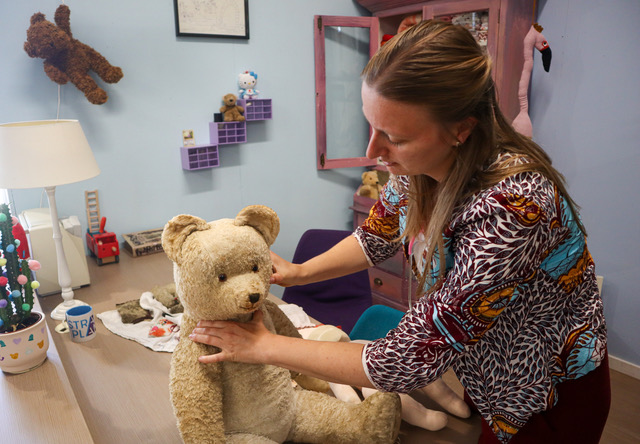
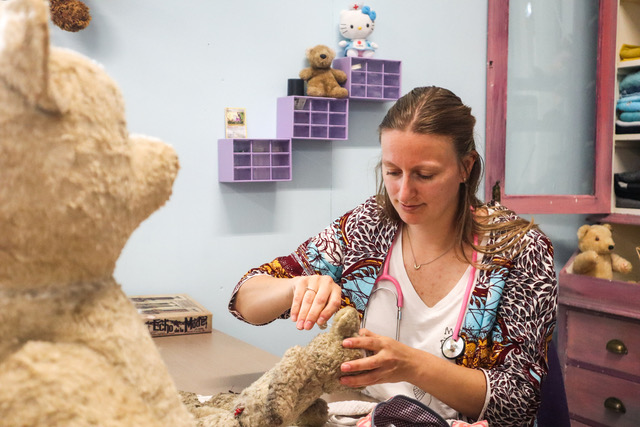
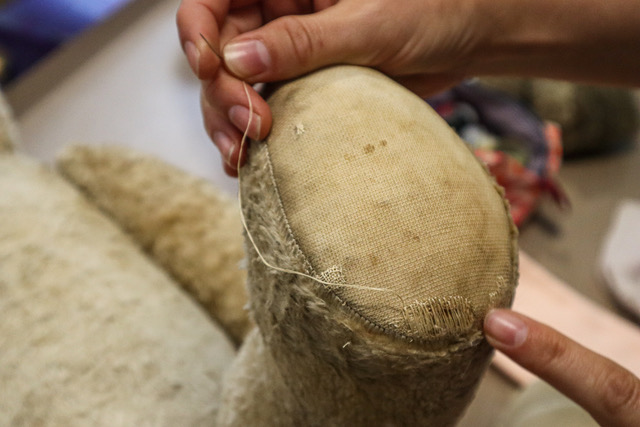
Bring your favorite stuffed animal to the free walk-in consultation for stuffed animals and dolls that need some extra care. Femke is happy to repair holes, reattach loose limbs, provide extra stuffing, and replace eyes or noses.
Femke Wijman is the maker behind Mama Poppendokter and specializes in restoring and repairing beloved stuffed animals and dolls. From a child’s favorite stuffed animal to a birth teddy bear over 100 years old, or a doll that has been in the family for generations: each piece requires attention, craftsmanship, and respect for its original character. Restoration includes repairing damaged fabric, fixing seams, tears, and loose parts, renewing stuffing, cleaning delicate materials, and carrying out careful restorations. It is not only about technique, but also about preservation: of shape, appearance, signs of use, and emotional value. In this way, stuffed animals and dolls are given a second life, without losing their own character.
The materials are sponsored by De Rechte Steek.
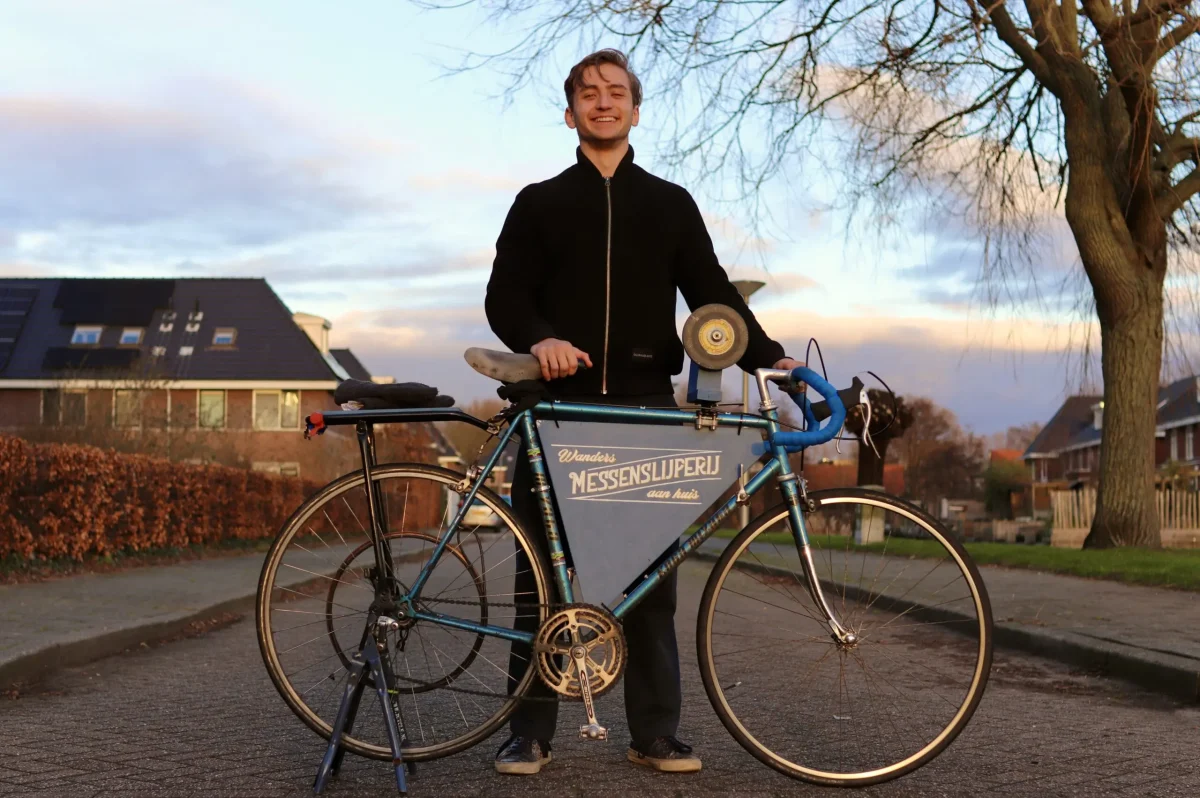
Bring your chisel, plane or scissors to the knife sharpener and have them professionally sharpened.
In the past, the knife sharpener would ring his bell and everyone would rush outside to have their knives sharpened. Today, this profession has almost disappeared. Knife smith Wander Vanhoucke has brought this ancient craft back to life. With his mobile sharpening workshop built on a converted vintage racing bike, he is present at the repair shop so everyone can work with sharp tools again.
Wander Vanhoucke started sharpening knives at the age of fourteen, after struggling to cut through a tomato while cooking. He is now twenty-two and forges knives for (Michelin-star) chefs across Europe. With a keen eye for detail, he carefully matches steel type, wood, shape and balance to each client’s needs. Last winter, Wander went viral with his mobile knife sharpening service, which brings sharpening directly to people’s homes in an effort to combat a throwaway culture.
Bring your own chisel, plane, scissors (or any other tools)!
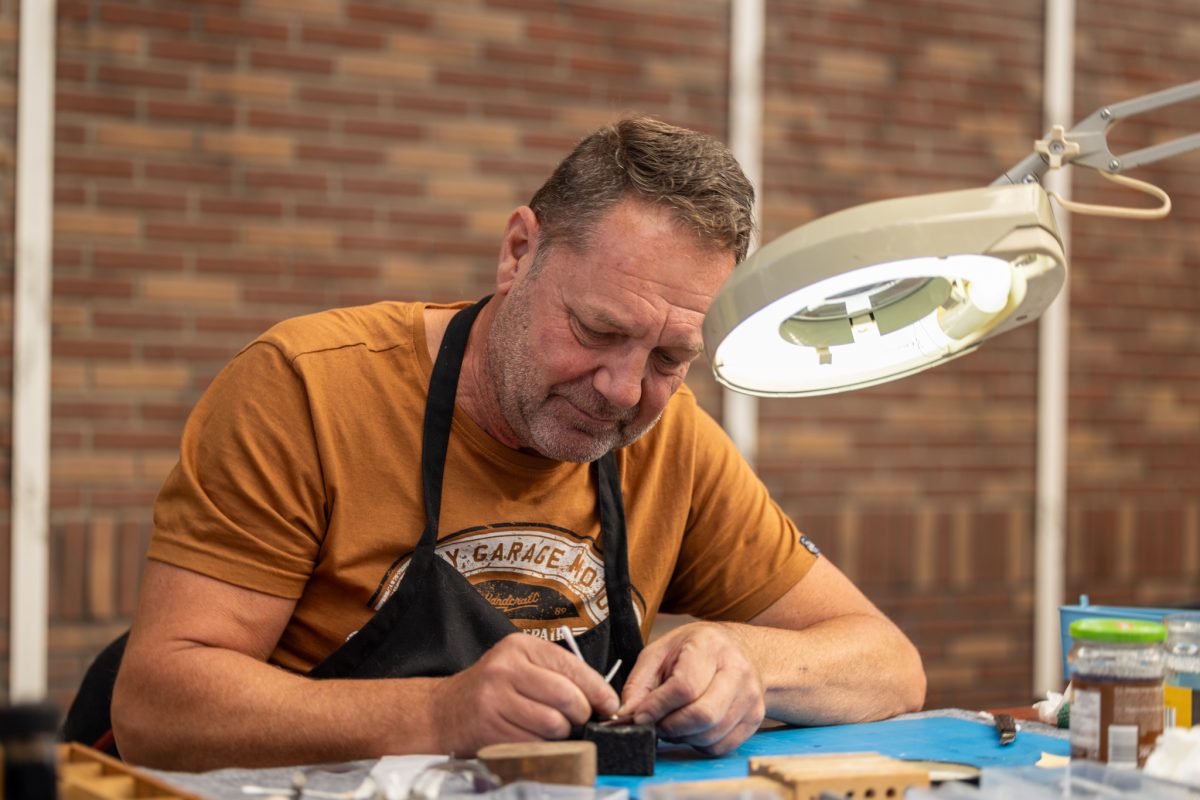
Does your fountain pen no longer write properly or not as smoothly as it used to? Give your pen a second life and visit master fountain pen restorer Carlo de Croock for (free) maintenance, repair or restoration.
Carlo de Croock of D’n Ouwe Vulpen Repair Shop specialises in restoring and repairing old and antique fountain pens.
A message from Carlo: “I often use parts from other old fountain pens, or so-called donor pens. If people still have fountain pens lying around that they no longer use and want to get rid of, I would be extremely grateful if they could bring them to me. This way I can continue repairing fountain pens using original parts and keep repair costs low.”
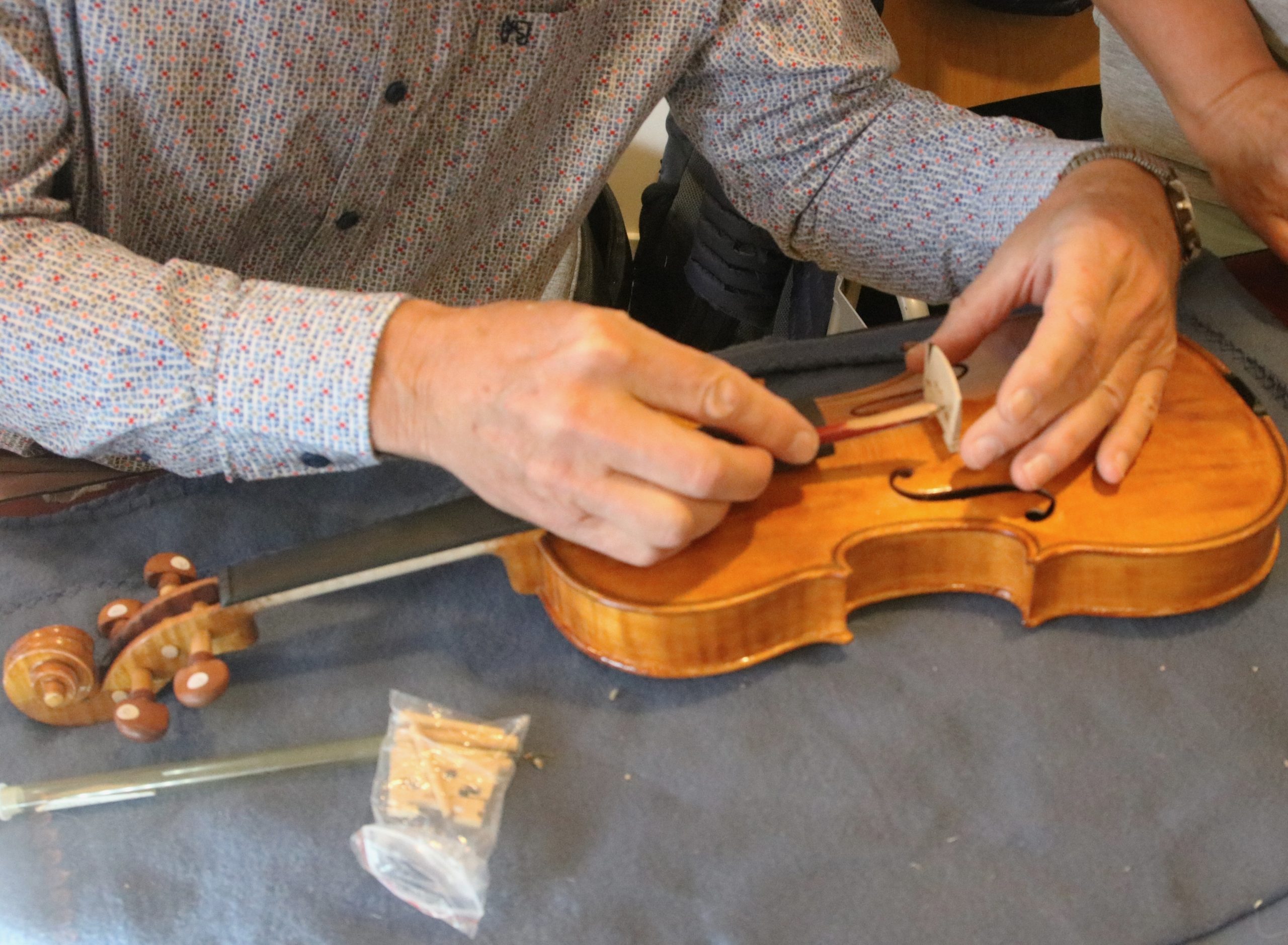
Bouwerskontakt regularly offers workshops on the maintenance and repair of string instruments, harpsichords, and barrel organs.
String players can learn how to straighten a bridge, loosen stiff pegs, properly fit a string, and receive tips on how to keep their instrument in good condition.
Owners of barrel organs can learn what types of maintenance can be done on various parts of the instrument. You can also discuss any problems you’re experiencing with your instrument. Harpsichordists receive instruction on regular maintenance and minor repairs, such as replacing and voicing a string or plectrum.
At the Repair Shop, you can bring your own string instrument for minor repairs. In short: come by, get advice, and find out what you can do yourself!
Bouwerskontakt is part of Huismuziek, the association for music and instrument making. Huismuziek aims to share, provide, expand, and disseminate knowledge and experience related to musical instrument making. Bouwerskontakt currently has around 350 members, including many hobbyists as well as semi-professional and professional instrument makers. Individually or through courses, they build historical and modern instruments such as guitars, violins, harpsichords, organs, barrel organs, transverse flutes, and recorders. Most activities take place at Houtclub-Ede.

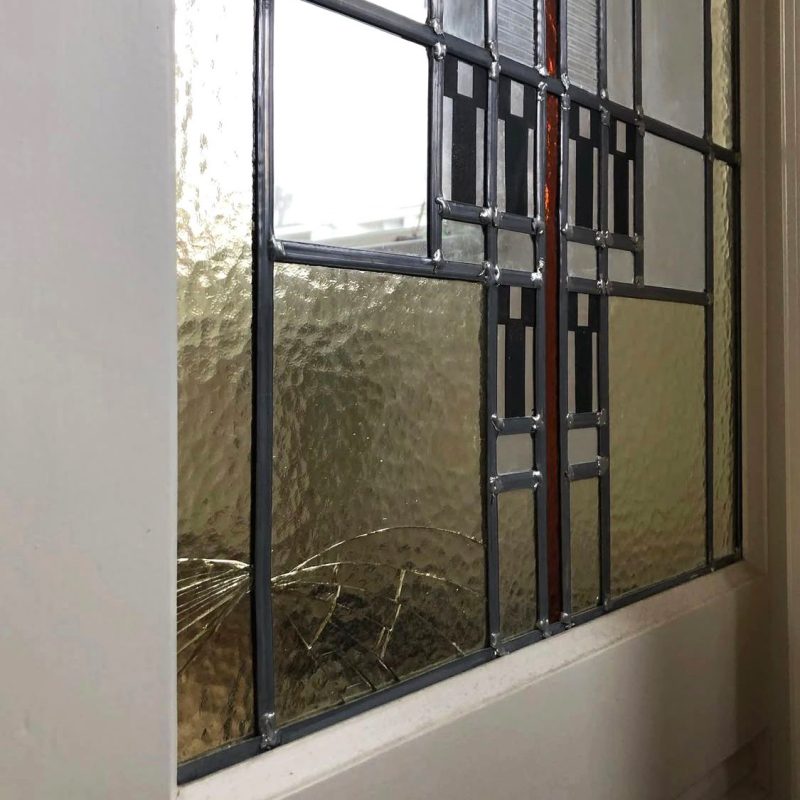
Part of this year’s Repair Shop is Glasloderij ’t Lemmet.
Do you have a stained-glass window or door (!) with a single broken pane? Bring it along and have it expertly and free of charge repaired during the festival.
During the repair, the cracked or missing piece of glass will be replaced with new glass that matches the original. Want to make sure we bring the right type of glass for you? Then email info@ambachtinbeeldfestival.nl with photos of the entire piece and close-ups of the broken or missing section, along with rough dimensions and a description of the colour/texture of the damaged glass. (Having trouble capturing the colour in a photo? Try holding a white piece of paper behind the glass and take the picture again.)
In addition to on-site repairs, the craftswomen will also give demonstrations of stained-glass restoration. Restoration is needed when the lead structure becomes old and brittle. In such cases, not only are broken or missing panes replaced, but the entire lead framework is rebuilt. During these live restorations, you’ll be able to see every step of the process, including cutting, breaking and grinding glass, shaping lead came, setting the glass into the lead, closing the seams, soldering, cementing, and patinating.
Glasloderij ’t Lemmet was founded by Tiara Roquas, whose love for the craft was nurtured and supported by a group of like-minded women with years of experience in the field. Today, the core team of Glasloderij consists of Tiara Roquas & Tess van de Coevering, and they regularly collaborate with other skilled artisans who practice the craft with the same passion and precision.


Have your chisel, planer, or scissors sharpened by the knife sharpener.
In the past, the scissor grinder (knife sharpener) would ring his bell, and everyone would rush out to have their knives sharpened. Nowadays, the profession is almost extinct. Knife smith Wander Vanhoucke has brought this ancient craft back to life. With his vintage racing bike converted into a mobile knife sharpening workshop, he will be at the repair shop so everyone can work again with sharp tools.
Wander Vanhoucke started sharpening knives when he was fourteen after struggling to cut through a tomato while cooking. Now, at twenty-two, he forges knives for (star) chefs across Europe. With great attention to detail, he tailors the type of steel, wood, shape, and balance exactly to the customer’s needs. Last winter, Wander went viral with his mobile knife sharpening service, sharpening knives at people’s homes to combat throwaway culture.
Practical information
Is your fountain pen not writing anymore or not writing smoothly? Give your pen a second life by coming for maintenance, repair, or restoration (free of charge!) with artisan fountain pen repairer Carlo de Croock.
Carlo de Croock of D’n Ouwe Vulpen Repair Shop specializes in restoring and repairing old and antique fountain pens.
Please also read this message from Carlo: “I often use parts from other old fountain pens, called donor pens. If anyone has fountain pens lying around that they no longer use and want to donate, I would be grateful. This way, I can continue repairing pens using original parts and keep repair costs low.”
Practical information

At our Ambacht in Beeld Repair Shop, master tailor and embroiderer Katja van der Steen will demonstrate the refined craft of invisible mending. This technique lies at the intersection of repair and textile restoration. It is an extremely precise method used to restore damaged textiles think moth holes, tears, or worn spots almost imperceptibly.
Unlike regular sewing or visible repairs, this method replicates the original weave structure thread by thread. Sometimes, thread is sourced from hidden seams of the original garment so that colour and texture match perfectly. The result? A garment that looks as though it was never damaged.
Feel free to bring your cherished sweater, blouse, or trousers to the festival, where Katja will assess the possibilities and potential costs of repair with you. And who knows your garment might be selected during the two-day festival to be repaired on the spot, entirely free of charge, so you can take it home looking as good as new.
Want to learn how to repair clothes yourself? Even if you have never sewn on a button or patched a hole, you’re welcome at our repair table. You will receive a short explanation and can start hands-on right away. We will also have convenient repair kits available for purchase at our stand so you can continue mending at home or on the go. Together, we are taking an important step, not only toward repairing clothing, but toward mending the world of tomorrow. Stitch by stitch.
Katja van der Steen is a master tailor, lace maker, and embroiderer specializing in bespoke menswear, corsetry, and pattern drafting. She honed her craft creating historical, dance, and theatre costumes at the renowned Bolshoi Theatre in Moscow. Katja is skilled in a wide range of needlework techniques, including goldwork, tatting, and haute couture embroidery, which she uses to bring traditional crafts to life. As a passionate educator, she leads inspiring workshops, both online and in person, including at the Embroidery School of CraftsCouncil Netherlands. Through her work, she shares artisanal knowledge, makes it accessible to new generations, and connects tradition with innovation to keep handcraft relevant in the modern world.
Practical Information

Festival address:
NDSM Loods
NDSM-Plein 85
1033 WC Amsterdam
Postal address:
Stichting Ambacht in Beeld
Kalf 158
1509AH Zaandam
The Netherlands