In this workshop, you will create your own etching just like Rembrandt, using the drypoint technique. You scratch a drawing into a plastic plate with an etching needle, rub ink into the grooves, and then print the plate onto a sheet of paper using a traditional printing press. With a few guiding instructions, you will make a beautiful and surprising print to take home.
At Museum Rembrandthuis, you come closer to Rembrandt. In the intimate, domestic setting of the museum on Jodenbreestraat in Amsterdam, you get to know the person behind the art and discover Rembrandt’s craftsmanship.
Inspired by Rembrandt’s approach to art, the museum aims to encourage you to develop your own craftsmanship and creativity. The museum holds over 250 prints of the more than 300 etchings Rembrandt made, and offers demonstrations of his painting and etching techniques. Both in the museum and on location (such as schools, community centers, hotels, and care homes), we provide workshops in the drypoint technique, a simple form of etching that Rembrandt also used.
The museum educators have years of experience giving etching workshops at Museum Rembrandthuis. They know everything about Rembrandt and his etchings, and know how to bring out the artist in everyone.

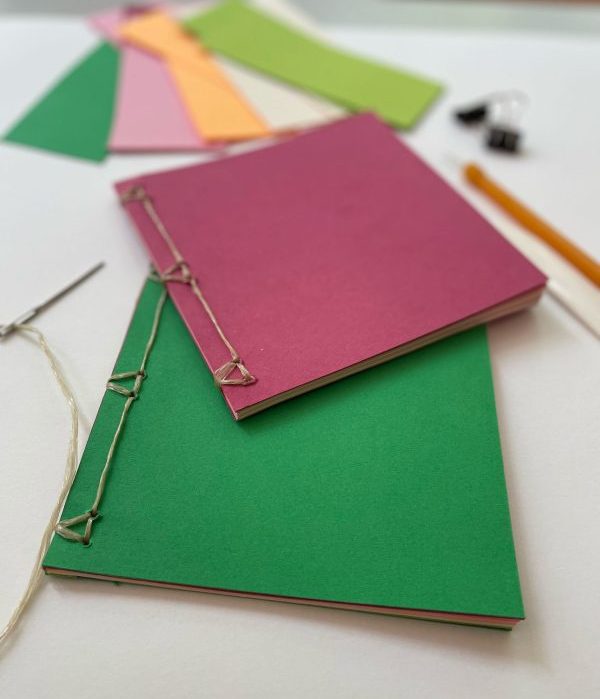
In this workshop for young and old, you will get hands-on experience making and binding a booklet using traditional Japanese techniques. This binding method was used for the famous Amsterdam School art and architecture magazine Wendingen. In it, artists shared their ideas, their inspiration, and their work.
You begin by selecting paper: which colours go well together, and which type of paper will you use for the cover? Then the folding and binding begins. Using a bone folder, needle and thread, and step-by-step instructions, you assemble your own booklet. And if you still have time left, you can draw inspiration from Amsterdam School artists and personalise your booklet.
You will go home with your own handmade booklet.
The artists of the Amsterdam School excelled in craftsmanship. As a reaction to industrialisation over 100 years ago, they returned to fully handmade art objects, often using natural materials. This happened across many disciplines: sculptors were part of the movement, as were ceramics and stained glass artists, woodcarvers, bookbinders, and many graphic artists. The total work of art was important, often meaning that multiple artists from different disciplines collaborated on, for example, a building or interior.
Museum Het Schip is located in a fantastical social housing complex in Amsterdam West, designed by architect Michel de Klerk. This expressionist housing block was built in 1919 for housing corporation Eigen Haard. Because of its distinctive shape, the building became known as “Het Schip” (“The Ship”). It is considered one of the highlights of the Amsterdam School, a movement in architecture and decorative arts that spread throughout the Netherlands and was closely intertwined with the rise of social housing provided by housing corporations.


Bring your favorite old sweater, worn-out jeans, or grandma’s scarf and transform it into a unique and personal garment during this alterations workshop.
The students in the Basic Fashion Associate program at ROC van Amsterdam/Flevoland are experts in applying alterations and repair techniques.
For the Oceanista exhibition at The National Maritime Museum, they created beautiful designs that showcase these techniques. During the Ambacht in Beeld Festival, these students will give workshops in various techniques, such as darning, crochet, and appliqué. You’ll learn how to perform and apply these techniques to give your own clothing and textiles a new lease on life.
Oceanista
From Chanel to Jean Paul Gaultier and from streetwear to haute couture: the influences of the sea and life on the water are reflected in many wardrobes.
Starting October 10, 2025, the temporary exhibition “Oceanista” will be on display at the National Maritime Museum in Amsterdam: a multifaceted and stimulating fashion exhibition that captivatingly connects the maritime past, contemporary fashion, and the sustainable future of clothing.
“Oceanista” will take visitors on a journey through maritime-inspired designs by international giants such as Chanel, Maison Margiela, Versace, Jean Paul Gaultier, Thom Browne, Balmain, Off-White/Virgil Abloh, and Moncler, as well as by Dutch designers making a name for themselves with sustainable and distinctive designs. Think of Iris van Herpen, Duran Lantink, Botter, Martan, Camiel Fortgens, Niño Divino (Darwin Winklaar), and Yousra Razine Mahrah.
The exhibition, divided into nine diverse themes, explores how the maritime world leaves its mark on fashion through materials, silhouettes, and prints, and demonstrates how designers use these influences to highlight topics such as sustainability, heritage, and identity. Oceanista also offers space for a broader social conversation: about what sustainable fashion actually is, and how we can reconcile our need for expression with a cleaner planet.
A special feature of the exhibition is the Oceanista Atelier, developed in collaboration with students from the Basic Fashion Associate program at ROC Amsterdam. Here, the focus is on slow fashion: designing timeless, repairable clothing with a minimal ecological footprint. Students will showcase their own designs and provide tutorials on traditional crafting techniques. Visitors can sketch their own sustainable garment.
Practical information

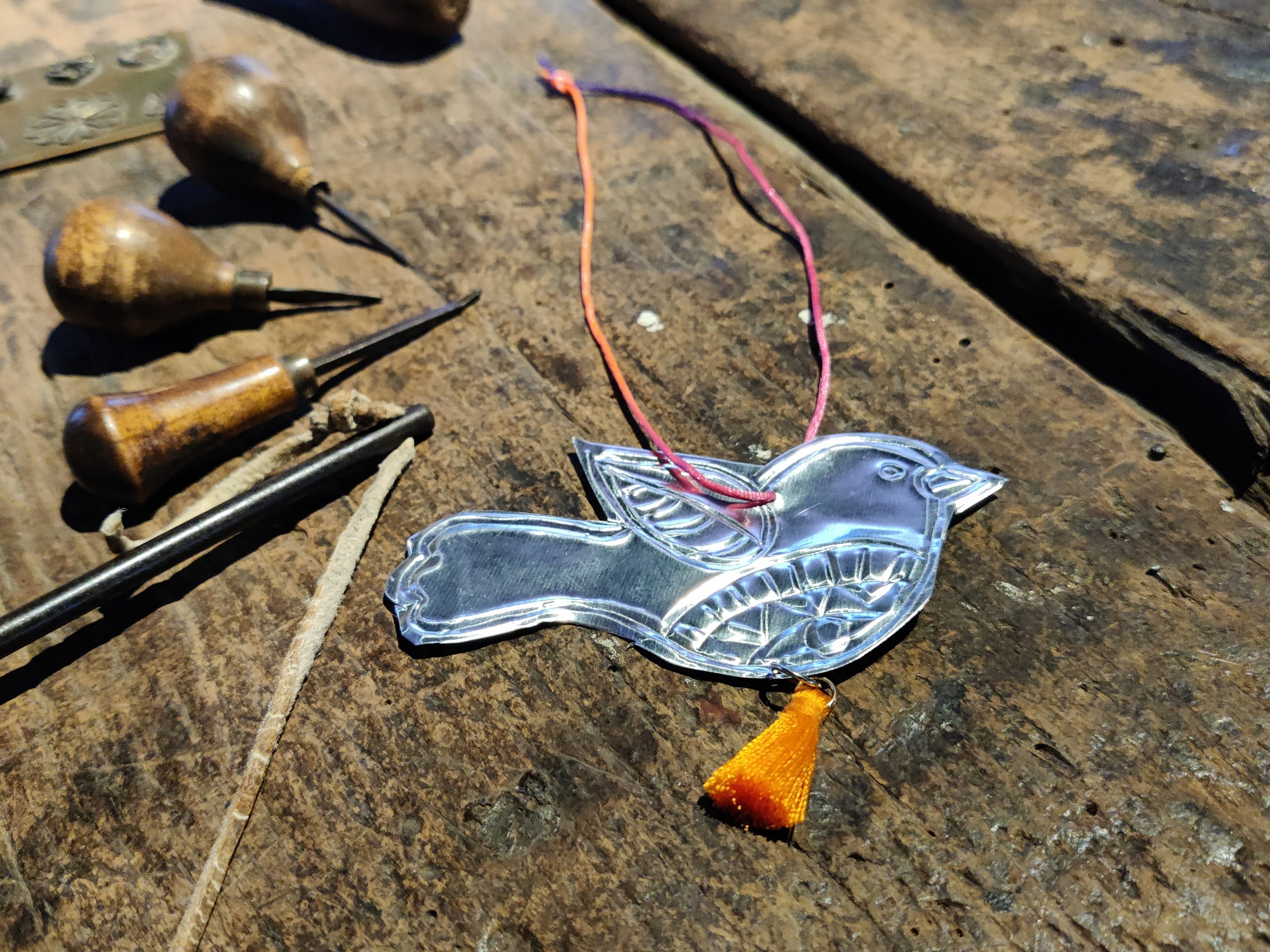
During this ongoing workshop, especially for children, you’ll learn to create a shape in aluminum. This way, you’ll discover the various forging techniques in a playful way.
Come and watch the blacksmith, try your hand at crafting, and visit the traveling exhibition “On a Visit.”
The workshops are led by experts in gold and silversmithing.
You’ll go home with your own creation.
The Dutch Silver Museum in Schoonhoven is committed to showcasing and preserving the craft of silversmithing. Visitors can see, feel, smell, and hear silver, and discover much more about this versatile precious metal in the World of Silver. With regularly changing exhibitions and activities, it’s worth coming back!

Our ancestors built their homes using natural materials such as loam, straw, and lime.
During this interactive workshop, you will explore up close how earthen construction works together with the team from Bokrijk | Craft & Heritage. You will literally roll up your sleeves and learn a few basic techniques. This hands-on session offers a unique opportunity to discover a traditional building craft that is once again highly relevant today in the context of sustainable architecture and the challenges of the modern construction sector.
In addition, staff members will be available to answer questions and to reflect together on the preservation, transmission, and future of earthen building. Do you already work with historical or contemporary clay techniques, or are you curious about the network of earth-builders just across the border? This is the perfect moment to share knowledge, exchange experiences, and find inspiration. Discover how craftsmanship and innovation go hand in hand within the world of earthen construction, where past and present meet in building expertise!
You will also meet Aïcha and Zabi, two skilled artisans who put their expertise into practice daily at the Bokrijk Open-Air Museum. By the end, this craft will hold no more secrets for you!
Bokrijk | Craft & Heritage has been the Bokrijk expertise centre since 2019, focusing on the contemporary relevance of historic woodworking and building techniques. From its Craftsmanship Campus, the team documents, researches, supports, and communicates about craft heritage throughout Flanders and Brussels. As a service provider, C&H is part of a strong national network and also acts as an international knowledge hub. Jeroen Desaver and Rien Bogaert will be present to share more information.

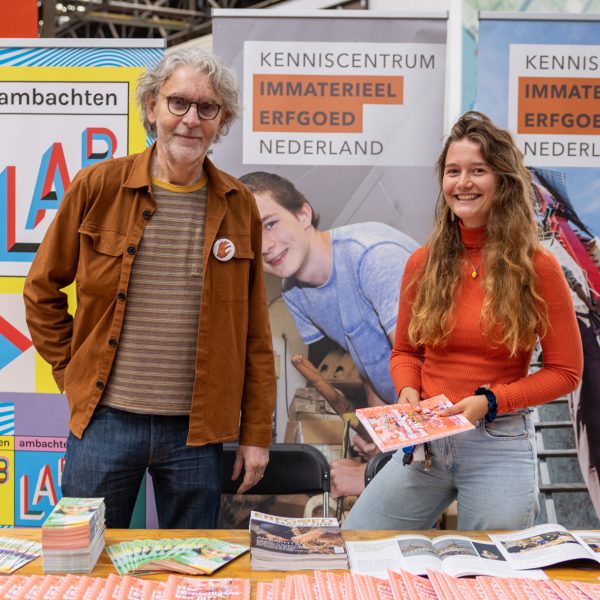
It is practically a no brainer that the Knowledge Centre for Intangible Heritage Netherlands is present at the Ambacht in Beeld Festival. Practicing traditional craftsmanship or trades is an important domain of intangible heritage. The Knowledge Centre supports artisans in safeguarding intangible heritage, preserving techniques and skills, spreading knowledge, and passing it on to future generations.
During the Ambacht in Beeld Festival, the Knowledge Centre provides information and is happy to explore, through personal conversations, what the Knowledge Centre can mean for your intangible heritage community.
The Netherlands Open Air Museum has a crafts workshop with a wide range of programs for both museum visitors who want to experience the making process themselves and experienced craftsmen and craftswomen seeking specialized knowledge. The offerings include short workshops, one-day workshops, multi-day masterclasses, and lectures by curators and professors.
The Netherlands Open Air Museum and the Knowledge Centre for Intangible Heritage Netherlands work closely together to promote crafts and stimulate knowledge transfer.
During this workshop for young and old, you will get started with making and binding a booklet in the Japanese style. This binding method was used for the famous Amsterdam School art and architecture magazine Wendingen. In it, artists shared their ideas, inspiration, and work.
You begin by selecting paper: which colours go well together, and which type of paper will you use for the cover? Then you start folding and binding. Using a bone folder, needle, and thread, and guided by instructions on binding, you assemble a booklet. If you have extra time, get inspired by the Amsterdam School artists and personalize your booklet.
You will go home with your very own booklet.
The artists of the Amsterdam School excelled in crafts. In response to industrialization over 100 years ago, they returned to making art objects entirely by hand, often from natural materials. This happened across many disciplines: there were sculptors associated with the movement, as well as ceramic and stained-glass artists, woodcarvers, bookbinders, and many graphic artists. The total product was important, often meaning that multiple artists from different disciplines collaborated on, for example, a building or interior.
Museum Het Schip is located in a whimsical working-class housing complex in Amsterdam West, designed by architect Michel de Klerk. This expressionist housing block was built in 1919 for the housing corporation Eigen Haard. Because of its shape, the building is colloquially called Het Schip (The Ship). It is considered one of the top examples of the Amsterdam School, a movement in architecture and decorative arts that spread throughout the Netherlands and is closely linked to the rise of good social housing through housing corporations.

The exhibition Made in China features the work of Chinese artist Yang Yongliang. From a distance, his artwork looks like a traditional Chinese shanshui (“mountains and water”) landscape painting done with ink on paper. But when you look closer, you don’t see mountains — instead, you see a photo collage of skyscrapers! And what appear to be trees from afar are actually construction cranes.
During the workshop, you’ll be inspired by this artwork and create your own landscape using stamps on a roll of paper.
You’ll go home with your very own handmade scroll painting.
Made in China is on display from October 17 at the Wereldmuseum Amsterdam. The Wereldmuseum uses China as a case study for a fresh perspective on craftsmanship. The exhibition presents China’s making culture—a tradition that is both centuries old and vibrantly alive—through a mix of objects, art, fashion, photographs, and videos. It also explores the diverse meanings of “making” among contemporary artists and designers such as Cao Fei, Susan Fang, Jing He, Ma Ke, and Yang Yongliang.
Practical information:


In this workshop, the Wereldmuseum introduces you to the technique of Chinese paper carving.
You’ll learn about the history and origins of this traditional craft. Artist Hoi-Shan Mak will teach you the basic techniques:
you’ll start with cutting and then move on to carving a design from red paper.
You’ll go home with your own creations.
The oldest piece of paper is more than 2,000 years old and was found in a Chinese tomb. Paper cutting is almost as old as the invention of paper itself. Designs are cut or carved from a single sheet of paper. In the past, people created decorative patterns with specific meanings to adorn their homes—especially important in times when many couldn’t read. Over time, the practice shifted toward cutting symbols of good fortune.
Made in China is on display from October 17 at the Wereldmuseum Amsterdam. The Wereldmuseum uses China as a case study to offer a fresh perspective on craftsmanship. The exhibition features a rich mix of objects, art, fashion, photography, and video, showcasing China’s maker culture, which is both ancient and vibrantly alive today. It also explores the many meanings of “making” through the work of contemporary artists and designers such as Cao Fei, Susan Fang, Jing He, Ma Ke, and Yang Yongliang.
Practical information
• The workshop will be conducted in Dutch and English

When the First Emperor of China ascended the throne in 247 BC, he ordered his ministers to build a massive burial complex. This underground palace had to be well guarded—not by real people, but by soldiers made of baked clay: a Terracotta Army.
In the exhibition Made in China, on view at Wereldmuseum Amsterdam starting October 16, life-size reconstructions of the original soldiers will be displayed. Based on extensive archaeological research, restorer Catharina Blaensdorf spent years creating these authentic reconstructions, using the same materials and techniques as in ancient times. They reveal the original colors that have faded on the real soldiers.
Willemijn van Noord, curator of Chinese art at the Wereldmuseum, will give a lecture about the creation process of the terracotta soldiers and their reconstructions, showing photographs of the process.
Made in China is on display from October 17 at the Wereldmuseum Amsterdam. The Wereldmuseum uses China as a case study to present a new perspective on the concept of making. The exhibition features a mix of objects, art, fashion, photography, and video, showcasing China’s rich and ongoing maker culture. It also explores the various meanings of “making” through the work of contemporary artists and designers such as Cao Fei, Susan Fang, Jing He, Ma Ke, and Yang Yongliang.
Practical information
• The lecture will be in Dutch
• The lecture schedule will follow soon


Festival address:
NDSM Loods
NDSM-Plein 85
1033 WC Amsterdam
Postal address:
Stichting Ambacht in Beeld
Kalf 158
1509AH Zaandam
The Netherlands