In the workshop on 17th-century painting techniques, you will get acquainted with creating highly realistic paintings, just like the old masters did.
We will study how paintings were built up during that period. Corinna Wildschut will briefly explain this process. After that, you will get hands-on experience. Don’t expect to complete a full painting back in the 17th century, painters spent months on one, depending on its size and complexity. Instead, you will learn about the painting’s structure and practice a specific part called the “underpainting.” You will work on a portion of it since completing the entire underpainting within the limited time is not feasible.
Once you get the hang of it, the technique is quite approachable, so everyone can participate regardless of experience.
This workshop offers you a taste of 17th-century techniques, allowing you to experiment and truly understand their purpose. You will receive a step-by-step guide to take home explaining how to create an underpainting. It’s more about the experience than finishing a complete piece. Of course, you may take your work home after the session. We work with oil paints, so drying time is needed. If your wet work can’t be transported safely, you may pick it up later at Atelier Wildschut in the NDSM Loods.
Corinna Wildschut has been teaching this beautiful craft for 30 years at Nimeto art school in Utrecht and at her own Atelier Wildschut in the NDSM Loods. She inherited this art from her mother, also a specialist in imitation painting. Besides teaching, she actively practices this art with diverse commissions, including decorative painting, murals, ceiling paintings, and restoration of stucco ceilings, ornaments, mirror frames, and other antiques.
Practical information

In this masterclass, you will be introduced to the craft of traditional painting techniques. This craft includes imitating wood and marble, tortoiseshell and gemstones, as well as lettering, gilding, and bronzing.
During this session, we will focus on imitating white Brèche marble. “Brèche” means “breccia” or “broken stone.” What does white Brèche marble look like? Where is it quarried? How was it traditionally used? Why was it imitated in the past? And where can it be applied today?
We begin by studying the structure of the marble. What makes it so distinctive? To prepare for this masterclass, you can explore examples of white Brèche marble and study them carefully. You might even know places where you can see it in real life. This will help you better understand what you will be doing and gain insight into the enormous variety that exists.
We start with a lettering brush and ink on paper. Painting the veins (“adering”) is a skill that needs to be learned. Mastering this is essential to realistically imitate a piece of marble.
Next, we begin the imitation on primed paper, coated in high-gloss or satin (water-based) varnish. The imitation process consists of several layers, which Corinna fromAtelier Wildschut will explain and demonstrate step by step.
We work with acrylic paints. The techniques and required materials will be covered. If time allows, additional techniques will be demonstrated. Remember: practice makes perfect!
Because acrylic paint dries quickly, you can take your work home immediately. You will also receive a written description of the imitation process to take with you.
Practical information
Cancelled, the Dutch embassy has unfortunately not provided the required visa in time.
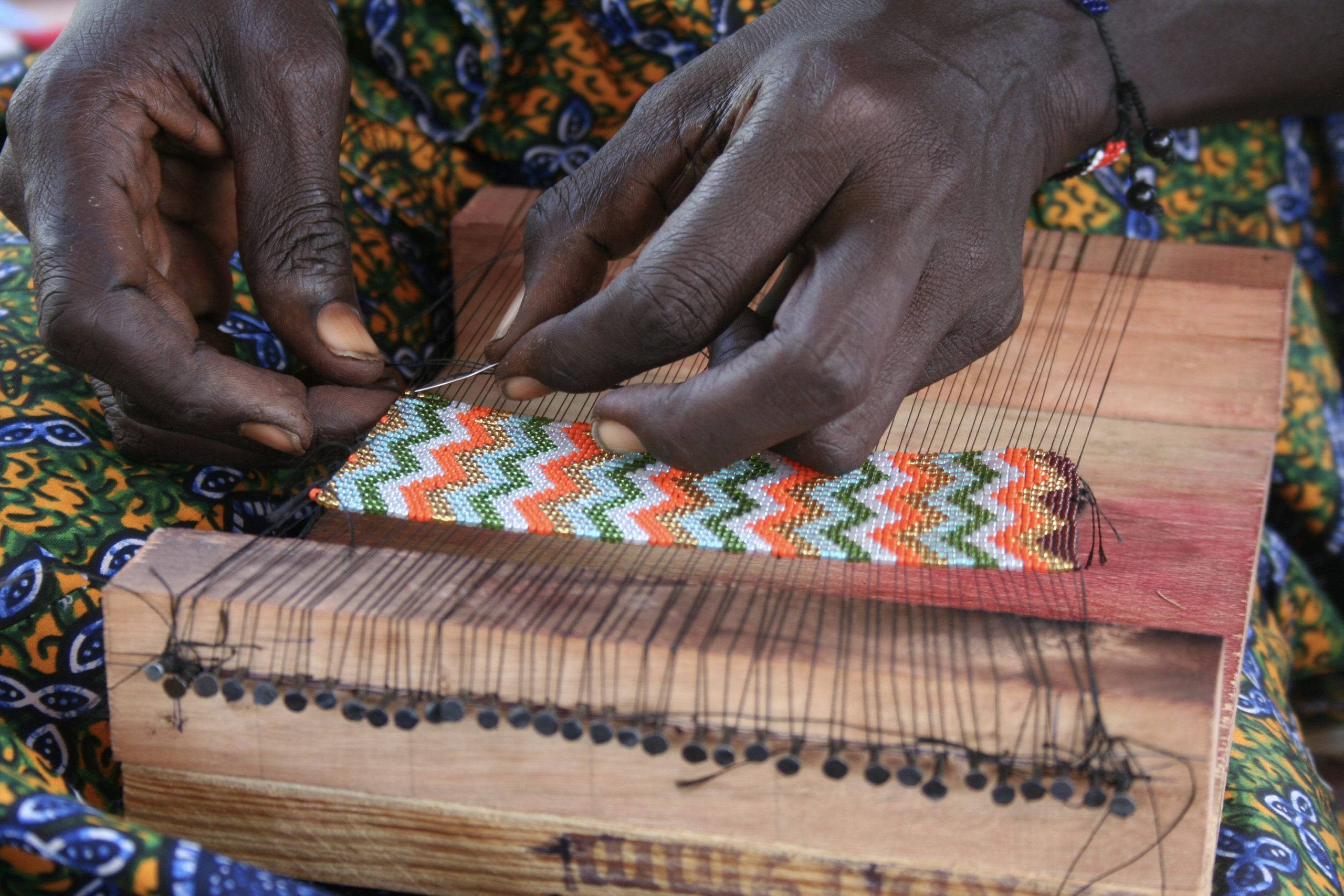
Beadwork has a long history in East Africa and often carries great cultural significance. Colors and patterns can indicate age, ethnic group, or marital status. Women often learn beadwork from their mothers and grandmothers. South Sudanese women are especially skilled in this craft and now, having been forcibly displaced, use it as a way to generate income.
In this workshop, a displaced South Sudanese woman and a displaced woman from Congo will share their knowledge with you. They work in collaboration with MADE51, a global brand by UNHCR. After the workshop, you will have gained more insight into the cultural importance of beadwork in South Sudan, and you will take home your own handmade bracelet.
The workshop begins with an introduction by the artisans, who will familiarize you with their materials, including a loom, needle, thread, and beads. They will then demonstrate the stringing technique and offer tips for creating bracelets. You can choose from three patterns and, under their guidance, make your own bracelet. Meanwhile, Sunday and Sarah will assist and share stories about their personal situation.
More than 120 million people worldwide are forcibly displaced, driven from their homes by war, persecution, or disaster. Among them are skilled artisans with the talent and cultural heritage to create objects of true beauty.
MADE51 is a global brand, an initiative of UNHCR, the UN Refugee Agency, that connects these artisans with social enterprises. Following Fair Trade principles, MADE51 supports the design, development, and marketing of the unique products in its collection. Through MADE51, those forced to flee have the opportunity to earn an income while displaced. For consumers, these objects are more than exquisite examples of craftsmanship and heritage, they are expressions of hope.
Sunday is a South Sudanese refugee living in Kenya and a member of the Kalobeyei Women’s Handicraft Cooperative. She specializes in beadwork and is the youngest leader in the cooperative at 22 years old. In 2016, at the age of 13, she arrived at the Kakuma refugee camp with her 9-year-old brother. As a young girl, Sunday took full responsibility for her brother and herself, ensuring they received an education and had their basic needs met, acting as the head of her household. Her work with the cooperative has played a vital role in paying for their school fees and books.
Sunday shows resilience in every circumstance. She joined the cooperative at 19 in 2021 and hopes to finish her education, eventually attending university to study business administration. After graduation, she plans to start her own business and employ members of her community.
Sarah is an artisan working with a social enterprise partner in Kenya. She is the Chairlady of her cooperative. Sarah has been the dedicated leader of this group for the past few years and played a crucial role in its foundation in 2017.
Before coming to Kenya, Sarah was a journalist and a radio host. She is a natural communicator and leader. She left Congo due to persecution of the media in the battling regimes.
Once in Kenya, she became a tailor, mastering Grades 1-3 of Kenya’s tailoring curriculum. From this new vocation, she was resilient in training other women to harness these skills as well. With other artisan women in her settlement, they founded the multi-talented cooperative which showcases beading, basketry and tailoring.


Photo credits: Erin Flannery and Ala Kheir

This workshop is made possible by MADE51.

In this hands-on workshop, you’ll learn how to get your chisels razor-sharp using a traditional whetstone, no expensive machines required.
Under the guidance of an experienced master, you’ll first assess the condition of your own chisels. Then you’ll get to work sharpening one of them by hand, using time-honoured techniques. Step-by-step, you’ll learn the proper method to get, and keep, your tools in peak condition. Sharp tools not only work more smoothly and precisely, they’re also much safer to use. You’ll also get an introduction to various sharpening methods and aids. So, head into your workshop, grab your chisels, and sign up for this informative, hands-on session!
You’ll go home with new knowledge, practical skills, and a perfectly sharpened chisel.
Het Ambachtshuis Brabant is a leading educational organization for practical training in traditional crafts, following a modern master–apprentice model. Their doors are open to all (young) adults who want to work with head, heart, and hands, regardless of prior education, background, or skills. Here, anyone can discover and develop their passion for craftsmanship through training focused on real, time-tested techniques. Craftspeople are valued and increasingly in the spotlight! The Ambachtshuis aims to create honest products and meaningful experiences, contributing to the preservation and renewal of artisanal trades.
Workshop teachers Jos and Bart are highly experienced, now retired furniture makers who love sharing their knowledge. And they certainly are knowledgeable! They’ve been teaching at Het Ambachthuis Brabant for years. Bart Moonen helps shape our vocational training and courses in furniture making. Jos Elshout has a great passion for Japanese woodworking and has focused on this in recent years, teaching the Japanese woodworking workshop.
Practical information


Have you ever wondered how those delicious, crunchy little balls in your bubble tea are made?
In this unique workshop, you will get the chance to find out for yourself and make your very own popping pearls! Learn all about the different flavours, colours, and textures of these tiny flavour bombs.
Why this workshop is so much fun:
In short, this is a 100% vegan workshop you don’t want to miss!
“At BobaQtea, we’re always looking for new recipes and creative ideas. Popping pearls are so special, they offer a unique flavour and mouthfeel. We were curious how they were made and whether we could make them ourselves. We’re excited to share our knowledge and passion for bubble tea in this workshop.”


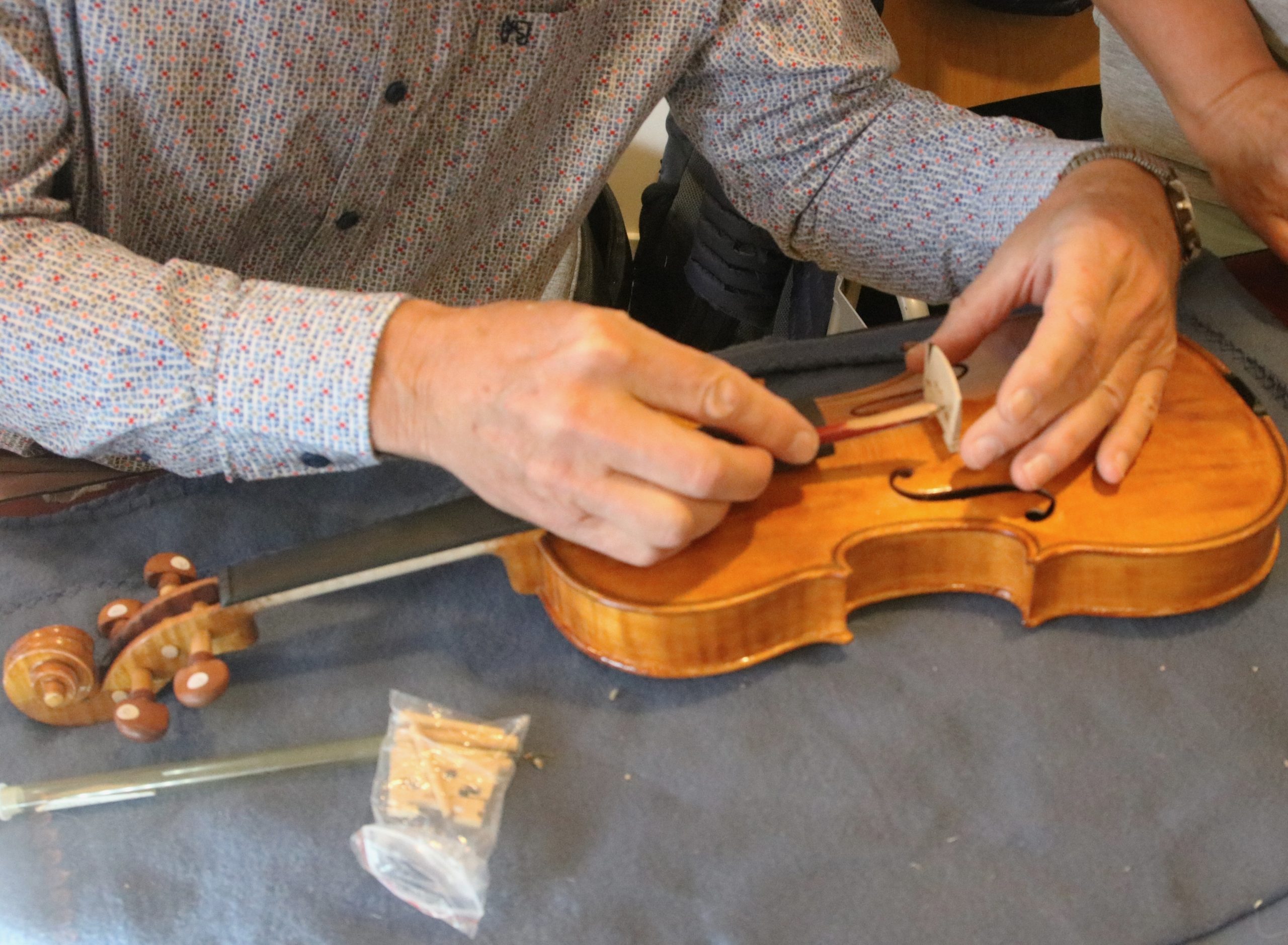
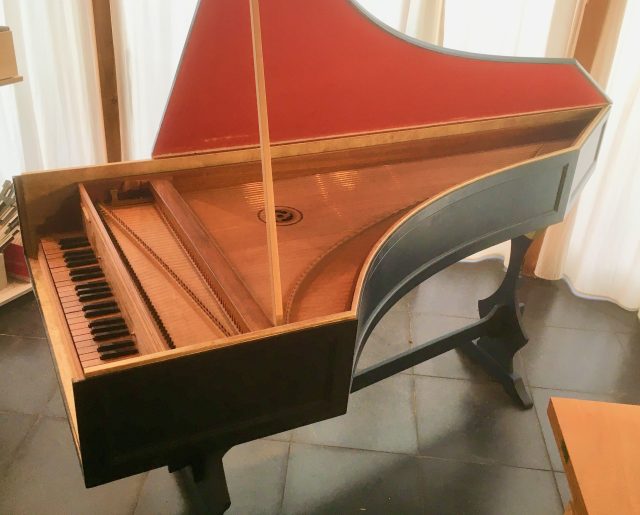
Bouwerskontakt regularly offers workshops on the maintenance and repair of string instruments, harpsichords, and barrel organs.
String players can learn how to straighten a bridge, loosen stiff pegs, properly fit a string, and receive tips on how to keep their instrument in good condition.
Owners of barrel organs can learn what types of maintenance can be done on various parts of the instrument. You can also discuss any problems you’re experiencing with your instrument. Harpsichordists receive instruction on regular maintenance and minor repairs, such as replacing and voicing a string or plectrum.
At the Repair Shop, you can bring your own string instrument for minor repairs. In short: come by, get advice, and find out what you can do yourself!
Bouwerskontakt is part of Huismuziek, the association for music and instrument making. Huismuziek aims to share, provide, expand, and disseminate knowledge and experience related to musical instrument making. Bouwerskontakt currently has around 350 members, including many hobbyists as well as semi-professional and professional instrument makers. Individually or through courses, they build historical and modern instruments such as guitars, violins, harpsichords, organs, barrel organs, transverse flutes, and recorders. Most activities take place at Houtclub-Ede.

During the Ambacht in Beeld Festival, one of the master diamond cutters from GASSAN Diamonds will offer an exclusive one-on-one masterclass, where you will work together to polish your very own diamond.
Diamond polishing is a craft that has been practiced in Amsterdam for centuries. Diamond is the hardest material on Earth and can only be worked with another diamond. Using a diamond-tipped disc, the diamond polisher transforms rough crystals into the most brilliant gemstones.
GASSAN Diamonds is a renowned family business based in Amsterdam, specializing in diamonds, jewelry, and watches. Founded in 1945 by Samuel Gassan, the company has grown into a leading player in the diamond industry, with a strong emphasis on craftsmanship and quality.
Practical information
• Price includes materials (diamond) and VAT


To pass on the love of making to children, the Ambachtenbus (Crafts Bus) offers fun workshops for kids aged 8 and up, led with great enthusiasm by Bram Korte.
Crafts are becoming less visible in today’s society. By creating something themselves, children experience the joy of making and discover that it’s not always as easy as it looks.
Offering children this hands-on experience aligns with one of the core goals of Ambachtelijk Vakmanschap Nederland: to pass on the love of craftsmanship and bring (renewed) appreciation for traditional skills back into the spotlight.
The bus is equipped with hand tools, workstations, and leftover materials, allowing children aged 8 and up to get creative under Bram Korte’s inspiring guidance.
Offered by the platform Ambachtelijk Vakmanschap Nederland.


Van der Linde is a specialist in art supplies and graphic studio materials, established in 1898. It serves as both a store and a wholesaler for schools, creative centres, professional visual artists, hobbyists, and anyone with creative ambitions.
“During the festival, we want to introduce visitors to our wide range of products.
The selection we present is tailored to complement the festival workshops. Feeling inspired? With us, you will find the materials you need to continue practicing your newly learned skills at home. We will also highlight several sustainable product innovations. We will offer a demonstration of water-mixable oil paints, and for children, there will be a fun ‘make and take’ activity using Posca markers.”

Take a seat in the Craft in Focus Cinema, where you can enjoy a continuous, free screening of films about craftsmanship.
We will be showing the following films:

Norwegian films by filmmaker Silje Ensby, covering topics such as traditional boatbuilding and ropemaking.

Dutch documentary about potter Floortje Roetemeijer, directed by Wendy van Wilgenburg.
 A series of films on Chinese crafts, produced by the Wereldmuseum. These include: A film on lacquerware artist Gan Erke, a look into porcelain-making in Jingdezhen, a film about paper artist Chen Hangfeng, his work, and the history of Chinese paper-cutting, and a documentary on the development of ceramic master Dong Quanbin.
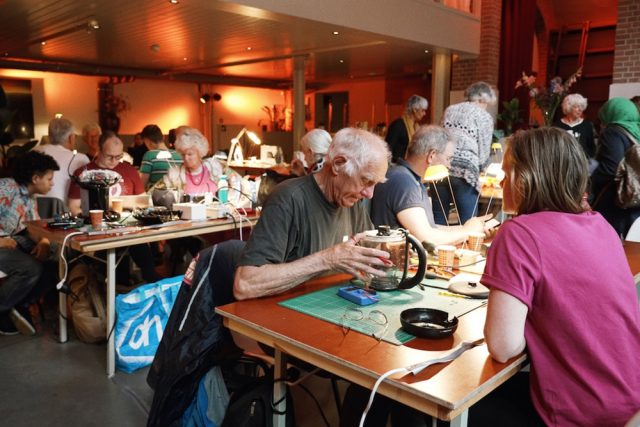 Documentary The Repair Cafe, a film byMasato Sezawa.
“It wasn’t just things we wanted to fix.”
Born in the Netherlands, Repair Cafés bring volunteers together to fix household items, clothing, and bicycles for free. But their mission goes beyond simple repairs. They bring memories back to life, strengthen communities by welcoming newcomers, and inspire us to cherish what we already own, resisting the tide of consumerism.
Who comes to Repair Cafés? What stories are shared? This is the story of people fixing more than just broken things
Festival address:
NDSM Loods
NDSM-Plein 85
1033 WC Amsterdam
Postal address:
Stichting Ambacht in Beeld
Kalf 158
1509AH Zaandam
The Netherlands