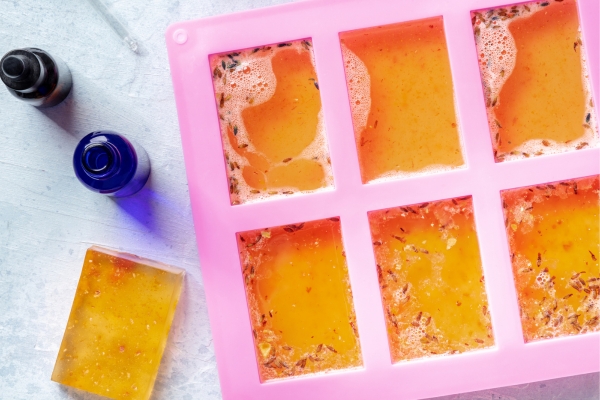
In this hands-on parent-child workshop, you will create two soap bars together using a melt-and-pour technique, fully customised to your own taste with a choice of colours, fragrances, and natural botanicals such as lavender blossoms and rose petals.
You will work with high-quality shea and glycerine soap bases, along with professional soap-making materials and tools that are safe and easy to use.
You will learn the basic principles of soap formulation, including melting, mixing, scenting, colouring, and shaping soaps. The focus is on experimentation, sensory experience, and creative expression.
At the end of the workshop, each duo will go home with two handmade soaps, beautifully packaged, along with the knowledge to continue making soap at home.
Duo workshop; you purchase 1 ticket per duo.
Farah of Sparkling Mosaic is a skincare educator, workshop developer, and entrepreneur with a deep passion for handmade, natural self-care. Her mission is to help people create their own skincare at low cost, using natural ingredients and without unnecessary chemicals; with only 5 to 6 ingredients instead of the 30+ often found in industrial products. What began as an internship in Paris and home experiments grew into a full practice in which she makes skincare simple, sustainable, and accessible to everyone.
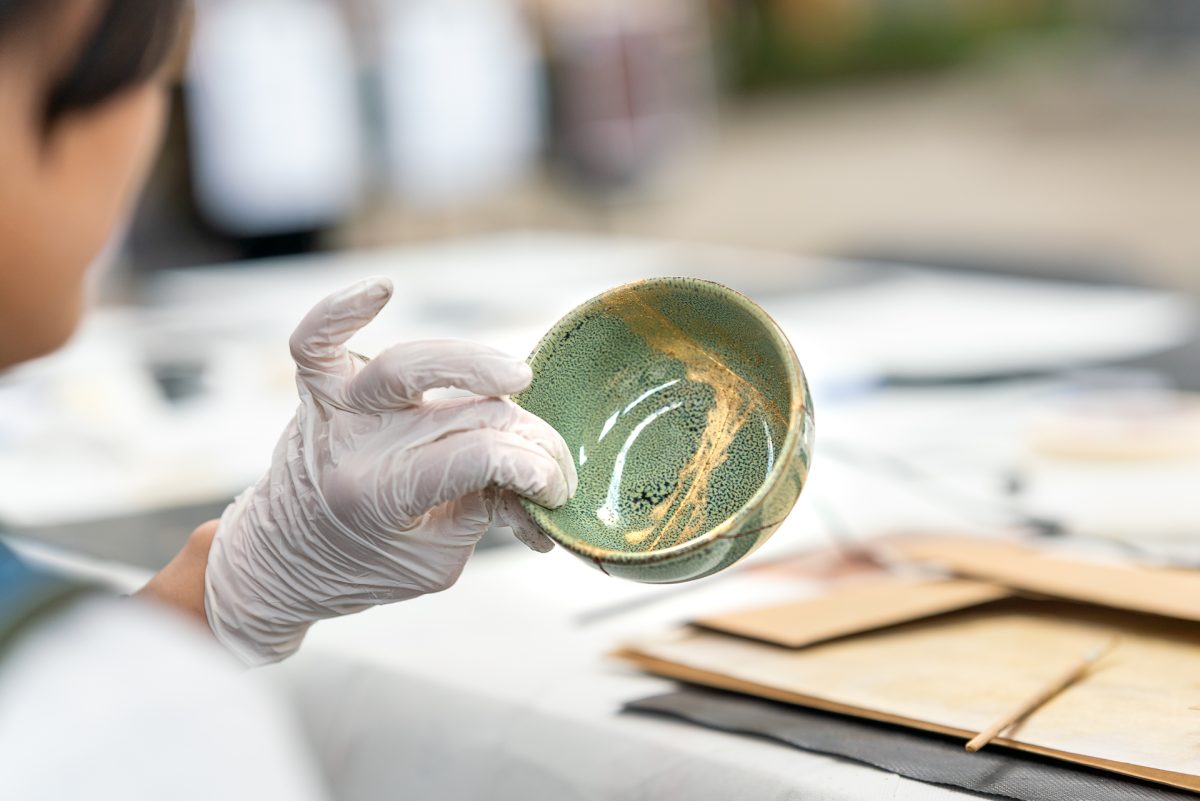
In this workshop, you will become acquainted with traditional Japanese restoration techniques, the history of Kintsugi, and its most essential material: Urushi, a Japanese lacquer. You will learn how to repair broken bowls and decorate them with gold, while rediscovering the beauty of imperfection.
Each participant receives a Kintsugi bowl, and during the three-hour workshop you will follow the process step by step: gluing, cleaning, filling, painting, and finally dusting with gold powder to complete your unique creation. At the end of the workshop, participants take their own Kintsugi ceramics home in a specially designed box that allows the lacquer to dry.
Kintsugi is a traditional Japanese restoration technique that breathes new life into broken ceramics. By using Urushi, the natural sap of the Urushi tree, and decorating the repaired cracks with gold, silver, or vermilion, each piece becomes a beautiful work of art.
Kintsugi is more than a craft; it is a philosophy rooted in acceptance and resilience. By highlighting scars instead of hiding them, this centuries-old method teaches us to embrace flaws and imperfections.
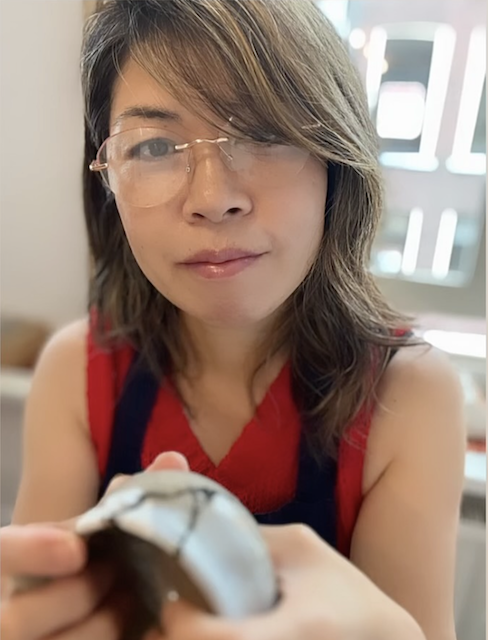
Yuki Tessler gives workshops and courses in Kintsugi in the Netherlands, France, Denmark, and Belgium. Originally from Saitama, Japan, her journey began as a lighting designer in Tokyo, where she worked for ten years. Her deep fascination with traditional Japanese art and culture has always shaped her work. Theatre technique gave her practical insights into Japanese craftsmanship and its long-standing tradition. During her studies in philosophy, specialising in Buddhism, she explored the concepts of wabi-sabi and Zen that underpin the Japanese cultural mindset. The Kintsugi and Urushi art that are part of this allow her to embrace imperfection. Sharing the Kintsugi philosophy through workshops has become a way to foster cultural exchange and celebrate Japanese artistry.

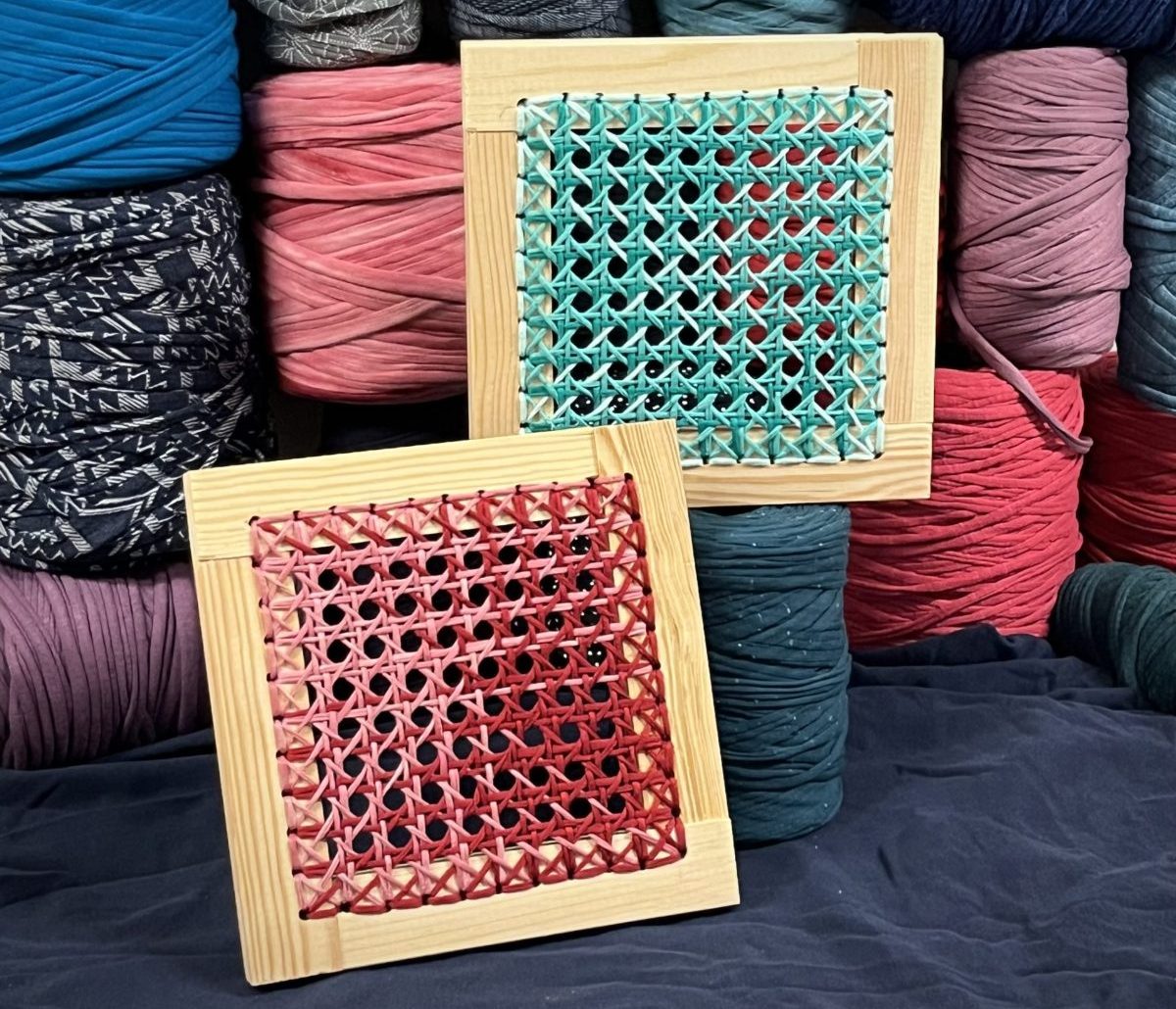
Would you like to get a taste of the craft of chair caning? You can! Since it’s not possible to cane an entire chair in two hours, during this workshop you will create a small frame in colours of your choice. You will work with a blunt needle and thread on a wooden frame. You can choose from a wide palette of colours to design your own woven frame. Several examples of possible patterns will be available, but you are of course also free to create your own design.
You will go home with a handmade piece of art that you can hang on the wall or display anywhere you like.
Chair caning is handcraft, and it takes a lot of time, even for a traditional chair caner. What makes the caning technique so special is that a single thread, or a strip of rattan in traditional caning, is not strong on its own. The strength of the seat emerges through the weaving of the pattern during the caning process. That remains remarkable every single time a new chair is woven.
Caning, rush seating, and weaving are practices that Francine Becker approaches in her own distinctive way as de amsterdamse stoelenmatter. She gives chairs new seats using only recycled materials such as discarded T-shirts and jersey fitted sheets, old festival banners, and second-hand Zpagetti yarn from Hooked, made from leftover materials from the fashion and textile industry. This results in colourful chair seats with a wide variety of patterns. She also rescues chairs from the street. Chairs with rattan or rush seats are often discarded because re-caning or re-rushing can be expensive. Francine gives these chairs a new life by caning and weaving them in a style that suits the interior of her clients.

Design from waste! Learn how to make your own belt from a discarded fire hose. By carefully looking at a material, you can discover hidden beauty. Using this fresh perspective, you will start creating. First, you choose your hose from various shades of red. Working in pairs, you cut the material into a strip using belt cutters. Next, you transfer the patterns and use a spindle to make holes and attach the buckle. Finally, you adjust it to your size.
You will go home with your own belt.
Ilse Evers of Eversom has spent many years creating theater sets. This makes her look at what is possible rather than what is intended. With a deep love for craftsmanship, she combines different materials and tools to ultimately create entirely new forms. This exploratory mindset has led to the diverse collection of Eversom. The studio transforms discarded fire hoses into powerful and sustainable design pieces, from exclusive bags to monumental rugs, from unique gifts to striking room dividers.
To process the material, techniques and tools from leatherwork, textile work, and woodworking have been combined and further developed. She also uses traditional techniques such as chair caning and weaving in a contemporary way. The patterns for her bags enhance the properties of the hoses and are precisely matched to the specific size of each fire hose. It is precisely this material exploration that makes working with circular materials so fascinating for Ilse Evers.

Ilse Evers, foto: Evy Hachman

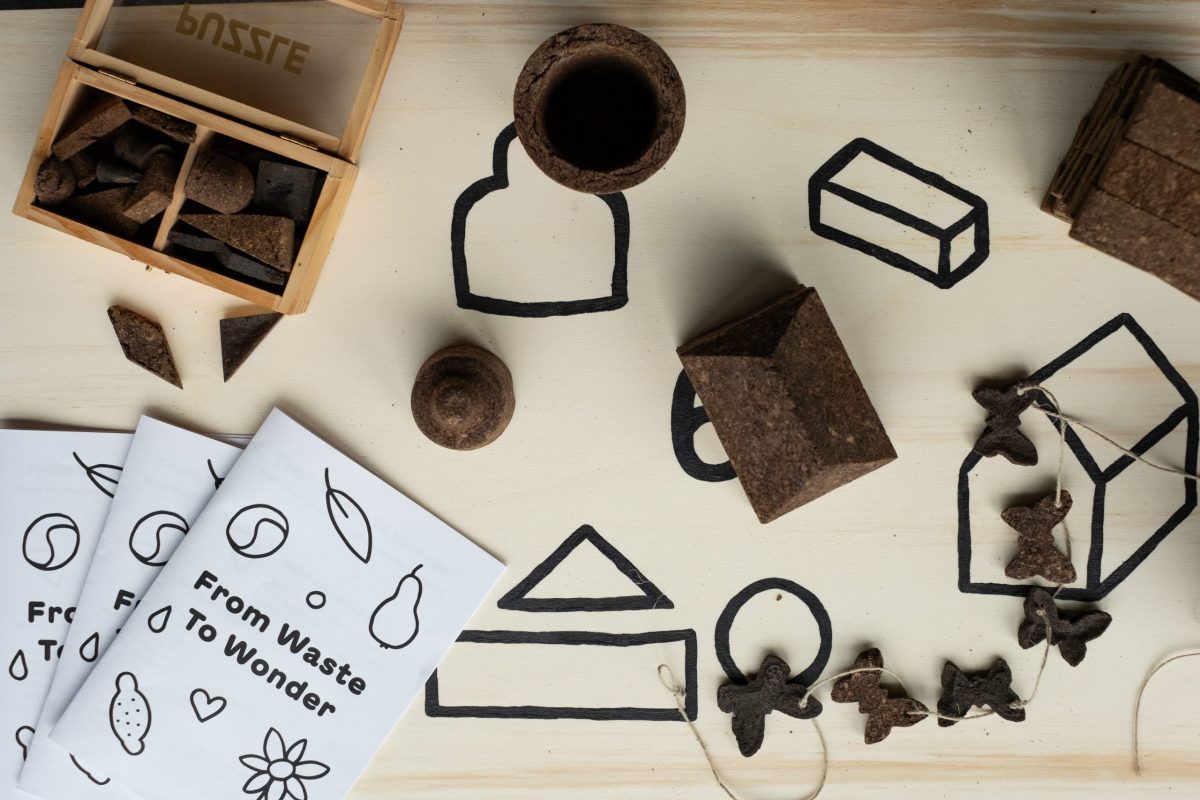
In this interactive children’s workshop, you transform bio-waste such as coffee grounds and casein into biodegradable “ground treasures.” You will get hands-on experience making and shaping your own flower seed bombs, using cookie cutters and a hydraulic press.
The creations are then dried in a drying oven and can be taken home at the end of the day to plant in your garden. If you don’t have a garden, you can plant them somewhere outside or give them away as a small gift.
Through a creative, hands-on process, you will learn about circularity, material use, and the impact of waste. The workshop combines sustainability with making and experimenting, and encourages environmental awareness, creativity, and problem-solving skills.
Please note: your work needs to dry in the drying oven and can be collected at the end of the day. It is helpful to bring your own container to transport your “ground treasure.”
From Waste to Wonder offers various interactive workshops in which children learn in a playful and practical way to see waste and sustainability differently. Guided through a structured process, they actively work on making recipes, shaping toys, and revaluing bio-waste as a valuable raw material. In doing so, they discover the life cycle of materials and learn to understand the impact of waste. Instead of passive learning, the focus is on doing, making, and experimenting. This stimulates creativity, problem-solving skills, and a sustainable mindset. Children become makers and innovators, proud of their creations and more connected to their environment.
Jamie van Duuren is a product designer with a passion for sustainability and social impact. She specializes in biodesign and alternative materials and explores environmentally friendly solutions through hands-on experiments. Her goal is to inspire the next generation through creativity and environmental awareness.
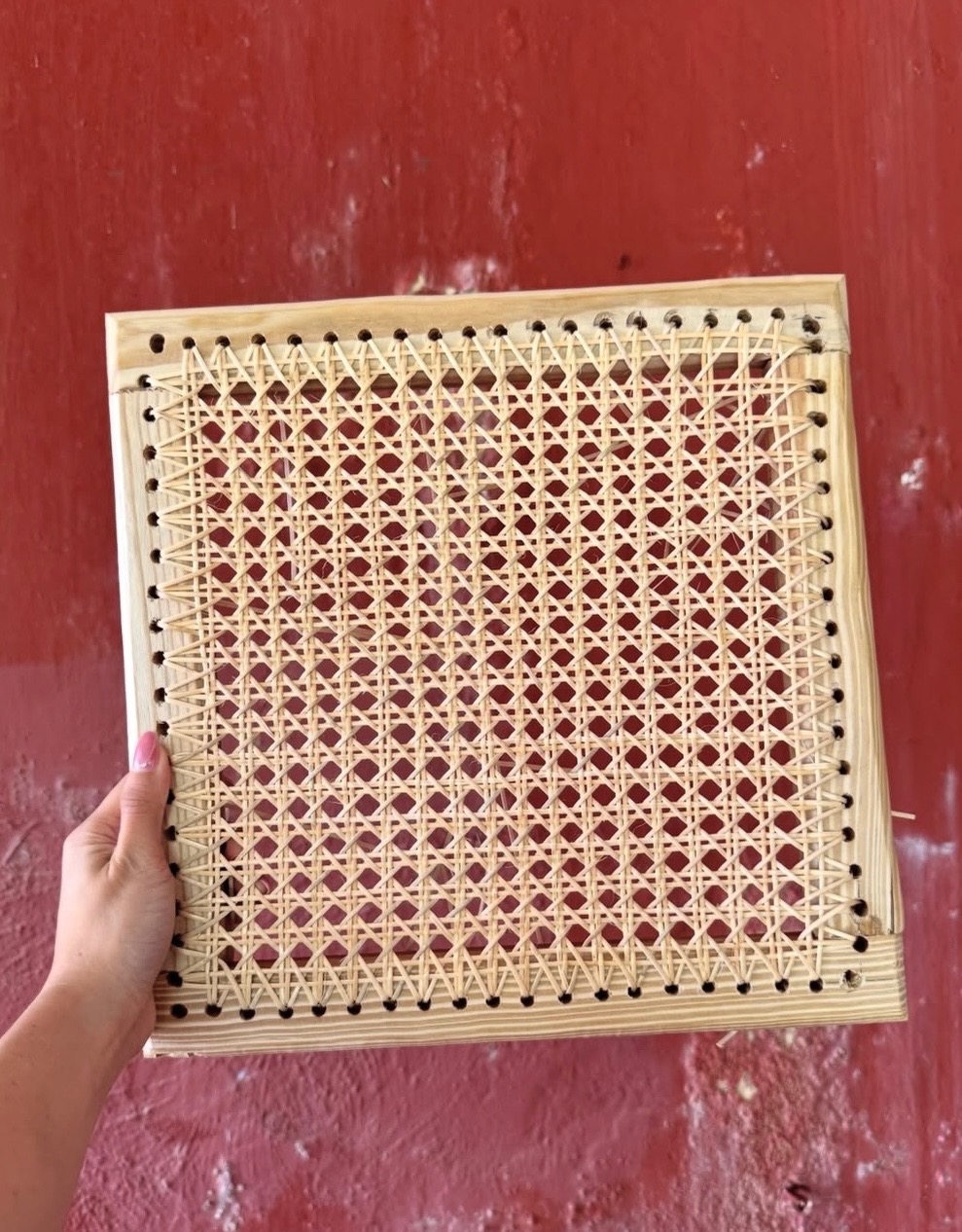
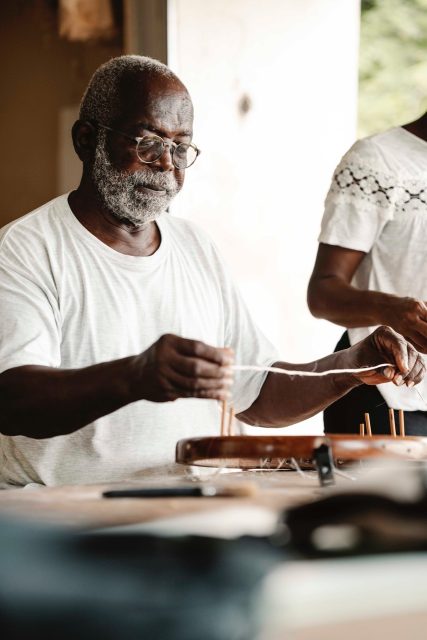
During this masterclass, you will learn step by step how to weave a chair seat or backrest using bamboo fibers. Under the guidance of Felix Etienne, you will work on a wooden practice frame of approximately 20×20 cm, ideal for mastering the basics of weaving. You will take the frame home afterwards, together with extra material so you can continue the work at home and keep practicing this special skill.
Felix Etienne is a master weaver, creative therapist, and teacher with a passion for craftsmanship. During the masterclass, he shares both practical techniques and knowledge and traditions that have been passed down through generations.
Farm to Crafts on Curaçao is an initiative by Cleo de Brabander and explores how traditional knowledge can regain meaning within a sustainable and future-oriented making culture. Based on the principle of learning by doing, the project brings together agriculture, design, heritage, and craftsmanship to create new connections and production chains on the island. One of the crafts that Farm to Crafts is helping to revive is traditional chair caning, a skill that has become increasingly rare in Curaçao but is still part of the island’s cultural heritage. Through workshops, innovation programs, and hands-on experiments with local materials, the project explores how this knowledge can be preserved and renewed. In addition, Farm to Crafts organizes various collaborations and activities such as indigo dyeing workshops, kite making, and material research with banana fibers.
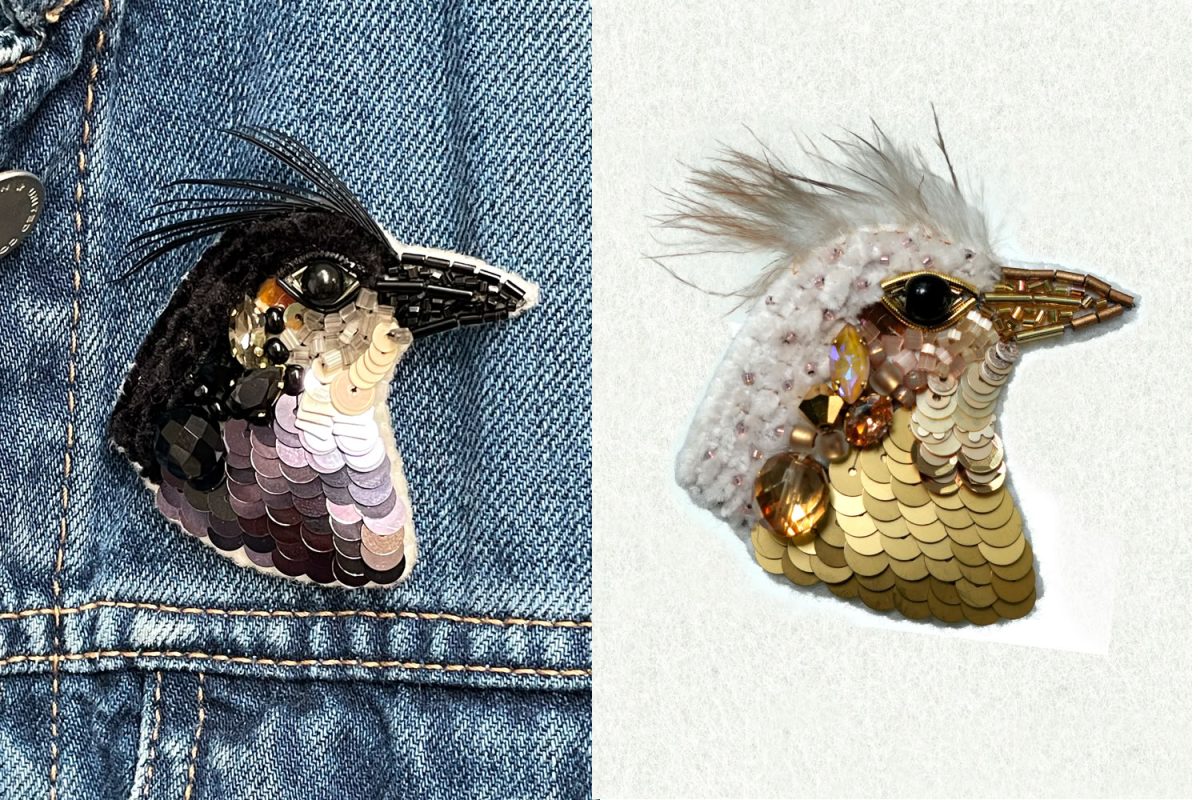
In this workshop, you will embroider a colorful bird head that you can wear as a brooch. A bird with real character. You will use many different materials such as beads, sequins, stones, and threads. You will also apply several techniques, making this a varied introduction to embroidery. Even if you have never embroidered before, you can join. However, it is helpful if you know that you are comfortable working with fine materials.
We will create the embroidery on felt, which allows for a relatively quick finish. In addition to all materials, a needle, and an embroidery hoop, you will receive instructions with text and photos to take home so you can finish it there. Afterwards, you can pin your handmade bird onto your coat or bag.
Embroidery has existed for thousands of years. It is a collective term for various techniques used to decorate fabric with needle and thread. It adds color, draws attention, creates wonder, and has a unique appearance. Embroidery is very versatile. You can work with traditional materials or with unusual ones. It can be extremely small or very large. You can follow an existing design or create something that comes straight from the heart.
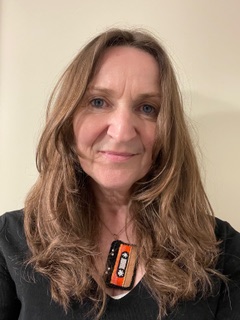
Eva van den Top is the founder of Eevees. After studying Fashion Design in Rotterdam, she gradually returned over the years to the embroidery she learned from her grandmothers. She loves exploring techniques, understanding every detail, and adding her own twist to them. Material combinations in which she intentionally seeks a touch of dissonance create a strong drive to keep pushing the boundaries of her creativity. In this craft, focus and an eye for the smallest details are essential. Through her embroidery, Eva aims to bring more attention to honest craftsmanship and contribute to a future in which fair clothing is the norm.
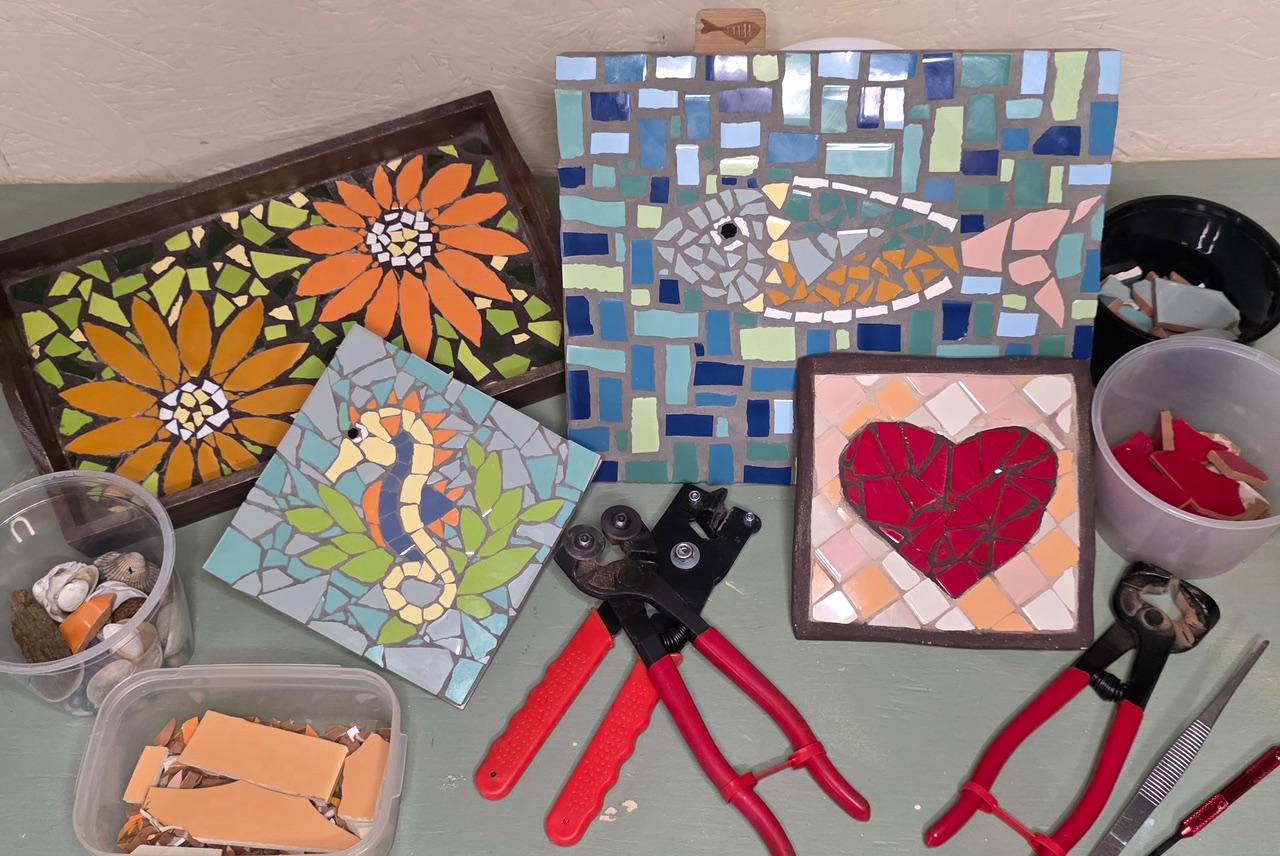
This workshop begins with a short piece of history and a brief explanation of all the materials and tools. Then you will choose an image to work with. Be inspired by the many examples available or let your own creativity run free.
Next, you will choose the materials you want to work with and, using tools such as hammers, tile nippers, and tile cutters, shape everything to size. The size of your artwork will be 15 x 15 cm. Once your design is ready, you will prepare the glue and carefully attach each piece in the right place. If there is time left, you may also do the grouting. If not, you will take the grout home together with your artwork.
Mosaic is an ancient art form in which small pieces of material such as glass, ceramic, stone, porcelain, beads, and shells are brought together by hand to create a larger whole. It is not only about technique and precision, but also about planning, insight, feeling, and attention. Each piece can find its right place in your own way. Through color, texture, and shape, a unique work is created that can be both decorative and meaningful. By using recycled materials and glue made from natural resources, creativity and respect for nature can come together beautifully.
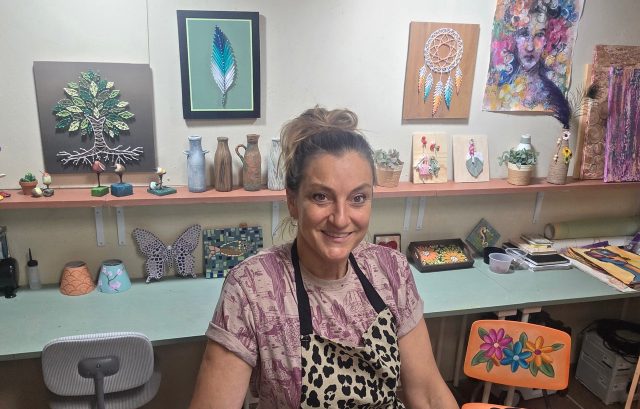
For Renate from R-tistic, creativity has been very important since childhood. For more than 20 years, Renate has been building sets for amusement parks, zoos, hospitality venues, theater, and television. Today, her focus is increasingly on inspiring the people around her and passing on knowledge and techniques, with mosaic being one of them.
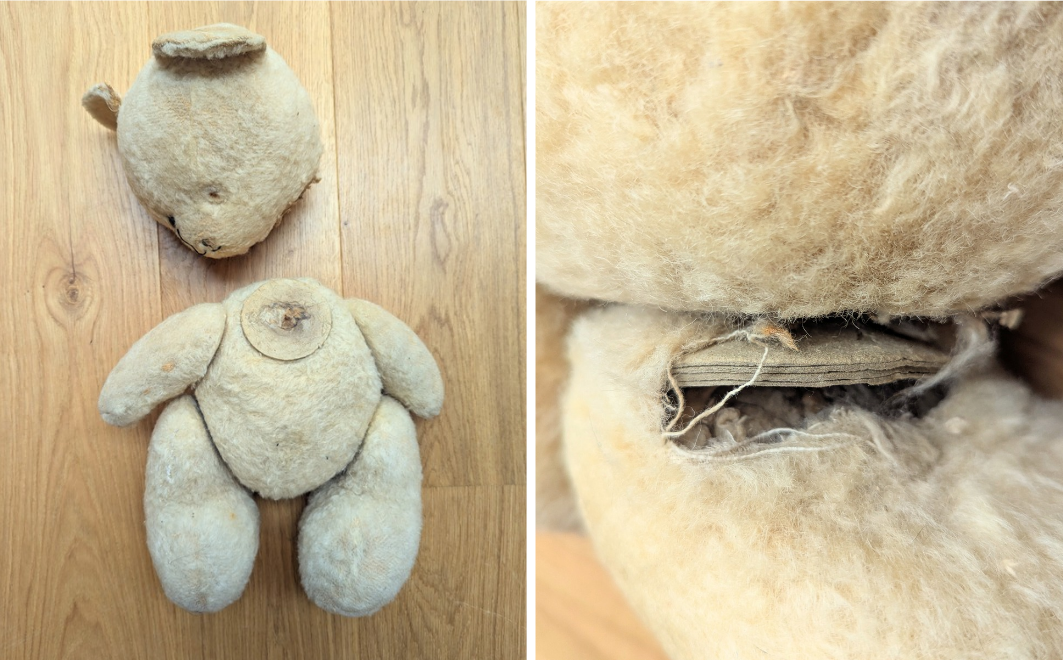
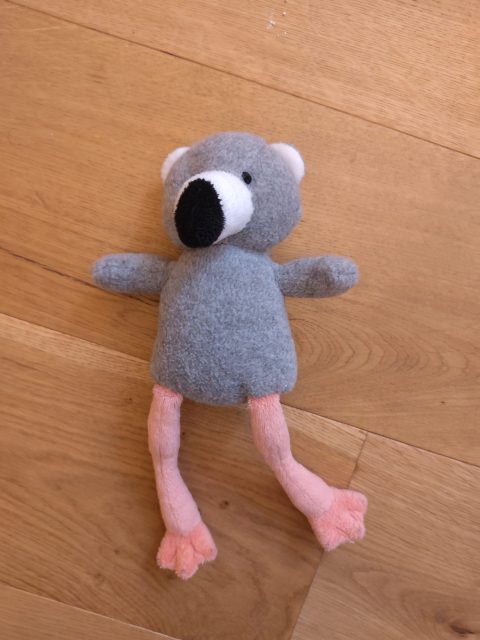
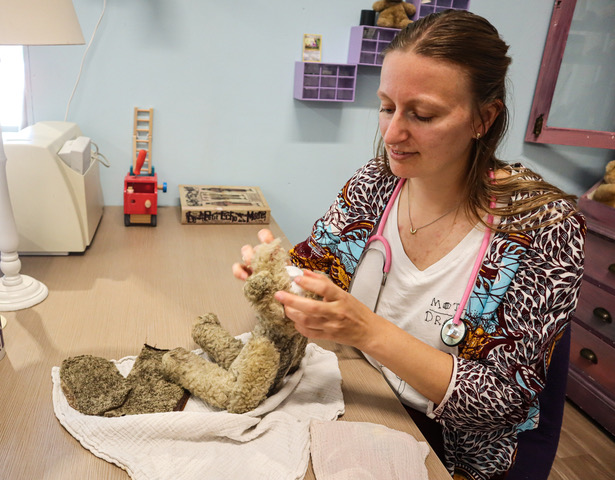
During this workshop, you will get hands-on experience with basic techniques to repair the most common issues with stuffed animals. You will first practice on a sample piece of fabric. After that, you can work on your own beloved and worn stuffed animal, or on one of the donor stuffed animals available that could use some love. There is also room to create a “Refurbeast”: a new, assembled stuffed animal made from usable parts of donor stuffed animals. This gives loose ears, paws, fur, eyes, or other materials a new life in a unique new creature.
Some skill with needle and thread is helpful, but not required. We work with different fabrics, yarns, plastic or glass eyes, and polyester stuffing.
Afterwards, you will go home with new skills that can also be useful for small clothing repairs, and of course with your own repaired stuffed animal or self-made Refurbeast. By repairing and reassembling, you discover how much value lies in what we already have. In this way, you not only give a beloved object, a loose part, or a discarded stuffed animal a second life, but you also learn to look differently at use, repair, creativity, and preservation.
Mama Poppendokter specializes in restoring and repairing beloved stuffed animals and dolls. From a child’s favorite stuffed animal to a birth teddy bear over 100 years old, or a doll that has been in the family for generations: each piece requires attention, craftsmanship, and respect for its original character. The craft includes repairing damaged fabric, fixing seams, tears, and loose parts, renewing stuffing, cleaning delicate materials, and carrying out careful restorations. It is not only about technique, but also about preservation: of shape, appearance, signs of use, and emotional value. In this way, stuffed animals and dolls are given a second life, without losing their familiar character.
Femke Wijman is the maker behind Mama Poppendokter and specializes in repairing and restoring beloved stuffed animals and dolls. With great care, attention, and an eye for detail, she helps damaged and worn stuffed animals and dolls get back on their feet. She works on everything from deeply loved childhood companions to old birth teddy bears, family heirlooms ranging from several decades to sometimes over 100 years old. In her work, craftsmanship, material knowledge, and respect for the original character come together. Her starting point is always not only to restore, but also to preserve as much as possible the original appearance, signs of use, and emotional value. In her workshops, she shares this knowledge in a warm and accessible way and shows how much meaning can lie in careful repair.
The materials for this workshop are sponsored by De Rechte Steek.
Examples of Refurbeasts:

Bring your chisel, plane or scissors to the knife sharpener and have them professionally sharpened.
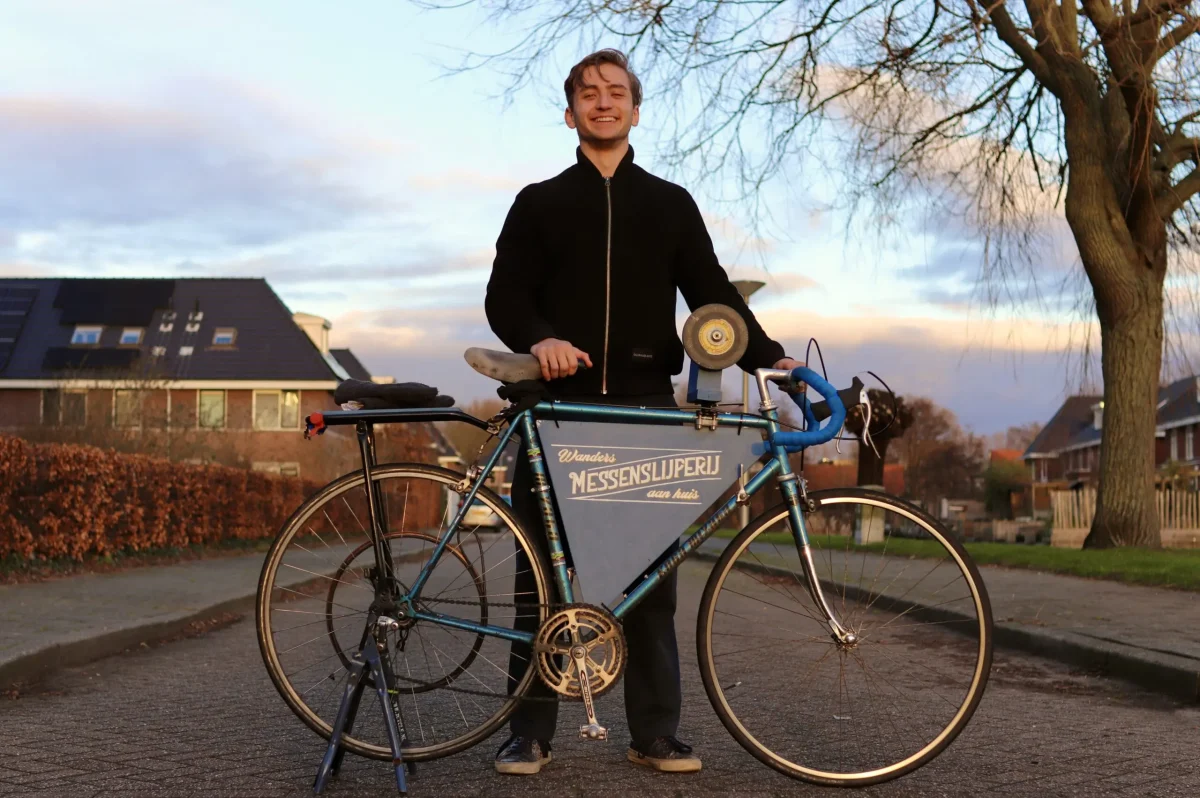
In the past, the knife sharpener would ring his bell and everyone would rush outside to have their knives sharpened. Today, this profession has almost disappeared. Knife smith Wander Vanhoucke has brought this ancient craft back to life. With his mobile sharpening workshop built on a converted vintage racing bike, he is present at the repair shop so everyone can work with sharp tools again.
Wander Vanhoucke started sharpening knives at the age of fourteen, after struggling to cut through a tomato while cooking. He is now twenty-two and forges knives for (Michelin-star) chefs across Europe. With a keen eye for detail, he carefully matches steel type, wood, shape and balance to each client’s needs. Last winter, Wander went viral with his mobile knife sharpening service, which brings sharpening directly to people’s homes in an effort to combat a throwaway culture.
Bring your own chisel, plane, scissors (or any other tools)!
Festival address:
NDSM Loods
NDSM-Plein 85
1033 WC Amsterdam
Postal address:
Stichting Ambacht in Beeld
Kalf 158
1509AH Zaandam
The Netherlands