In this hands-on workshop, you’ll learn how to get your chisels razor-sharp using a traditional whetstone, no expensive machines required.
Under the guidance of an experienced master, you’ll first assess the condition of your own chisels. Then you’ll get to work sharpening one of them by hand, using time-honoured techniques. Step-by-step, you’ll learn the proper method to get, and keep, your tools in peak condition. Sharp tools not only work more smoothly and precisely, they’re also much safer to use. You’ll also get an introduction to various sharpening methods and aids. So, head into your workshop, grab your chisels, and sign up for this informative, hands-on session!
You’ll go home with new knowledge, practical skills, and a perfectly sharpened chisel.
Het Ambachtshuis Brabant is a leading educational organization for practical training in traditional crafts, following a modern master–apprentice model. Their doors are open to all (young) adults who want to work with head, heart, and hands, regardless of prior education, background, or skills. Here, anyone can discover and develop their passion for craftsmanship through training focused on real, time-tested techniques. Craftspeople are valued and increasingly in the spotlight! The Ambachtshuis aims to create honest products and meaningful experiences, contributing to the preservation and renewal of artisanal trades.
Workshop teachers Jos and Bart are highly experienced, now retired furniture makers who love sharing their knowledge. And they certainly are knowledgeable! They’ve been teaching at Het Ambachthuis Brabant for years. Bart Moonen helps shape our vocational training and courses in furniture making. Jos Elshout has a great passion for Japanese woodworking and has focused on this in recent years, teaching the Japanese woodworking workshop.
Practical information

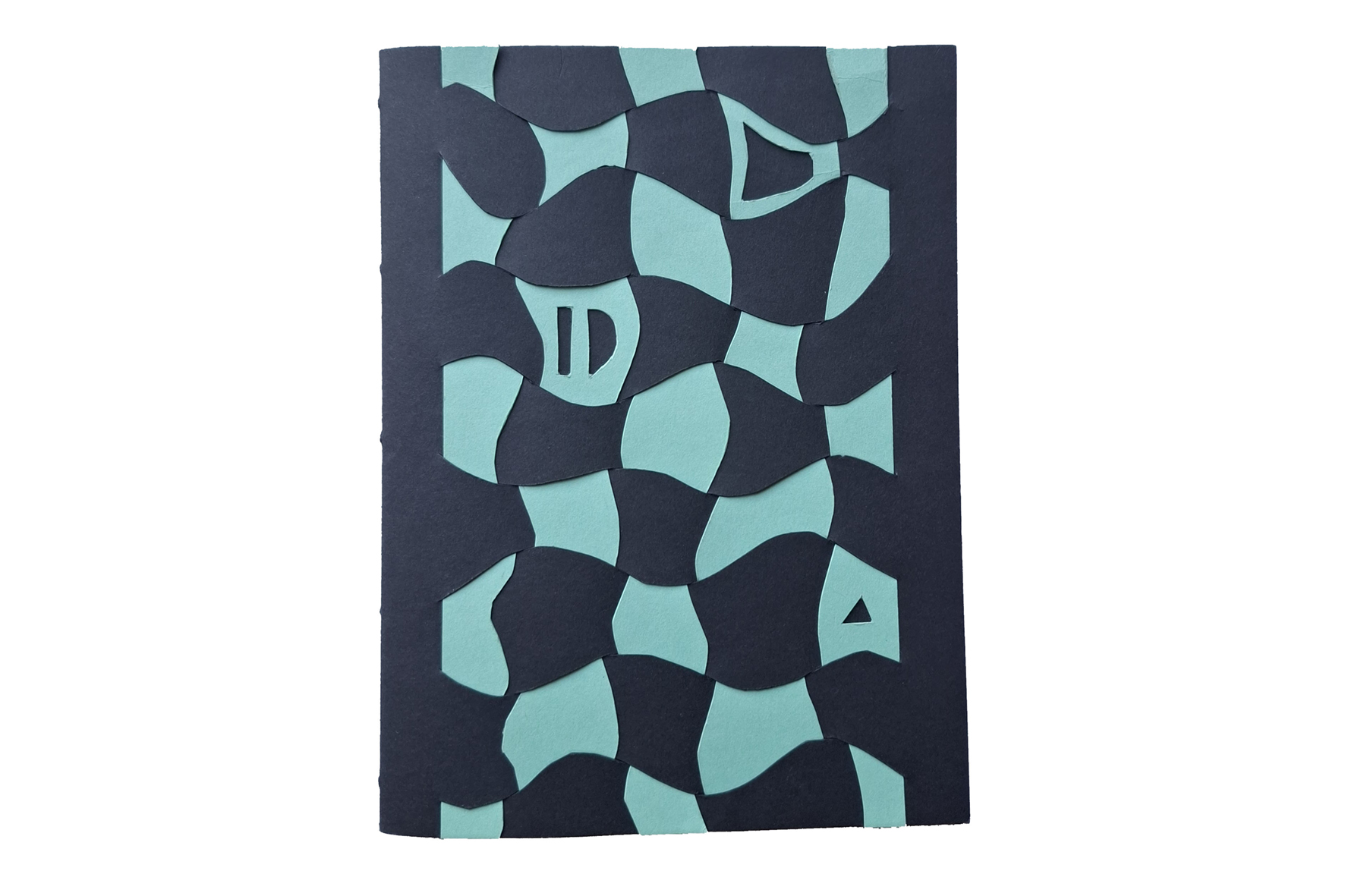
In this workshop, you will learn how to create a unique woven cover using colourful strips of paper.
Next, you will bind two sections into it using a simple, decorative binding. Under the guidance of Tanja Rakic, you will discover the art of paper weaving, inspired by the work of American paper artist Helen Hiebert.
You will go home with a special, handmade booklet.
At Boektotaal in Echten, you can find bookbinding supplies, workshops, courses, and services for repairing and/or binding books.
Practical information


Under the guidance of Aaldert de Lange, you will make a booklet bound in the traditional Japanese style. For the cover of this booklet, Chiyogami paper will be used.
Chiyogami is made from the fibers of the mulberry tree, after which it is traditionally screen-printed in multiple layers to create beautiful colors and designs; each sheet is screen-printed individually.
The word Chiyogami refers to the graphic, repetitive patterns applied to paper during Japan’s Edo period. Originally, these patterns were block-printed for use in making paper dolls and small accessories. In the 20th century, these patterns also began to be used for screen printing.
You will go home with a unique, handmade booklet.
At Boektotaal in Echten, you can purchase bookbinding supplies, take workshops and courses, and have books repaired and/or bound.
Practical information

Have you ever wondered how those delicious, crunchy little balls in your bubble tea are made?
In this unique workshop, you will get the chance to find out for yourself and make your very own popping pearls! Learn all about the different flavours, colours, and textures of these tiny flavour bombs.
Why this workshop is so much fun:
In short, this is a 100% vegan workshop you don’t want to miss!
“At BobaQtea, we’re always looking for new recipes and creative ideas. Popping pearls are so special, they offer a unique flavour and mouthfeel. We were curious how they were made and whether we could make them ourselves. We’re excited to share our knowledge and passion for bubble tea in this workshop.”


Learn the basics of the filigree craft in just two hours.
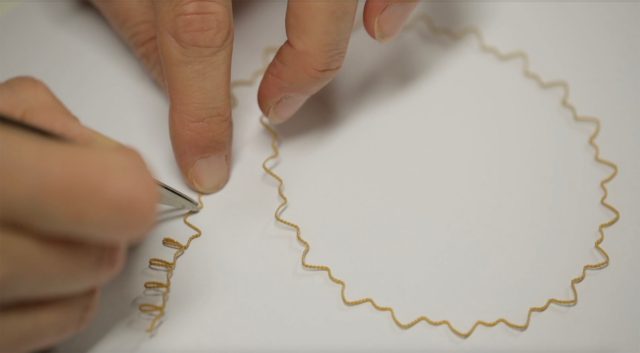
In this workshop, you will bend an elegant floral pattern from silver filigree wire using a specially designed tool. You’ll also be introduced to the modern PUK welding technique, a precise method for connecting wirework, and soldering with a flame using a specialized approach.
You will go home with your own handmade silver filigree pattern and a newfound appreciation for this centuries-old craft.
The workshop is suitable for both beginners and more advanced participants with an interest in fine metalwork.
Filigree is a specialization within the silversmithing craft, where ultra-thin metal wire is shaped into delicate, ornamental patterns. The technique is thousands of years old and found across many cultures, from the Middle East and Asia to Europe. Filigree is often used in jewellery and decorative objects and is known for its lace-like elegance. The craft requires patience, precision, and a keen eye for detail. Despite the Netherlands’ rich history with regional filigree jewellery as part of traditional costume, the technique is at risk of fading into obscurity. Fortunately, modern makers are working to preserve and innovate this extraordinary craft.
Eva van Kempen is a silversmith and the founder of The Filigree Embassy, an online knowledge platform aimed at making filigree accessible to a new generation of makers and wearers. Together with Ming Design Studio, she developed Tool-RF (Reproducing Filigree): a gear-like tool that makes it easier to bend filigree wire. This makes the craft more accessible, even for those with less experience or those looking to work more efficiently. Tool-RF helps keep the technique alive while opening new possibilities in design, fashion, and art. Eva’s mission is to preserve, innovate, and share filigree with the world.
Practical Information
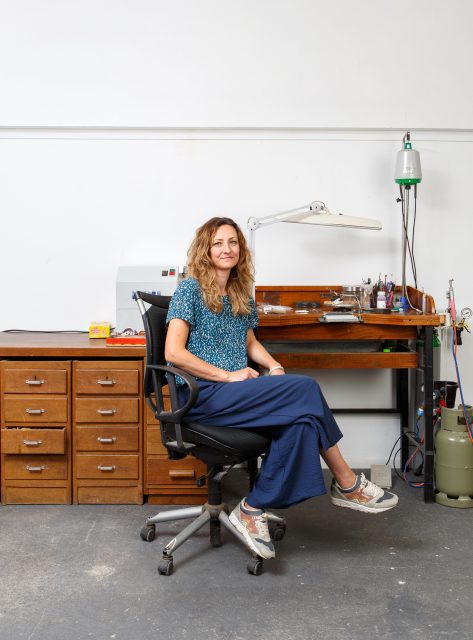
Eva van Kempen. Foto Fan Liao


Do you want to help create a more positive and inspiring world?
Bring your own piece of clothing and decorate it with a patch of your choice in vibrant, inspiring colours. Add beads, sequins, and other materials to make it truly your own.
The patches feature imagery related to joy, love, or social issues such as racism, allowing you to express a positive message to the world through your clothes.
You will go home with your own customized and decorated garment.
Bas Kosters works as an artist and designer with passion and compassion at the heart of everything he does. Through social engagement, he creates imaginative worlds filled with exuberant, provocative, and tender characters. Determination and enthusiasm are key traits that define his diverse body of work. With a deep love for textiles and paper, he celebrates and communicates personal and societal issues he finds important. Using recycled fabrics, he playfully transforms materials into new artworks and garments that are unmistakably his.
Surrounded by humour and bold messages, his work expresses emotions that might otherwise be hard to face. His fascination with characters, identity, and even eroticism results in a sometimes raw and layered reality where multiple perspectives vie for attention. His storytelling unfolds through tapestries, dolls, sets, glass objects, drawings, paintings, and ceramics.
Welcome to the world of Bas Kosters.
Practical Information

Portret door Marc Deurloo


Discover how the use of brushes, ink, and rice paper creates the distinct aesthetic characteristic of calligraphy as it was adopted into Korea from China.
Participants in this workshop will go home with a self-written kanji, signed with their name and stamped with a vermilion seal as a keepsake.
Owen Tjon Sie Fat studied Japanese and Korean language and culture at Leiden University and was trained in calligraphy by both Chinese and Japanese calligraphers. He is currently researching various Korean calligraphic techniques. Owen teaches biweekly Japanese calligraphy courses at the Japanese Cultural Center Shofukan in Rotterdam.
Practical Information
Participation at your own risk. Do not wear highly flammable clothing!
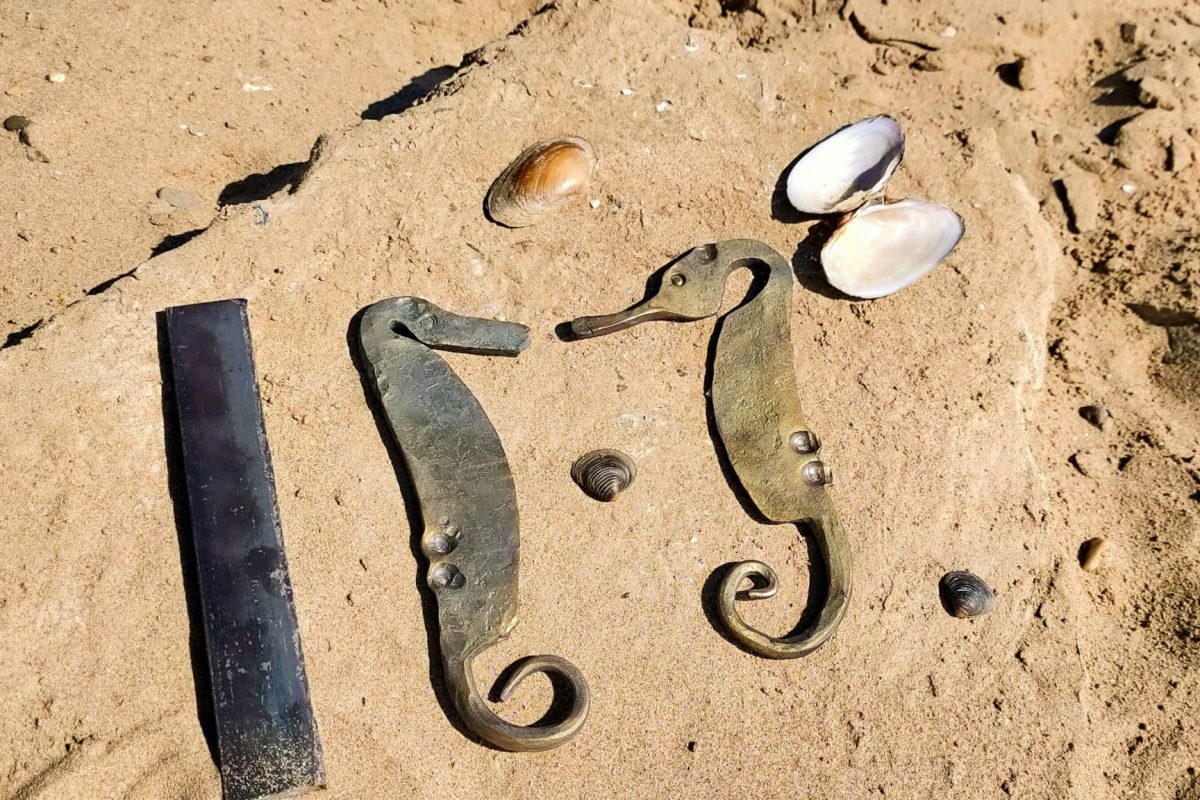
From a hard piece of metal, a seahorse is born through heat and force.
After a brief explanation from the blacksmith, you will forge a seahorse yourself. A provided strip of metal will be heated in the fire, and then you’ll hammer your very own seahorse on the anvil. This will be done with extensive guidance and example drawings from the blacksmith.
Having started as a freelancer in the metal industry, Cees Pronk conducted research on blacksmithing courses in the Netherlands in 1999/2000. Finding that a good vocational training no longer existed, he developed a blacksmithing course himself. The end terms he wrote, approved by the Ministry of Education, Culture, and Science (OCW), served as the basis for compiling and writing teaching materials for the Blacksmithing Course in Andelst and the establishment of Mondra Training. In addition to the Blacksmithing Course, various workshops and masterclasses are also offered for young and old, artists, and primary school students. All of this takes place at the Cornelis Pronk Forge, the place to gain knowledge about forging techniques.
As of January 1, 2024, Cornelis Pronk Forge has been handed over to his daughter Lotte Pronk, keeping the business in the family.
Practical information


Children’s workshop (age 11 and up). Parents/guardians are responsible at all times. Participation at your own risk, do not wear highly flammable clothing.
Together with the blacksmith, a bar of iron is heated in the fire, and this glowing iron is forged into a keychain. This is done by hammering the hot material on an anvil. You will go home with a unique keychain.
Two children can forge per 20-minute slot, with hourly time slots, so you may have to wait your turn.
Having started as a freelancer in the metal industry, Cees Pronk conducted research on blacksmithing courses in the Netherlands in 1999/2000. However, a good vocational training no longer existed, which led him to develop a blacksmithing course himself. The end terms he wrote, approved by the Ministry of Education, Culture, and Science (OCW), served as the basis for compiling and writing teaching materials for the Blacksmithing Course in Andelst and the establishment of Mondra Training. In addition to the Blacksmithing Course, various workshops and masterclasses are also offered for young and old, artists, and primary school students. All of this takes place at the Cornelis Pronk Forge, the place to gain knowledge about forging techniques.
As of January 1, 2024, Cornelis Pronk Forge has been handed over to his daughter Lotte Pronk, keeping the business in the family.
Practical information

Participation at your own risk. Do not wear highly flammable clothing!
After a brief explanation of the history of the poppy, you will create a flower from copper yourself. Using a hammer, you will work the provided copper petals on an anvil into graceful flower petals. The petals are then shaped on a hollowed-out plastic disc. The brass stem is threaded so that the petals can be attached to the stem.
In addition to iron/steel, several other metals can be used, such as copper, aluminum, bronze, and tin. Copper is a metal that we also work with in our forge. Copper is a relatively soft material that is easy to work with. We shape the copper by hammering it on an anvil and a plastic mold. Sometimes copper is heated to process it properly, but relatively thin copper can also be worked as is.
Having started as a freelancer in the metal industry, Cees Pronk conducted research on blacksmithing courses in the Netherlands in 1999/2000. However, a good vocational training no longer existed, which led him to develop a blacksmithing course himself. The end terms he wrote, approved by the Ministry of Education, Culture, and Science (OCW), served as the basis for compiling and writing teaching materials for the Blacksmithing Course in Andelst and the establishment of Mondra Training. In addition to the Blacksmithing Course, various workshops and masterclasses are also offered for young and old, artists, and primary school students. All of this takes place at the Cornelis Pronk Forge, the place to gain knowledge about forging techniques.
As of January 1, 2024, Cornelis Pronk Forge has been handed over to his daughter Lotte Pronk, keeping the business in the family.
Practical information
Festival address:
NDSM Loods
NDSM-Plein 85
1033 WC Amsterdam
Postal address:
Stichting Ambacht in Beeld
Kalf 158
1509AH Zaandam
The Netherlands