In this inspiring session, you will create a small, colourful painting. You’ll learn how to recognize shapes within abstract backgrounds and discover the magic of various painting techniques.
We’ll work with acrylic paints, pencils, and ink, allowing you to develop your own unique style. Whether you’re a beginner or have some experience, let your creativity flow and join us for a fun painting session!
By the end of the workshop, you’ll take home a beautiful, self-made painting that sparks your imagination and deserves a special place in your home.
Visual artist Kinga Wieczorek grew up in Zbąszyń, Poland. She graduated cum laude in 2008 from the Lyceum for Visual Arts in Zielona Góra, specializing in visual advertising, painting, and art history. From 2009 to 2016, she collaborated with Galerie Pretekst in Krakow, and her work was featured in the Polish film The Art of Loving.
Kinga mainly paints portraits in oil but also enjoys experimenting with acrylic and texture paste, especially when creating landscapes. Her style is inspired by magical realism and realism, focusing on the connection between nature and humanity.
She works with art lovers and private clients and offers a wide range of workshops and lessons in various techniques such as drawing, ink work, pastel, charcoal, acrylic, and oil painting. Kinga believes that painting is a valuable investment in your well-being. By first learning realistic drawing and painting, students can develop their own unique style.
Currently, Kinga lives and works in Zaandam, where she runs her own studio. Besides her art practice, she teaches and serves as vice-chair of Stichting Tengel.
Practical information

In the workshop on 17th-century painting techniques, you will get acquainted with creating highly realistic paintings, just like the old masters did.
We will study how paintings were built up during that period. Corinna Wildschut will briefly explain this process. After that, you will get hands-on experience. Don’t expect to complete a full painting back in the 17th century, painters spent months on one, depending on its size and complexity. Instead, you will learn about the painting’s structure and practice a specific part called the “underpainting.” You will work on a portion of it since completing the entire underpainting within the limited time is not feasible.
Once you get the hang of it, the technique is quite approachable, so everyone can participate regardless of experience.
This workshop offers you a taste of 17th-century techniques, allowing you to experiment and truly understand their purpose. You will receive a step-by-step guide to take home explaining how to create an underpainting. It’s more about the experience than finishing a complete piece. Of course, you may take your work home after the session. We work with oil paints, so drying time is needed. If your wet work can’t be transported safely, you may pick it up later at Atelier Wildschut in the NDSM Loods.
Corinna Wildschut has been teaching this beautiful craft for 30 years at Nimeto art school in Utrecht and at her own Atelier Wildschut in the NDSM Loods. She inherited this art from her mother, also a specialist in imitation painting. Besides teaching, she actively practices this art with diverse commissions, including decorative painting, murals, ceiling paintings, and restoration of stucco ceilings, ornaments, mirror frames, and other antiques.
Practical information
Cancelled, the Dutch embassy has unfortunately not provided the required visa in time.
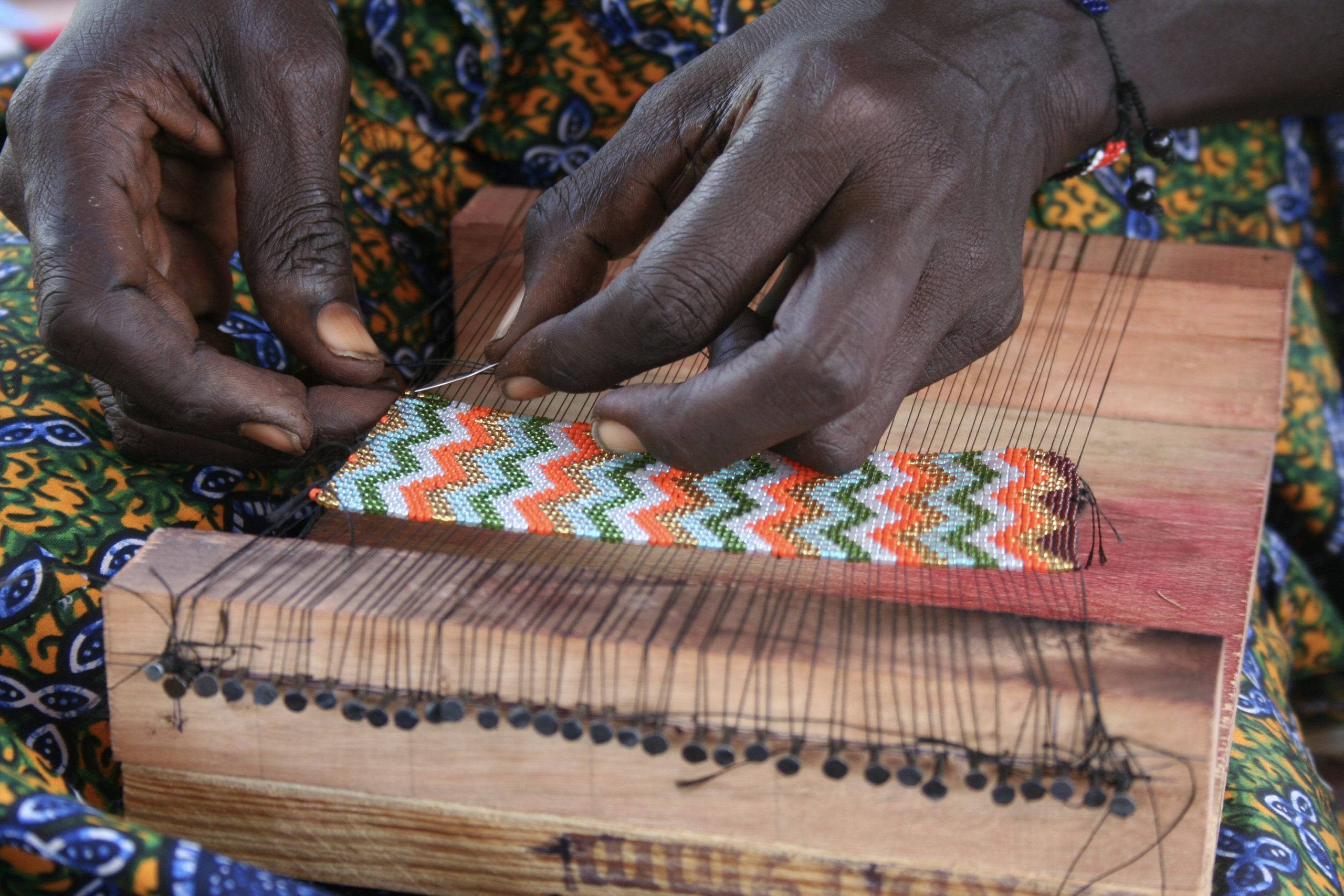
Beadwork has a long history in East Africa and often carries great cultural significance. Colors and patterns can indicate age, ethnic group, or marital status. Women often learn beadwork from their mothers and grandmothers. South Sudanese women are especially skilled in this craft and now, having been forcibly displaced, use it as a way to generate income.
In this workshop, a displaced South Sudanese woman and a displaced woman from Congo will share their knowledge with you. They work in collaboration with MADE51, a global brand by UNHCR. After the workshop, you will have gained more insight into the cultural importance of beadwork in South Sudan, and you will take home your own handmade bracelet.
The workshop begins with an introduction by the artisans, who will familiarize you with their materials, including a loom, needle, thread, and beads. They will then demonstrate the stringing technique and offer tips for creating bracelets. You can choose from three patterns and, under their guidance, make your own bracelet. Meanwhile, Sunday and Sarah will assist and share stories about their personal situation.
More than 120 million people worldwide are forcibly displaced, driven from their homes by war, persecution, or disaster. Among them are skilled artisans with the talent and cultural heritage to create objects of true beauty.
MADE51 is a global brand, an initiative of UNHCR, the UN Refugee Agency, that connects these artisans with social enterprises. Following Fair Trade principles, MADE51 supports the design, development, and marketing of the unique products in its collection. Through MADE51, those forced to flee have the opportunity to earn an income while displaced. For consumers, these objects are more than exquisite examples of craftsmanship and heritage, they are expressions of hope.
Sunday is a South Sudanese refugee living in Kenya and a member of the Kalobeyei Women’s Handicraft Cooperative. She specializes in beadwork and is the youngest leader in the cooperative at 22 years old. In 2016, at the age of 13, she arrived at the Kakuma refugee camp with her 9-year-old brother. As a young girl, Sunday took full responsibility for her brother and herself, ensuring they received an education and had their basic needs met, acting as the head of her household. Her work with the cooperative has played a vital role in paying for their school fees and books.
Sunday shows resilience in every circumstance. She joined the cooperative at 19 in 2021 and hopes to finish her education, eventually attending university to study business administration. After graduation, she plans to start her own business and employ members of her community.
Sarah is an artisan working with a social enterprise partner in Kenya. She is the Chairlady of her cooperative. Sarah has been the dedicated leader of this group for the past few years and played a crucial role in its foundation in 2017.
Before coming to Kenya, Sarah was a journalist and a radio host. She is a natural communicator and leader. She left Congo due to persecution of the media in the battling regimes.
Once in Kenya, she became a tailor, mastering Grades 1-3 of Kenya’s tailoring curriculum. From this new vocation, she was resilient in training other women to harness these skills as well. With other artisan women in her settlement, they founded the multi-talented cooperative which showcases beading, basketry and tailoring.


Photo credits: Erin Flannery and Ala Kheir

This workshop is made possible by MADE51.

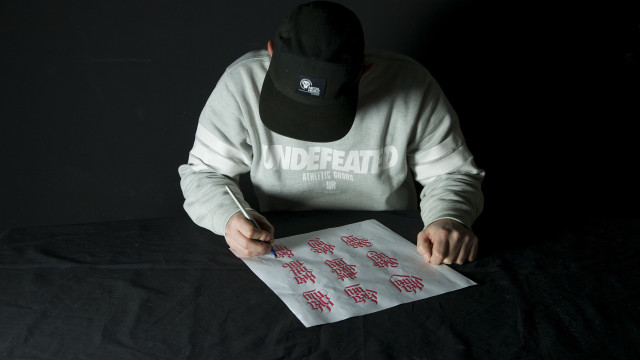
Artists Lindsay van Vliet and Daan Wille have joined forces as Team Blazin. Both have mastered calligraffiti, a fusion of calligraphy and graffiti.
Inspired by the renowned graffiti artist Shoe, they are versatile workshop leaders, offering sessions ranging from Stencil like Banksy and Doodle like Keith Haring to, of course, calligraffiti. Together, they also regularly create large-scale murals.
In this workshop you will learn how to create your own artwork with your name on it.
This workshop was first offered in 2015 in collaboration with the Street Art Museum Amsterdam. Daan also taught workshops at Craft in Focus New York in 2017 and 2019, and Lindsay led the workshop at Ambacht in Beeld Brussels in 2024. Due to its popularity, it’s back again this year in Amsterdam!
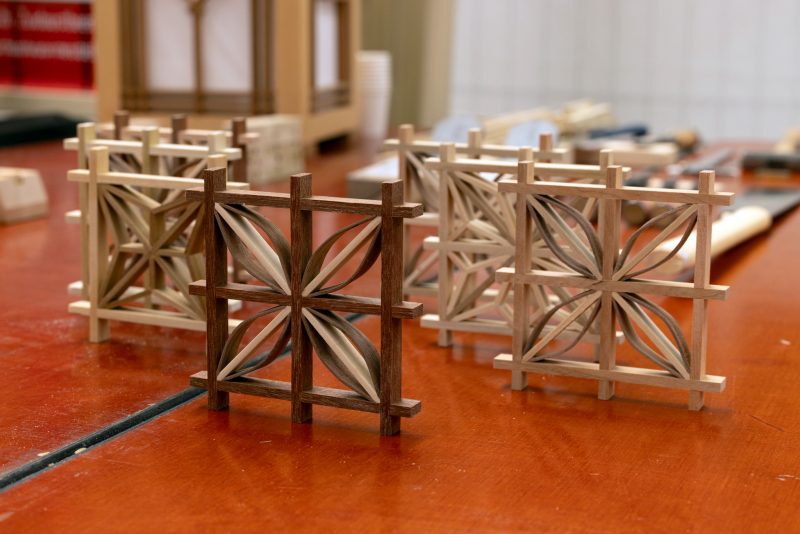
Japanese Kumiko is a refined woodworking craft traditionally used for making shoji (room screens). This technique demands great precision and skill. Each piece of wood is meticulously cut and shaped to fit into the pattern, resulting in a seamless and sturdy construction, without the use of glue or nails. The patterns range from simple to highly intricate and often carry symbolic meaning. Kumiko combines functional strength with elegance, reflecting the Japanese appreciation for craftsmanship, simplicity, and harmony with nature.
During the workshop, you will learn the basic techniques for sawing and cutting wooden strips, where accuracy is essential.
You will create your own Kumiko panel, optionally finished with rice paper perfect as a decorative artwork, coaster, or window hanging for your home.
The Beemster School of Furniture Making is dedicated to both professional furniture makers and hobbyists. Located in the picturesque Beemster Polder, the school offers an inspiring setting for anyone eager to learn the art of woodworking. The Beemster School is known for its hands-on approach, with participants working with their hands from day one. Experienced instructors guide students in developing both traditional and modern techniques. The school offers a variety of courses and workshops. With a strong focus on quality and sustainability, the Beemster School strives to train professionals and hobbyists alike to create high-quality, handcrafted furniture pieces.


During this workshop, you will learn how to combine different types of veneer to create beautiful, unique patterns. The thin wood sheets are carefully cut and assembled into a composition designed by you, then glued and finished.
By the end of the workshop, you will take home a handmade decorative coaster that is both functional and stylish.
Marquetry is an ancient woodcraft technique where very thin pieces of wood veneer are cut, pieced together, and glued onto a core wood surface. By using different wood species with their natural colours, a unique image quickly emerges.
This refined craft requires great skill and precision; each veneer piece must fit perfectly to form a seamless whole. The result is a unique and decorative surface that highlights the natural beauty and variety of wood. This technique is used in furniture, artworks, and interior elements, offering a special combination of visual refinement and artisanal skill.
The Beemster School of Furniture Making caters to both professional furniture makers and hobbyists. Situated in the picturesque Beemster Polder, the school provides an inspiring environment for anyone eager to learn the art of woodworking. The Beemster School is known for its hands-on approach, with participants working with their hands from day one. Experienced instructors guide students in developing both traditional and modern techniques. The school offers a range of courses and workshops. With a strong focus on quality and sustainability, the Beemster School aims to train both professionals and hobbyists to create high-quality, handcrafted furniture pieces.
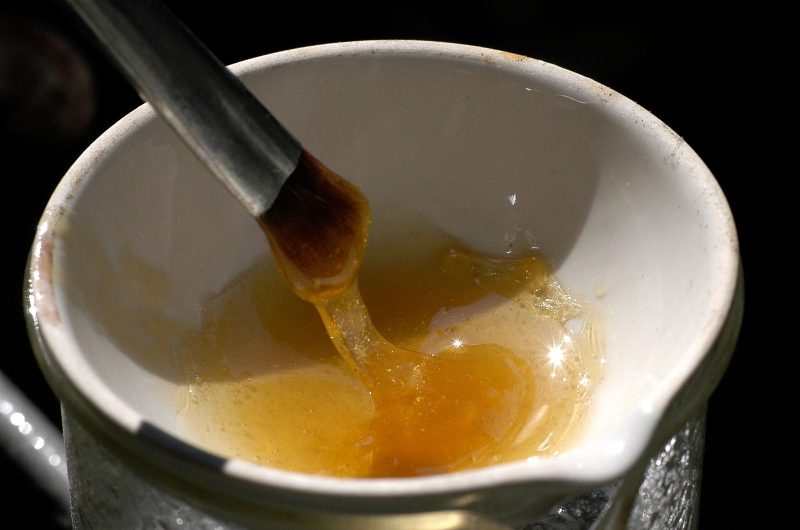
Discover the art of wood veneering using traditional bone glue in this hands-on workshop. You will learn how to apply a thin layer of veneer wood onto a wooden surface using natural materials, following age-old techniques still used in restoration and furniture craftsmanship. You’ll work with hand tools and receive tips on materials, tools, and how to avoid common mistakes. Additionally, you’ll get an introduction to bone glue: what it is, how to use it, and why it’s important.
You will take home your own finished piece.
Het Ambachtshuis Brabant is a leading educational organization for practical craft training, operating with a modern master–apprentice model. Their doors are open to all (young) adults who want to work with head, heart, and hands, regardless of background or prior education. Everyone can discover and develop their passion for crafts through training focused on authentic techniques. Craftspeople are valued and increasingly in the spotlight! The Ambachtshuis Brabant strives for honest products and meaningful experiences with a story, contributing to the preservation and renewal of traditional crafts.
Wijnand Tigchelaar is a creative woodworker running his own company Amb8.nl. He completed the two-year vocational training to become an independent traditional and machine furniture maker at Het Ambachtshuis Brabant, along with courses in furniture restoration. Wijnand is also a passionate woodturner and now serves as a skilled instructor at Het Ambachtshuis. Known for his calm and patient teaching style, he dedicates many enriching hours to his students, who greatly benefit from his knowledge and passion for wood.
Practical information:

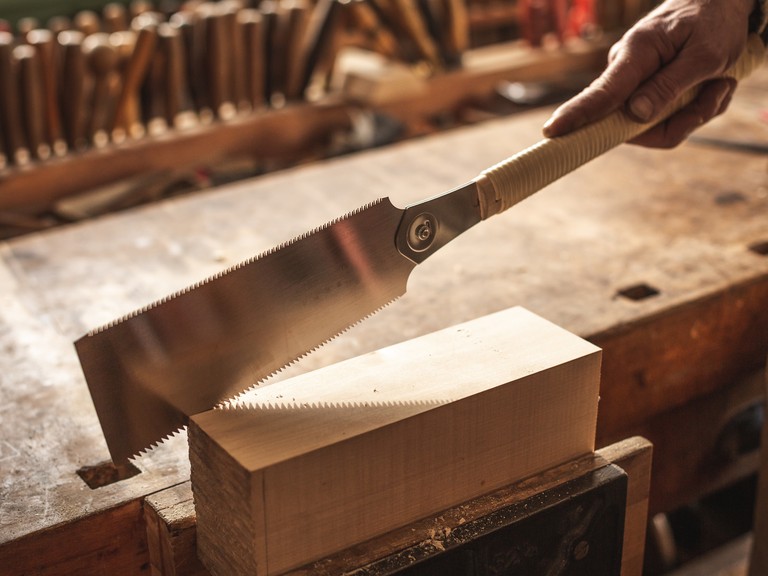
Japanese woodworking is rooted in its own unique philosophy. During this workshop, you will experience the distinctive Japanese approach to woodworking. The key difference from familiar Western techniques is working “towards yourself” using hand tools, known as the “pull stroke.”
You will get hands-on experience trying out a traditional Japanese pull plane and pull saw. Practically, you will craft a genuine Japanese wood joint.
Het Ambachtshuis Brabant is a leading educational institution for practical craft training, operating with a contemporary master-apprentice model. Their doors are open to all (young) adults eager to work with head, heart, and hands—regardless of education, background, or skills. Everyone can discover and develop their passion for crafts through authentic vocational training. Craftspeople are increasingly appreciated and in the spotlight! Het Ambachtshuis Brabant aims to promote honest products and meaningful experiences with a story, contributing to the preservation and renewal of crafts through their courses.
Peter Pothoven, the workshop instructor, has a deep passion for Japan and Japanese woodworking. In his projects, he uses Japanese tools with great precision and attention to detail. He mainly crafts bonsai tables, boxes for valuables, and display cases for treasured objects. His company is named Kanzen, a Japanese word meaning “perfection” and “completeness.”
At Het Ambachtshuis Brabant, Peter teaches basic woodworking and traditional furniture making courses, as well as these specialized Japanese woodworking workshops—delivered with extra passion.
Practical information:

In this workshop, you will playfully explore weaving patterns. These can be real patterns or false patterns, designs that emerge through experimenting with colours, creating the illusion of a pattern in the fabric.
You’ll discover endless possibilities through playful experimentation. A table loom will be pre-threaded and ready for you!
You’ll go home with your own woven creation.
Het Ambachtshuis Brabant is a leading educational organization offering hands-on training in traditional crafts. Their programme follows a modern master–apprentice model, placing practical learning at its core. Craftspeople are the teachers, and all (young) adults who want to work with head, heart, and hands are welcome. Students can discover and further develop their passion for craftsmanship through specialised skills training.
One of the crafts you can learn at Het Ambachtshuis Brabant is weaving. In their year-long programme, you can transform a simple collection of yarn into a colourful pattern, a warm scarf, or another artistic creation using your hands and a loom. It’s not only a technical skill but also a meditative, creative process that lets you experiment with colour, pattern, and material.
Jacqueline Looijen has been active as a weaver for over 25 years and continues to learn new techniques. She has volunteered for many years with the Weefnetwerk weaving association, making her a passionate ambassador for the craft. She also teaches workshops and courses independently and at Het Ambachtshuis Brabant. Her heartfelt approach makes her a warm and enthusiastic instructor.
Practical information

In this workshop, you’ll explore weaving “waffles” patterns with a beautiful 3D texture that invite experimentation. What effects can you create with different colours and materials? Can you achieve optical illusions?
Through playful discovery, you’ll explore the many possibilities. A table loom will be pre-threaded and ready for you!
You’ll go home with your own woven creation.
Het Ambachtshuis Brabant is a leading educational organization offering practical training in traditional crafts. Their programme follows a modern master–apprentice model, with learning-by-doing at its core. Craftspeople are the teachers, and all (young) adults who want to work with head, heart, and hands are welcome. Participants can discover and further develop their passion for craftsmanship through practical skills training.
One of the crafts you can learn at Het Ambachtshuis Brabant is weaving. In their year-long programme, you can transform a simple collection of yarn into a colourful pattern, a warm scarf, or another artistic creation using your hands and a loom. Weaving is not only a technical skill but also a meditative, creative experience that allows you to experiment with colour, pattern, and material.
Jacqueline Looijen has been weaving for over 25 years and continues to learn new techniques. She has volunteered for many years with the Weefnetwerk weaving association, making her a passionate ambassador for the craft. She teaches workshops and courses both independently and at Het Ambachtshuis Brabant, sharing the craft from the heart—making her a warm and enthusiastic instructor.
Practical information
Festival address:
NDSM Loods
NDSM-Plein 85
1033 WC Amsterdam
Postal address:
Stichting Ambacht in Beeld
Kalf 158
1509AH Zaandam
The Netherlands