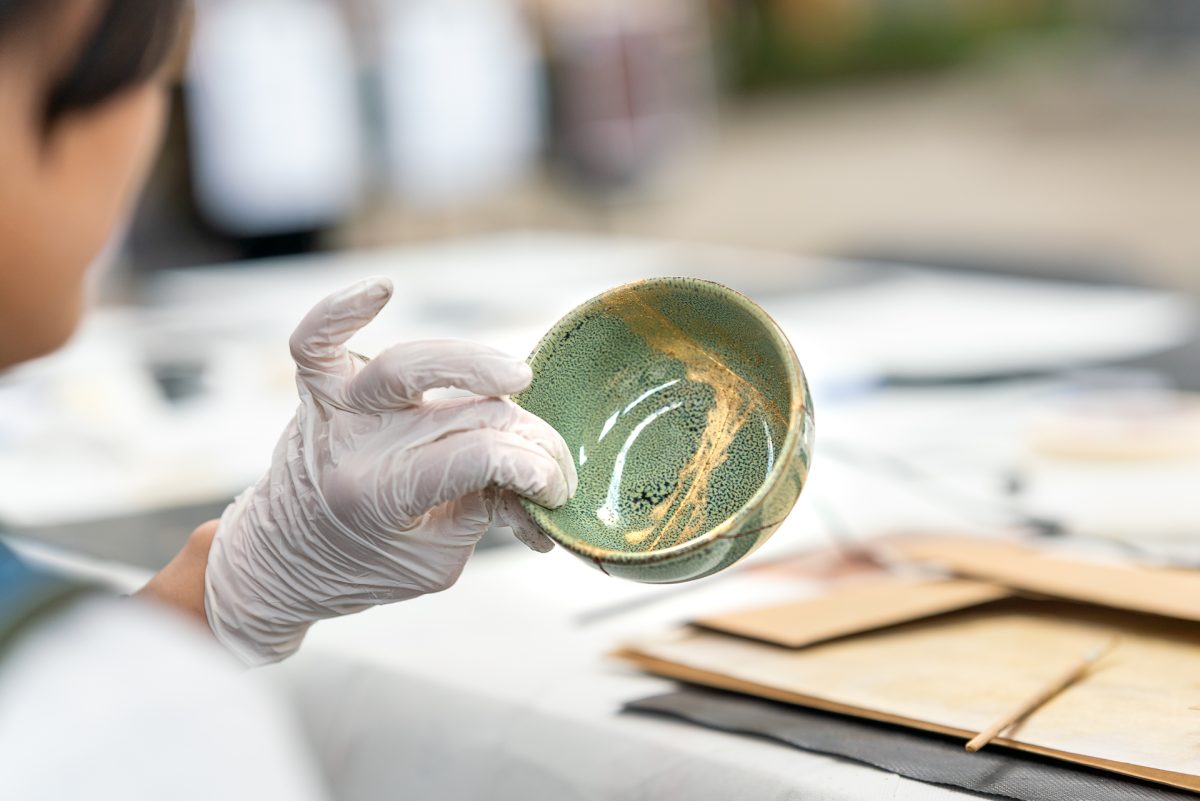
In this workshop, you will become acquainted with traditional Japanese restoration techniques, the history of Kintsugi, and its most essential material: Urushi, a Japanese lacquer. You will learn how to repair broken bowls and decorate them with gold, while rediscovering the beauty of imperfection.
Each participant receives a Kintsugi bowl, and during the three-hour workshop you will follow the process step by step: gluing, cleaning, filling, painting, and finally dusting with gold powder to complete your unique creation. At the end of the workshop, participants take their own Kintsugi ceramics home in a specially designed box that allows the lacquer to dry.
Kintsugi is a traditional Japanese restoration technique that breathes new life into broken ceramics. By using Urushi, the natural sap of the Urushi tree, and decorating the repaired cracks with gold, silver, or vermilion, each piece becomes a beautiful work of art.
Kintsugi is more than a craft; it is a philosophy rooted in acceptance and resilience. By highlighting scars instead of hiding them, this centuries-old method teaches us to embrace flaws and imperfections.
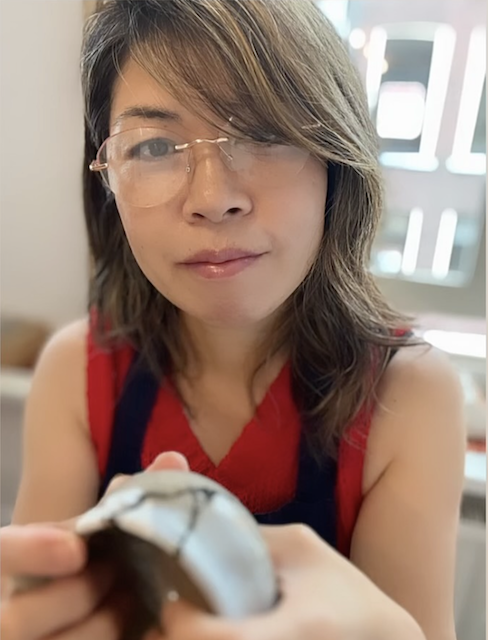
Yuki Tessler gives workshops and courses in Kintsugi in the Netherlands, France, Denmark, and Belgium. Originally from Saitama, Japan, her journey began as a lighting designer in Tokyo, where she worked for ten years. Her deep fascination with traditional Japanese art and culture has always shaped her work. Theatre technique gave her practical insights into Japanese craftsmanship and its long-standing tradition. During her studies in philosophy, specialising in Buddhism, she explored the concepts of wabi-sabi and Zen that underpin the Japanese cultural mindset. The Kintsugi and Urushi art that are part of this allow her to embrace imperfection. Sharing the Kintsugi philosophy through workshops has become a way to foster cultural exchange and celebrate Japanese artistry.

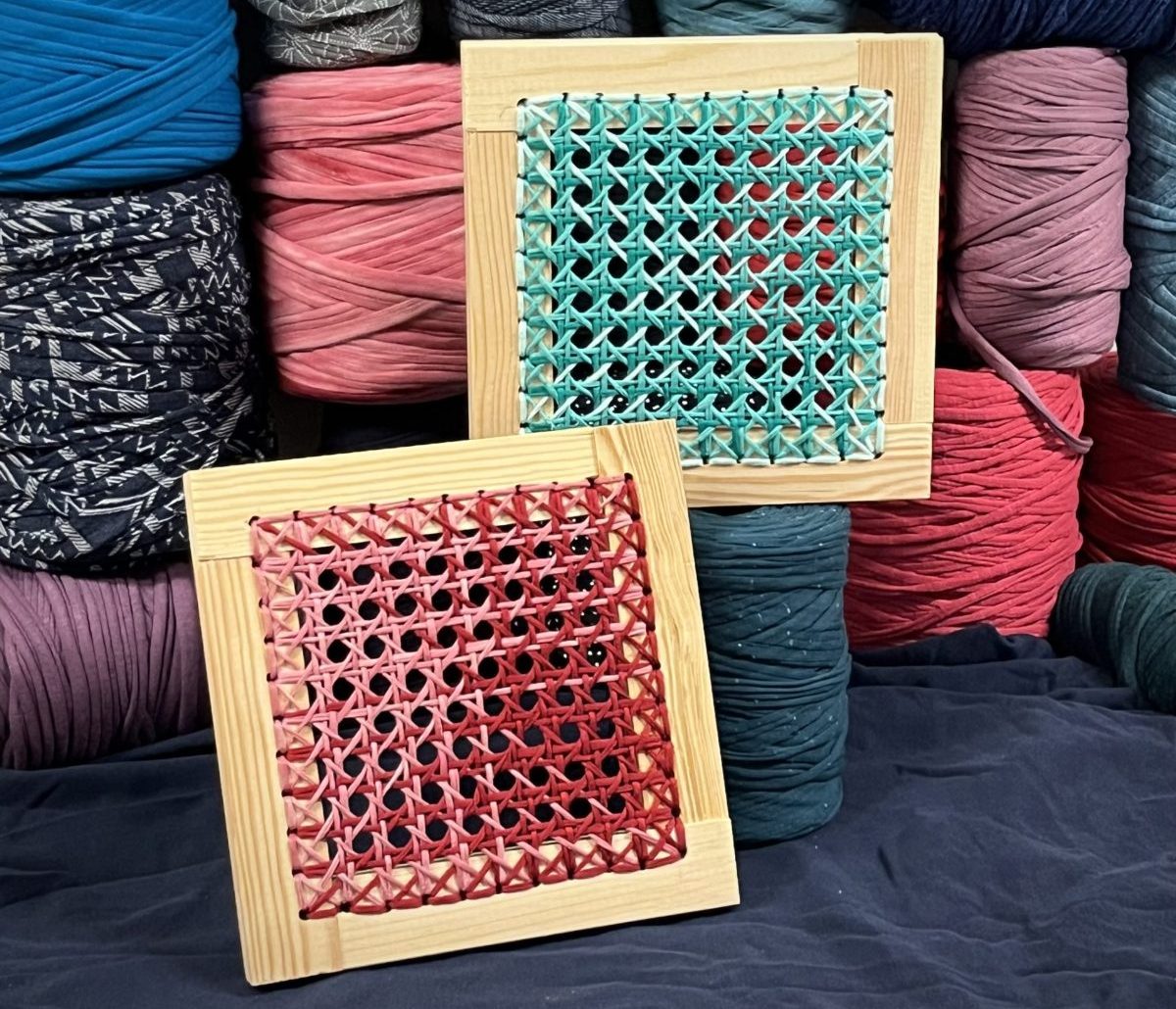
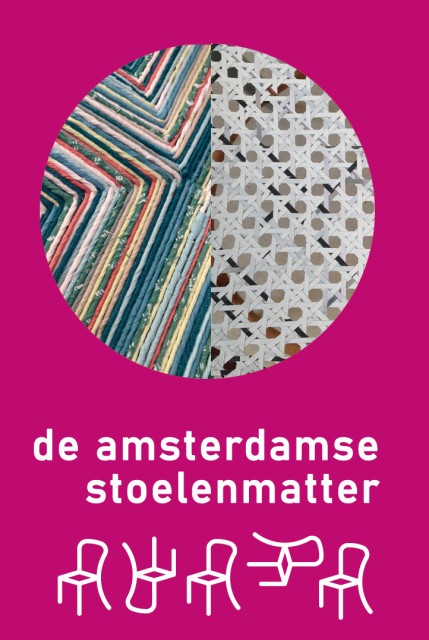
Would you like to get a taste of the craft of chair caning? You can! Since it’s not possible to cane an entire chair in two hours, during this workshop you will create a small frame in colours of your choice. You will work with a blunt needle and thread on a wooden frame. You can choose from a wide palette of colours to design your own woven frame. Several examples of possible patterns will be available, but you are of course also free to create your own design.
You will go home with a handmade piece of art that you can hang on the wall or display anywhere you like.
Chair caning is handcraft, and it takes a lot of time, even for a traditional chair caner. What makes the caning technique so special is that a single thread, or a strip of rattan in traditional caning, is not strong on its own. The strength of the seat emerges through the weaving of the pattern during the caning process. That remains remarkable every single time a new chair is woven.
Caning, rush seating, and weaving are practices that Francine Becker approaches in her own distinctive way as de amsterdamse stoelenmatter. She gives chairs new seats using only recycled materials such as discarded T-shirts and jersey fitted sheets, old festival banners, and second-hand Zpagetti yarn from Hooked, made from leftover materials from the fashion and textile industry. This results in colourful chair seats with a wide variety of patterns. She also rescues chairs from the street. Chairs with rattan or rush seats are often discarded because re-caning or re-rushing can be expensive. Francine gives these chairs a new life by caning and weaving them in a style that suits the interior of her clients.
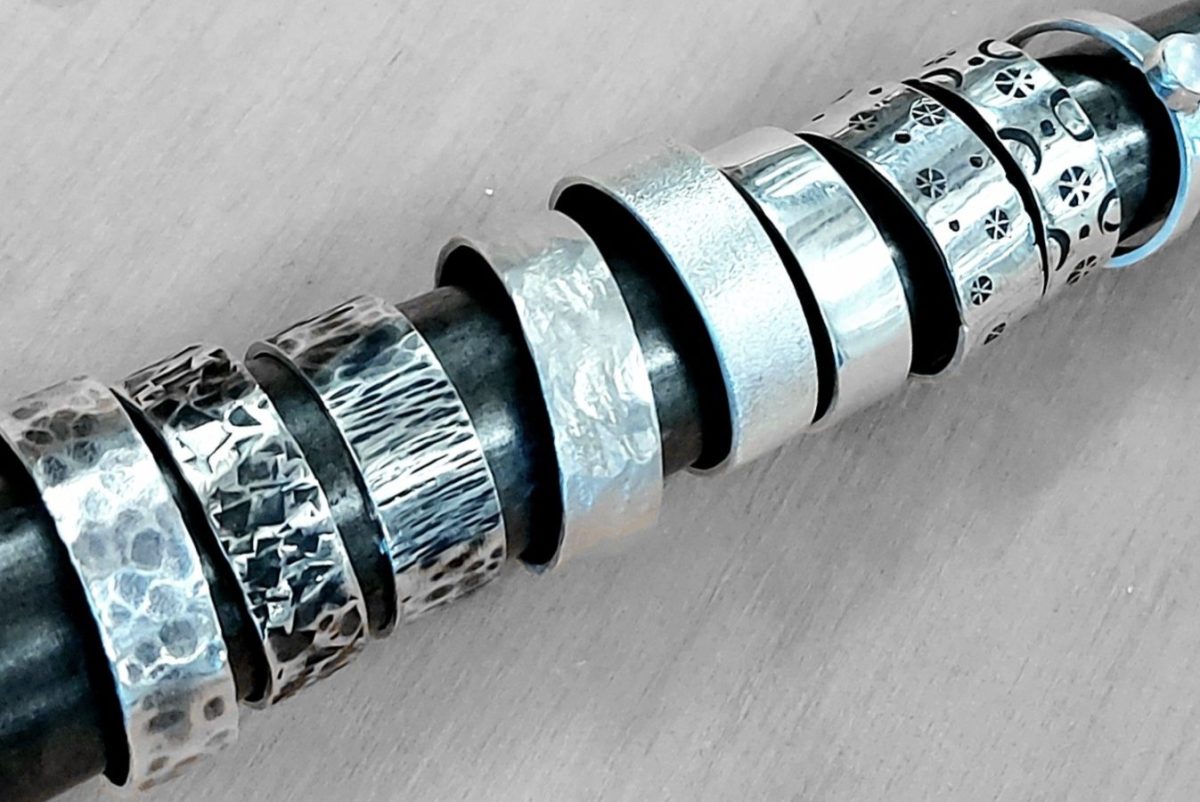
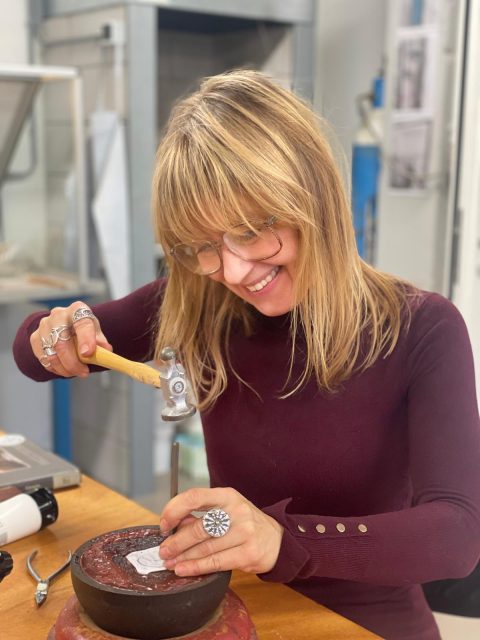
During this workshop, you will create a real silver ring with a finish of your choice. You will get to know all the steps from sheet to ring: measuring, drawing, sawing, filing, sanding, bending, soldering, and finishing. You shape the material according to your own insight: adding a hammered texture or a pattern using different stamping tools. Various examples will be available for inspiration. You will go home with your own handmade ring.
Sacha Ofman has been a goldsmith since 1999. She trained at the Vocational School for Goldsmiths in Amsterdam. She designs and creates unique jewellery in her own distinctive style in an entirely artisanal way, ranging from organic forms to wearable art pieces. Old buttons are transformed into jewellery, as if they were gemstones. Seven years ago, she began teaching at the art center Fluxus in Zaandam, where playful learning and enjoyment of the process are central.

Duo workshop for 1 adult with 1 child (1 ticket is valid for 1 duo)
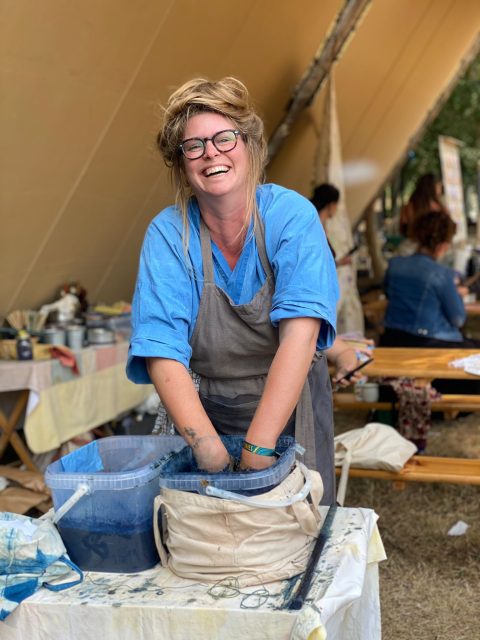
In this duo workshop for parent and child, you will get acquainted with the Japanese Shibori technique. You will learn to experiment with different natural dyes and create shapes and patterns by folding, clamping, and tying fabric.
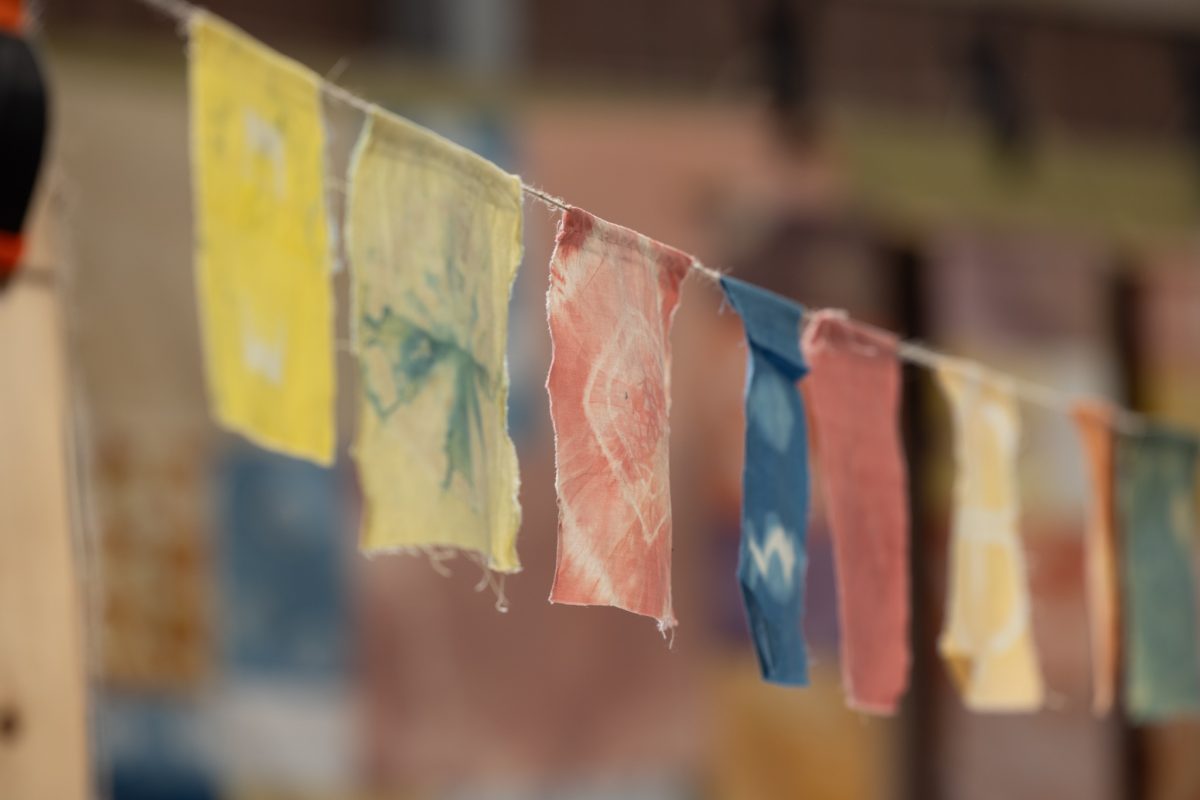
During this dye workshop, you will work with natural dyes to create a unique party garland. You will experiment with plant-based colors such as indigo, madder, onion skins, turmeric, reseda, and logwood. You will learn how the natural dyeing process works, how to create patterns using the Shibori technique, and how to mix colors by dyeing fabric layer by layer.
Together, you will make 20 flags, enough for a beautiful, personal garland that you can take home and that will last a lifetime.
Marte Haverkamp is a visual artist who gives a contemporary twist to the traditional craft of natural dyeing. She works with dyes from plants, flowers, and kitchen waste to color textiles in a sustainable way. Each color is an interplay between material, time, and attention. It is a process that requires patience, experimentation, and connection with nature. In her workshops, Marte shows how this age-old technique remains accessible and relevant in today’s world.

Design from waste! Learn how to make your own belt from a discarded fire hose. By carefully looking at a material, you can discover hidden beauty. Using this fresh perspective, you will start creating. First, you choose your hose from various shades of red. Working in pairs, you cut the material into a strip using belt cutters. Next, you transfer the patterns and use a spindle to make holes and attach the buckle. Finally, you adjust it to your size.
You will go home with your own belt.
Ilse Evers of Eversom has spent many years creating theater sets. This makes her look at what is possible rather than what is intended. With a deep love for craftsmanship, she combines different materials and tools to ultimately create entirely new forms. This exploratory mindset has led to the diverse collection of Eversom. The studio transforms discarded fire hoses into powerful and sustainable design pieces, from exclusive bags to monumental rugs, from unique gifts to striking room dividers.
To process the material, techniques and tools from leatherwork, textile work, and woodworking have been combined and further developed. She also uses traditional techniques such as chair caning and weaving in a contemporary way. The patterns for her bags enhance the properties of the hoses and are precisely matched to the specific size of each fire hose. It is precisely this material exploration that makes working with circular materials so fascinating for Ilse Evers.

Ilse Evers, foto: Evy Hachman


Learn to turn a wooden bowl on the lathe with a maximum diameter of 20 cm. In this workshop, you will receive information about various techniques and design approaches. You will go home with your own wooden bowl.
Mark brings two workstations, so two participants can follow this workshop at the same time. Last year, this workshop sold out within 10 minutes, so be quick if you want to get acquainted with the craft of woodturning.
Woodturning on a lathe is an ancient technique. The first lathes were powered by a bow (the pole lathe) or later by foot power (treadle lathe). After that came motor-driven lathes; the machines became larger and heavier and no longer fit into small spaces. It was only after the Second World War that electrically driven lathes became more common, and smaller versions also appeared. Today, interest in woodturning is increasing again.
In the Netherlands (RADIUS), Belgium (Flemish Guild of Woodturners), and other nearby countries, associations have been founded with the aim of promoting woodturning as a craft.
Mark Steltenpool is a versatile Dutch woodturner, furniture maker, and restorer. His passion for woodworking started as a hobby and grew into a professional craft. He trained in furniture making and furniture restoration at the Hout- en Meubileringscollege in Amsterdam.
The Dutch Woodturning Association RADIUS consists of 16 active regional branches. The association publishes a full-colour quarterly magazine called AktieRadius and organizes an annual woodturning day at a central location in the Netherlands. This day features demonstrations, lectures, information, and the sale of woodturning equipment from various suppliers.
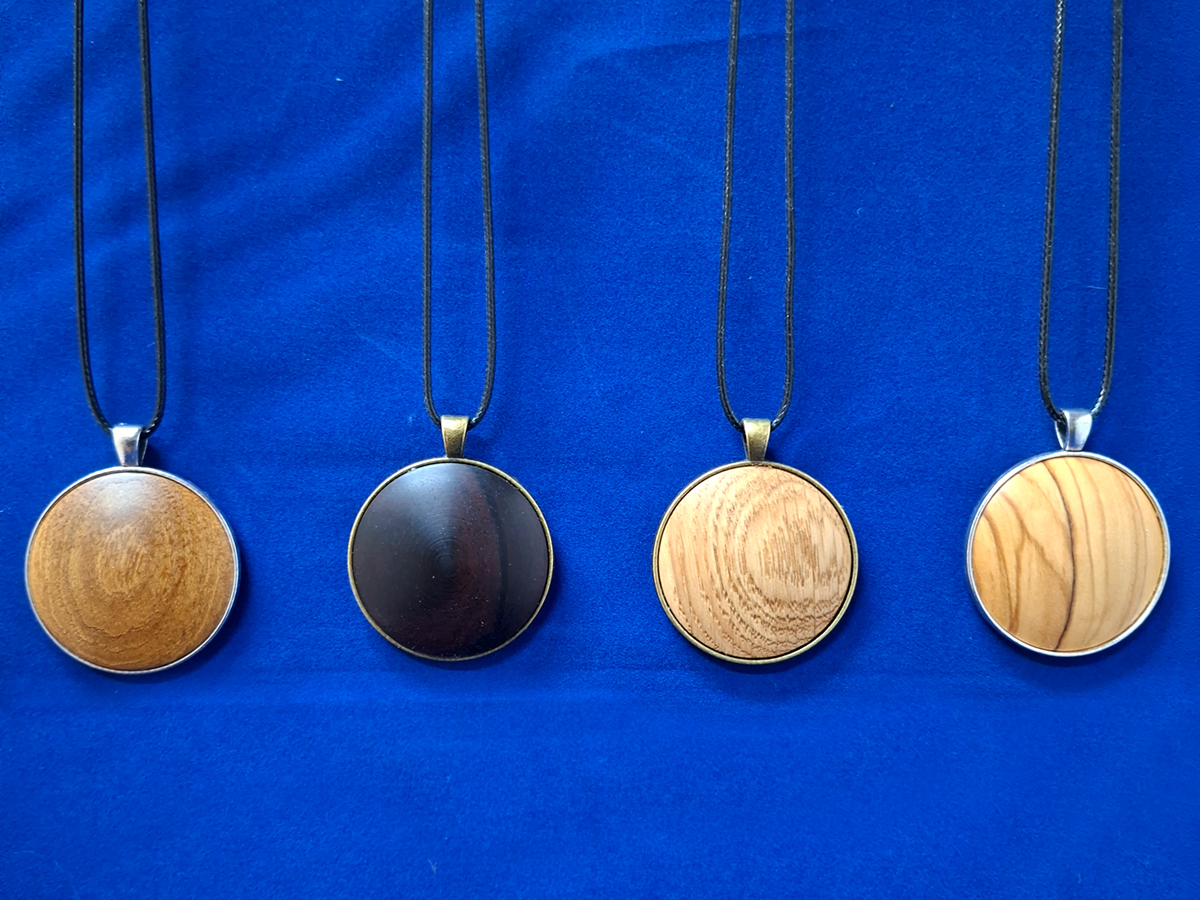
In this one-on-one workshop, you will learn how to use wood turning techniques to create a flat, round shape yourself. There are different types of wood to choose from.
You will go home with a brass pendant and a cord, as shown in the photo, and you can wear the necklace immediately.
Wood turning on a lathe is an ancient technique. The first lathes were powered by a bow (the pole lathe) or later by foot power (treadle lathe). After that came lathes driven by a motor; the machines became larger and heavier and no longer fit into small spaces. It was only after the Second World War that electrically powered lathes became more common, and smaller versions also appeared. Nowadays, interest in wood turning is increasing again.
In the Netherlands (RADIUS), Belgium (Flemish Guild of Woodturners), and other nearby countries, associations have been founded with the aim of promoting woodturning as a craft.
Gerald Ligthart of the Dutch Woodturning Association RADIUS is a Dutch woodturner who has gained recognition through his demonstrations of turning so-called “Chinese balls”—complex wooden spheres considered a technical masterpiece within woodturning.
RADIUS consists of 16 active regional branches. The association publishes a full-colour quarterly magazine called AktieRadius and organizes an annual woodturning day at a central location in the Netherlands. This day features demonstrations, lectures, information sessions, and the sale of woodturning equipment by various suppliers.
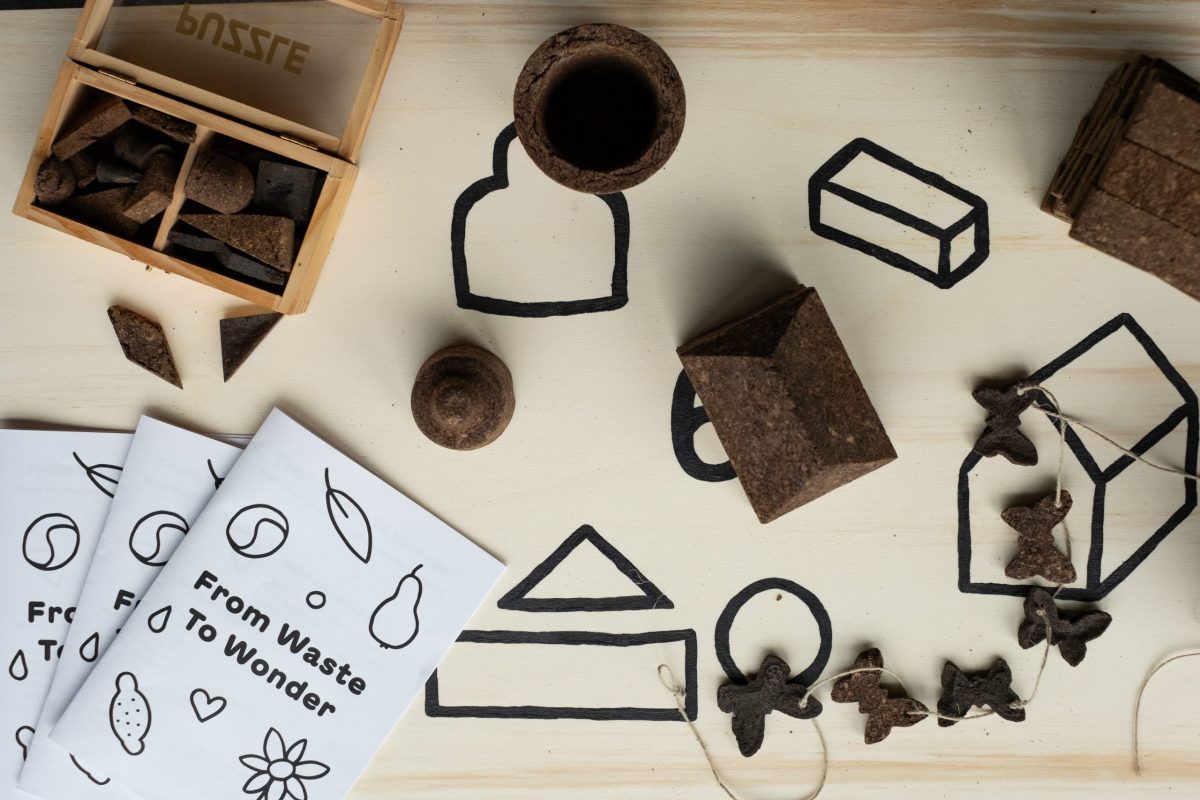
In this interactive children’s workshop, you transform bio-waste such as coffee grounds and casein into biodegradable “ground treasures.” You will get hands-on experience making and shaping your own flower seed bombs, using cookie cutters and a hydraulic press.
The creations are then dried in a drying oven and can be taken home at the end of the day to plant in your garden. If you don’t have a garden, you can plant them somewhere outside or give them away as a small gift.
Through a creative, hands-on process, you will learn about circularity, material use, and the impact of waste. The workshop combines sustainability with making and experimenting, and encourages environmental awareness, creativity, and problem-solving skills.
Please note: your work needs to dry in the drying oven and can be collected at the end of the day. It is helpful to bring your own container to transport your “ground treasure.”
From Waste to Wonder offers various interactive workshops in which children learn in a playful and practical way to see waste and sustainability differently. Guided through a structured process, they actively work on making recipes, shaping toys, and revaluing bio-waste as a valuable raw material. In doing so, they discover the life cycle of materials and learn to understand the impact of waste. Instead of passive learning, the focus is on doing, making, and experimenting. This stimulates creativity, problem-solving skills, and a sustainable mindset. Children become makers and innovators, proud of their creations and more connected to their environment.
Jamie van Duuren is a product designer with a passion for sustainability and social impact. She specializes in biodesign and alternative materials and explores environmentally friendly solutions through hands-on experiments. Her goal is to inspire the next generation through creativity and environmental awareness.
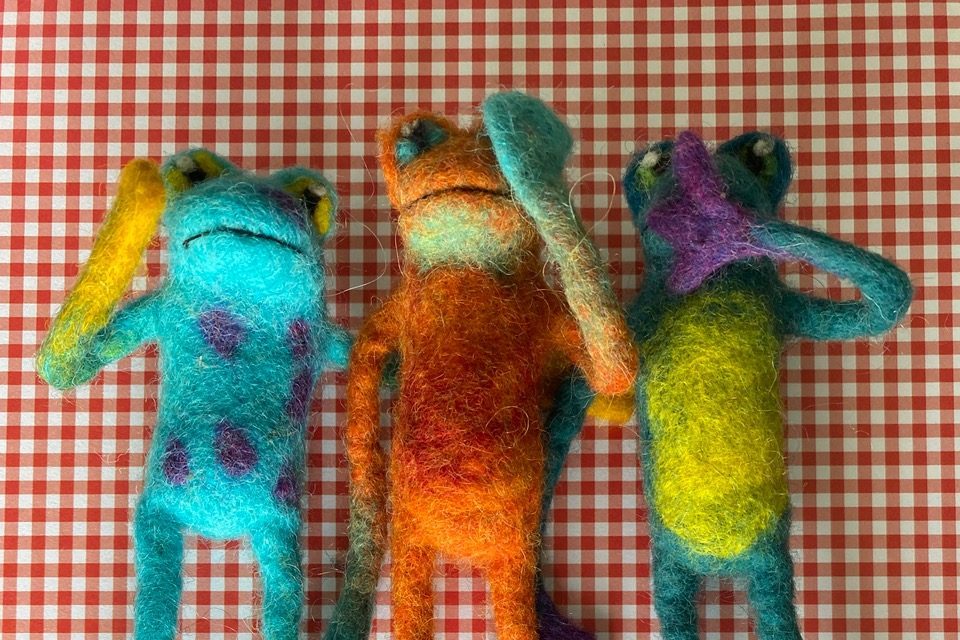
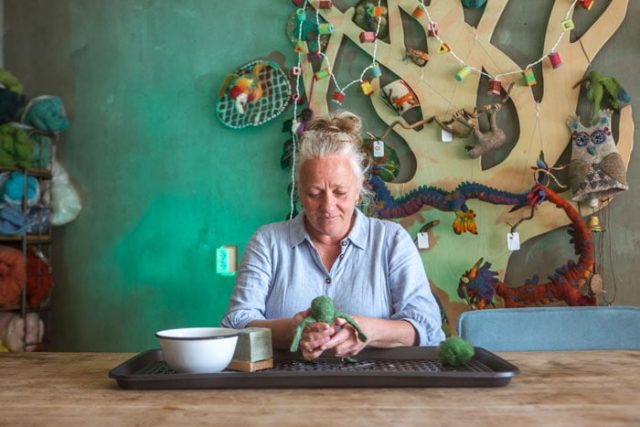
Felt-making is an ancient technique that has taken on new forms over the years. In this workshop, you will learn the first steps of felting wool using the build-up technique. You will work with the wet-felting technique, which involves wool, water, and soap. Once you understand this technique, you can create any animal. After making the basic shape, body, and head, the arms and legs are connected. Then the real work begins: felting the wool. When the frog is sufficiently felted, the eyes are added using a felting needle. During this workshop, you will make one frog.
Jolanda Smit discovered felting 20 years ago. From that moment on, it became the material she only wanted to work with. The possibilities are endless, and all you need is wool, water, and soap to create the most beautiful forms. From De Vrolijke Kikker, she gives workshops and sells her own work. The animals she creates are usually made from wool from Tyrolean mountain sheep, sometimes from merino wool. They each have their own character, but are all cheerful.
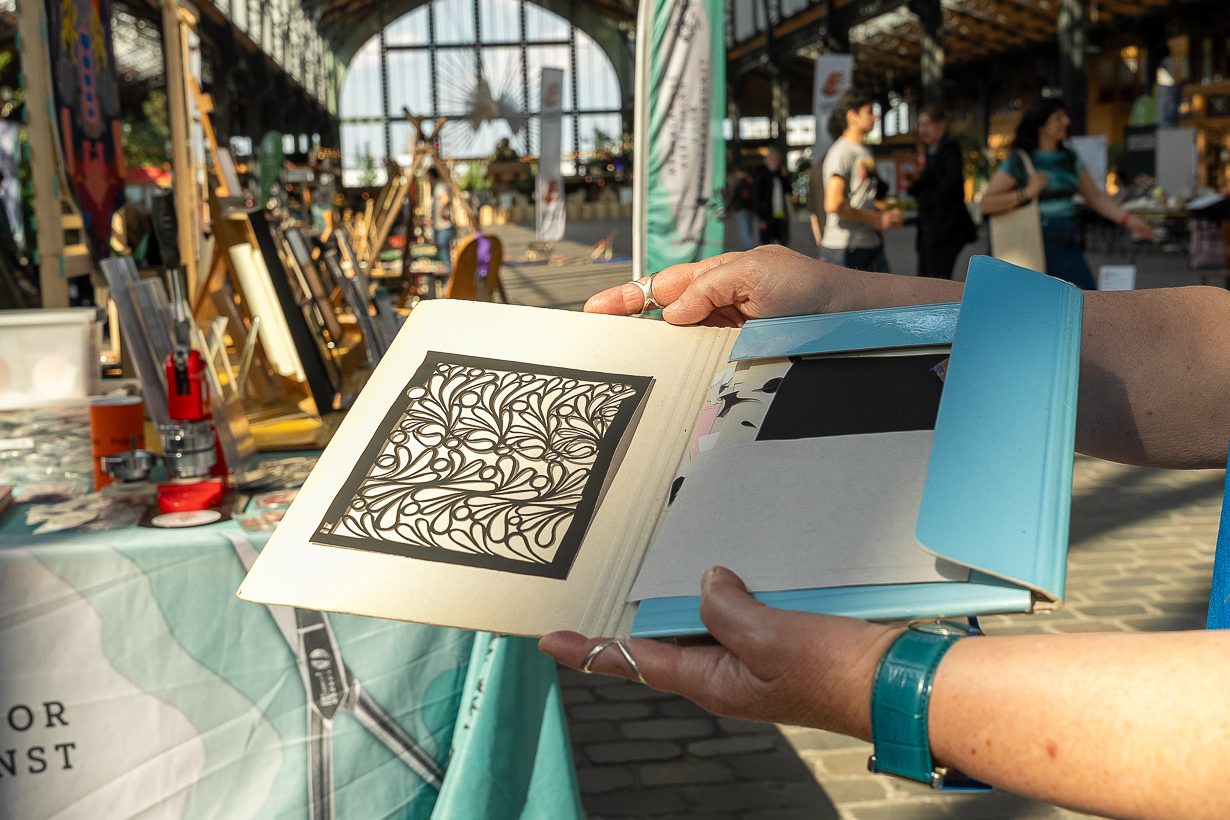
Everyone has put a pair of scissors into a sheet of paper at some point, but in this workshop you will truly go one step further. After a short introduction to the art of paper cutting, you will learn the basic techniques of paper cutting art from an experienced paper cutter. You will then apply these techniques to create your own cut-out design from silhouette paper. You will also learn how to carefully mount it afterwards.
You will go home with a framed artwork. You might want to reserve a spot on your wall at home in advance!
For centuries, thousands of people around the world have enjoyed paper cutting. It is fun and relaxing, and both young and old create beautiful artworks with it. Paper cutting is essentially drawing with scissors. With your scissors, you free your own design, decorations, and letters from the paper. And with so many cutters, there are countless variations.
De Nederlandse Vereniging voor Papierknipkunst is the meeting place for hobby cutters and professional artists. The workshop leaders are members of this association and are specially trained to teach interested participants the tricks of the trade. Most of them regularly exhibit their work. Paper cutting art has been included in the Inventory of Intangible Cultural Heritage in the Netherlands since 2013.

Festival address:
NDSM Loods
NDSM-Plein 85
1033 WC Amsterdam
Postal address:
Stichting Ambacht in Beeld
Kalf 158
1509AH Zaandam
The Netherlands