Did you know that weaving is an ancient art form? Indigenous peoples, who live in close connection with nature, have learned to create beautiful and durable objects from natural fibers. Think of bags, baskets, and cooking utensils, all woven by hand!
A wonderful example is the cassava press, or matapi, of the Lokono people of Suriname. It is woven from warimbo, a strong reed, and is shaped like a snake with distinctive patterns. Indigenous weavers often decorate their work with geometric designs inspired by animals from their surroundings, such as the anaconda, jaguar, or swallow.
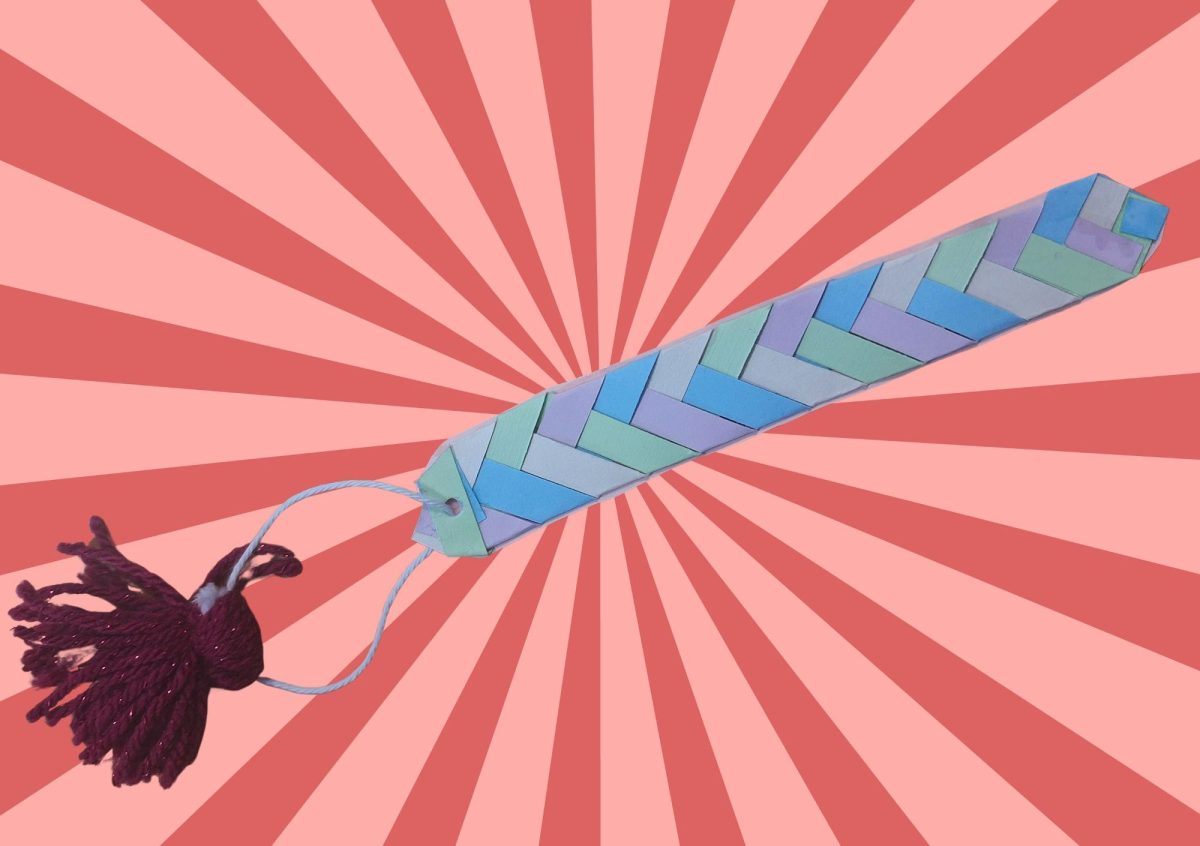
During this workshop, you will learn the basics of this craft! Step by step, you will discover how to weave paper strips together, and by the end you will have made your own bookmark, perfect for your favorite book or your planner.
Weaving is entirely handmade, and that is something special. Working with your hands brings a sense of calm, and when you have made something yourself, you can take extra pride in it!
Carla, Martha Sabajo, and Marilyn van Rijn, all born in Suriname, are proud cultural bearers of the Lokono community. As members of the Wasjikwa Foundation, they dedicate their time to preserving and passing on indigenous cultural heritage. Their motivation comes from a deep connection to their roots. They believe that traditional craft techniques can never be separated from the stories, values, and spirituality woven into them. For Carla, Martha, and Marilyn, passing on Indigenous skills goes far beyond teaching techniques; it is about sharing an entire way of life.
During their workshops, they create a warm sense of community where participants not only learn practical skills but also hear personal stories about the importance of community.
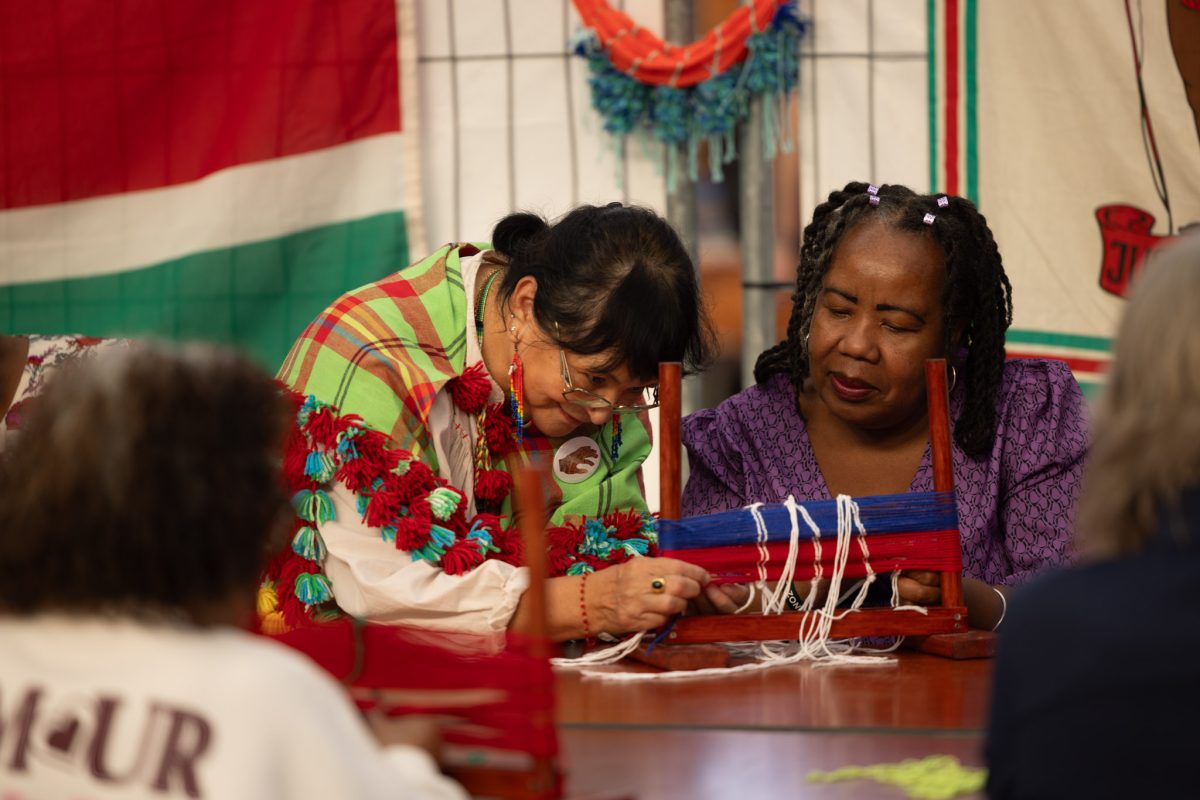
In the workshop “The Lost Art of Surinamese Hammocks”, you will learn how to make your own mini hammock on a weaving frame under the guidance of Carla & Martha Sabajo.
Step into the nearly forgotten world of traditional hammock making: an ancient Lokono craft from Suriname. This special technique, carried by only a few remaining Indigenous masters, is on the verge of disappearing. Experience how this ingenious creation comes to life, step by step and knot by knot. This is more than a creative experience, it is your chance to help preserve a fading tradition.
You will go home with your own mini hammock.
There are still very few indigenous knowledge holders who master and can pass on the traditional craft of hammock making. This technique originates from Suriname and is practiced by the Lokono, one of the indigenous peoples of this region. The hammock is made from palm fibre or cotton. The process includes preparing the raw material from plant fibre or cotton, cleaning and de-seeding, forming and spinning yarn, weaving, and knotting. An original hammock is an efficient invention designed for mobility, highly durable and environmentally friendly. It dates back to the time when Indigenous peoples lived nomadically, moving from place to place with minimal possessions.
Carla, Martha Sabajo and Marilyn van Rijn, born in Suriname, are proud cultural carriers of the Lokono community. As members of Stichting Wasjikwa, they dedicate their time to preserving and passing on Indigenous cultural heritage. Their motivation comes from a deep connection to their roots. They believe that craft techniques can never be separated from the stories, values, and spirituality that are woven into them. For Carla, Martha, and Marilyn, passing on Indigenous skills goes far beyond teaching techniques; it is about sharing an entire way of life.
During their workshops, they create a warm community atmosphere where participants not only learn skills, but also hear personal stories about the importance of community.

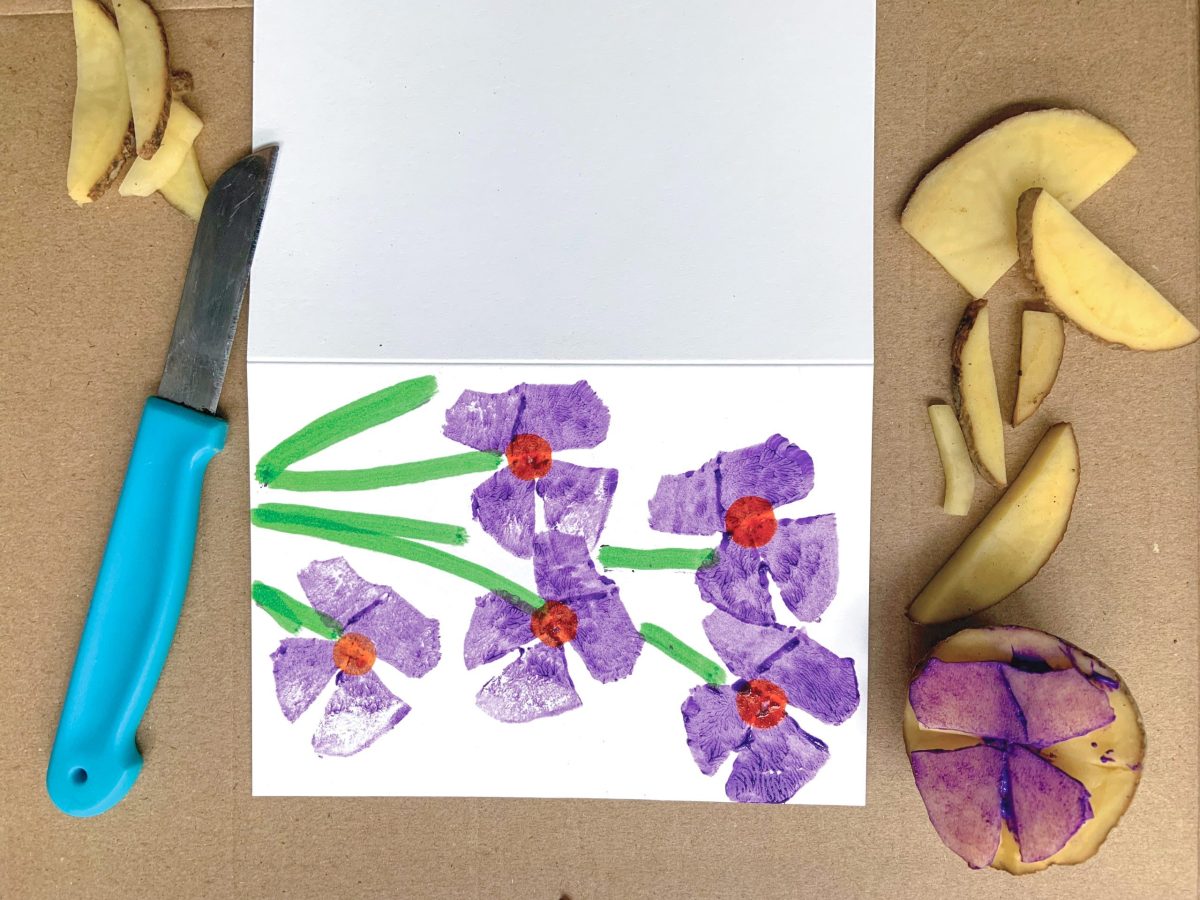
Discover how to create something special from an everyday material. In this workshop, you will design and print a series of unique cards using hand-carved potato stamps. It is a simple, creative technique that shows you don’t need much to achieve a beautiful result. You will learn how to carve shapes into potatoes, how to use them as stamps, and how to create your own designs using colour, pattern, and composition. We work with potatoes, acrylic paint, and paper, with a strong focus on creative reuse and sustainable materials.
This workshop is suitable for all ages and levels. At the end, you will go home with a set of hand-printed cards and inspiration to continue working creatively and sustainably with simple materials at home.
Lisa Dröes is an illustrator and typographer. She studied Illustration at HKU and then specialised in typography at the University of Reading in the United Kingdom. Alongside her work as an illustrator and graphic designer, she focuses on hand-printing small editions of cards. From her studio in the NDSM-loods in Amsterdam, she works on projects where typography, print techniques, and visual research come together. Using a 140-year-old printing press, she brings contemporary designs to life in an artisanal way. Her practice is characterised by a constant curiosity about materials. She experiments with what can be printed and how everyday or recycled materials can be used in the making process.


In this workshop, you will create your own etching just like Rembrandt, using the drypoint technique. You scratch a drawing into a plastic plate with an etching needle, rub ink into the grooves, and then print the plate onto a sheet of paper using a traditional printing press. With a few guiding instructions, you will make a beautiful and surprising print to take home.
At Museum Rembrandthuis, you come closer to Rembrandt. In the intimate, domestic setting of the museum on Jodenbreestraat in Amsterdam, you get to know the person behind the art and discover Rembrandt’s craftsmanship.
Inspired by Rembrandt’s approach to art, the museum aims to encourage you to develop your own craftsmanship and creativity. The museum holds over 250 prints of the more than 300 etchings Rembrandt made, and offers demonstrations of his painting and etching techniques. Both in the museum and on location (such as schools, community centers, hotels, and care homes), we provide workshops in the drypoint technique, a simple form of etching that Rembrandt also used.
The museum educators have years of experience giving etching workshops at Museum Rembrandthuis. They know everything about Rembrandt and his etchings, and know how to bring out the artist in everyone.

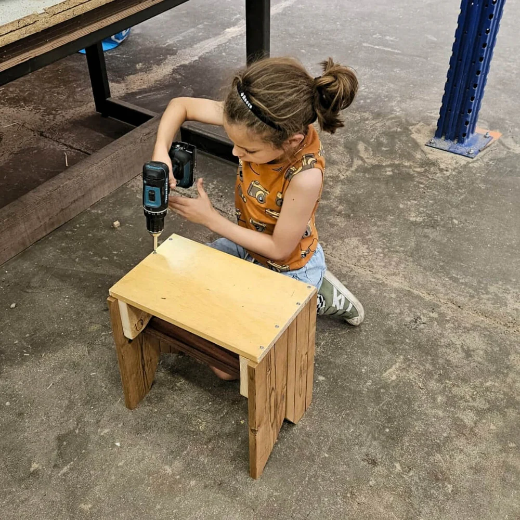
In this workshop, you will work together with your (grand)parent on recycled wood and build a small bench to take home with you. Guided by an experienced woodworker, you will learn in a playful and accessible way how to use basic tools such as a saw, hammer, drill, and screwdriver. No experience is needed: the focus is on enjoyment, making, and discovery.
The workshop is about collaboration, creativity, and experiencing how beautiful and valuable reclaimed materials can be. You will learn the basics of woodworking and how leftover wood gets a second life. At the end of the workshop, you will go home with new skills, inspiration, and a handmade piece of furniture.
Per duo, 1 ticket is required.
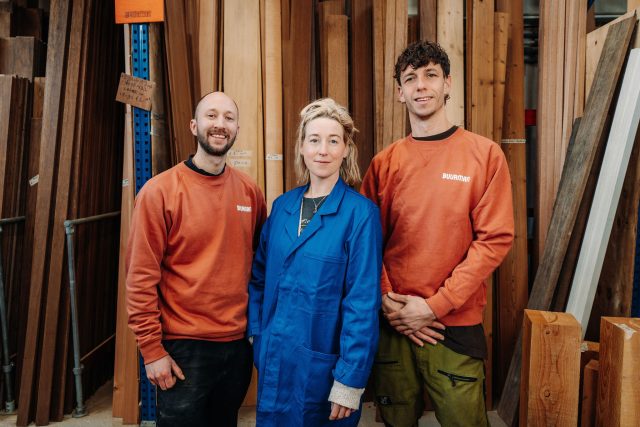
At Buurman Amsterdam, everything revolves around circular making. “In our workshop we give leftover and waste wood a second life and show people how fun and accessible woodworking can be. We combine a circular hardware store with educational workshops and courses, where participants learn to design, build, and repair using reclaimed materials. By locally rescuing materials from the waste stream and working with them, we make reuse tangible and practical. We strongly believe in learning by doing: working with your hands, discovering new skills, and creating something you are proud of together. Step by step, we are building a world where reuse becomes the norm.”
The workshops at Buurman Amsterdam are led by enthusiastic makers and wood lovers with a passion for circular building and knowledge sharing. With great energy, they guide participants step by step through the making process and create a welcoming, safe, and inspiring atmosphere in the workshop. Whether it’s your first time holding a drill or you’ve done DIY before: everyone is welcome. The instructors believe in learning by doing and help participants gain confidence while working. Alongside technical skills, they also share their enthusiasm for reuse, creativity, and sustainable material use. Each workshop is not only about making something, but also about learning to see materials and possibilities differently.
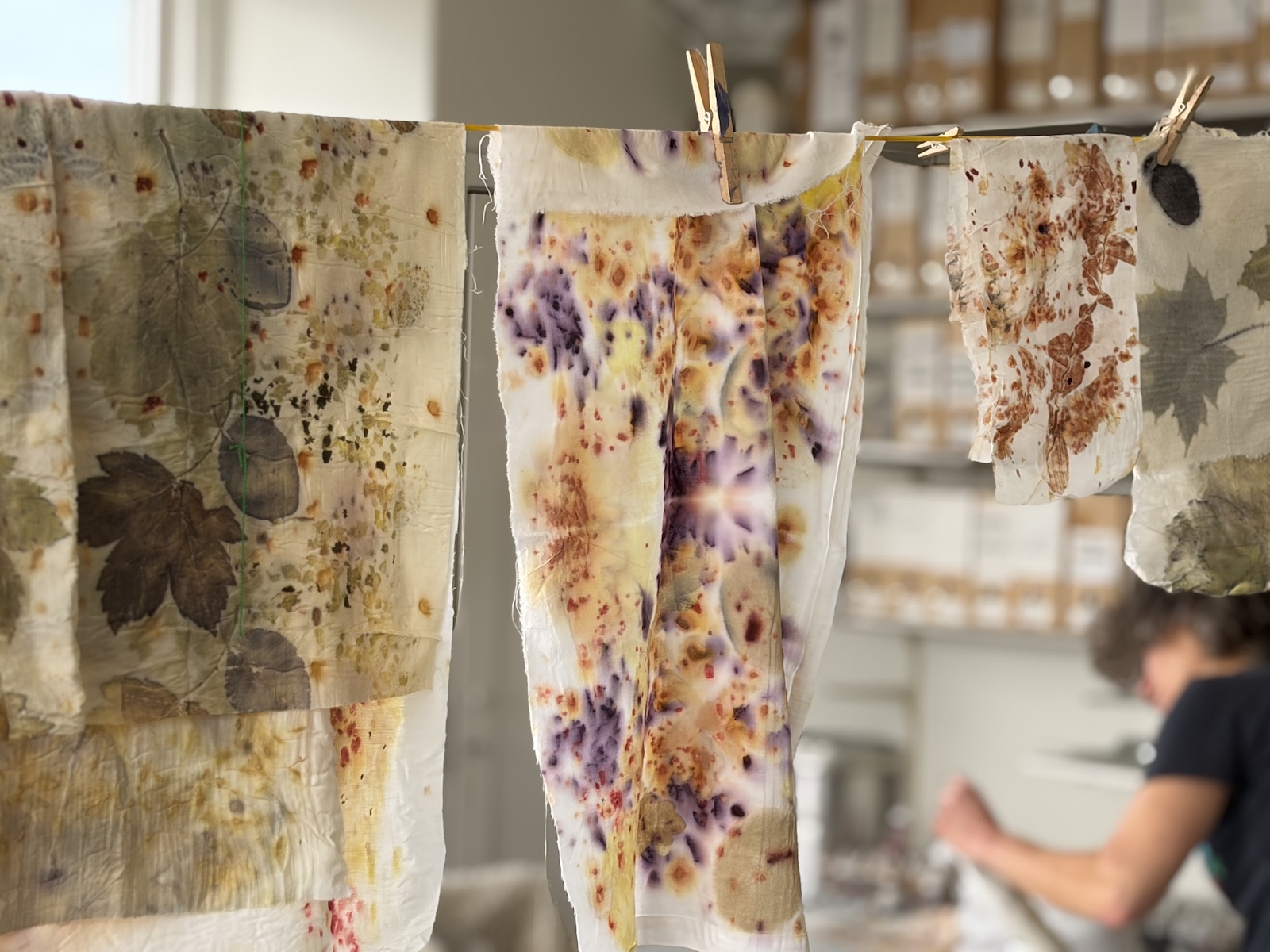
In this workshop, you will print a soft, breezy scarf made of Etamine de Laine with your own pattern of different leaves. The teachers of Textielinstituut Hawar know exactly how to guide you through this process and will teach you about the natural dyes of various leaves and how to achieve a beautifully sharp print.
For the workshop, you don’t need to bring anything yourself; there is an extensive selection of leaves available. However, if you enjoy experimenting, you can also bring your own plant, tree, or flower leaves. The colour they release is a surprise, often making the result even more beautiful.
Leaves can transfer natural colour onto fabric. In eco dyeing – also known as plant printing – a pattern is printed onto fabric using leaves from different plants. Since the books by India Flint, this dyeing technique has become increasingly popular. The art lies in ensuring that the leaf does not only leave a coloured stain, but that even the veins remain visible in the print.
You will go home with your own scarf! Part of the workshop includes the fixing process, which takes about an hour. You don’t need to wait for it, but please note that you won’t be able to take your scarf home immediately after the workshop.
Floor de Bruijn runs the family business Hawar Textielinstituut, which was built by Meinie Wardenier and Harm Harms. National and international teachers share their knowledge and skills in the large, atmospheric studio in Oldeberkoop, focusing on textile crafts and textile art. In addition, there is an extensive shop and an inspiring gallery, making it a creative hub where new and traditional materials and textile techniques are (re)discovered. During the festival, Floor and her team lead the workshops.


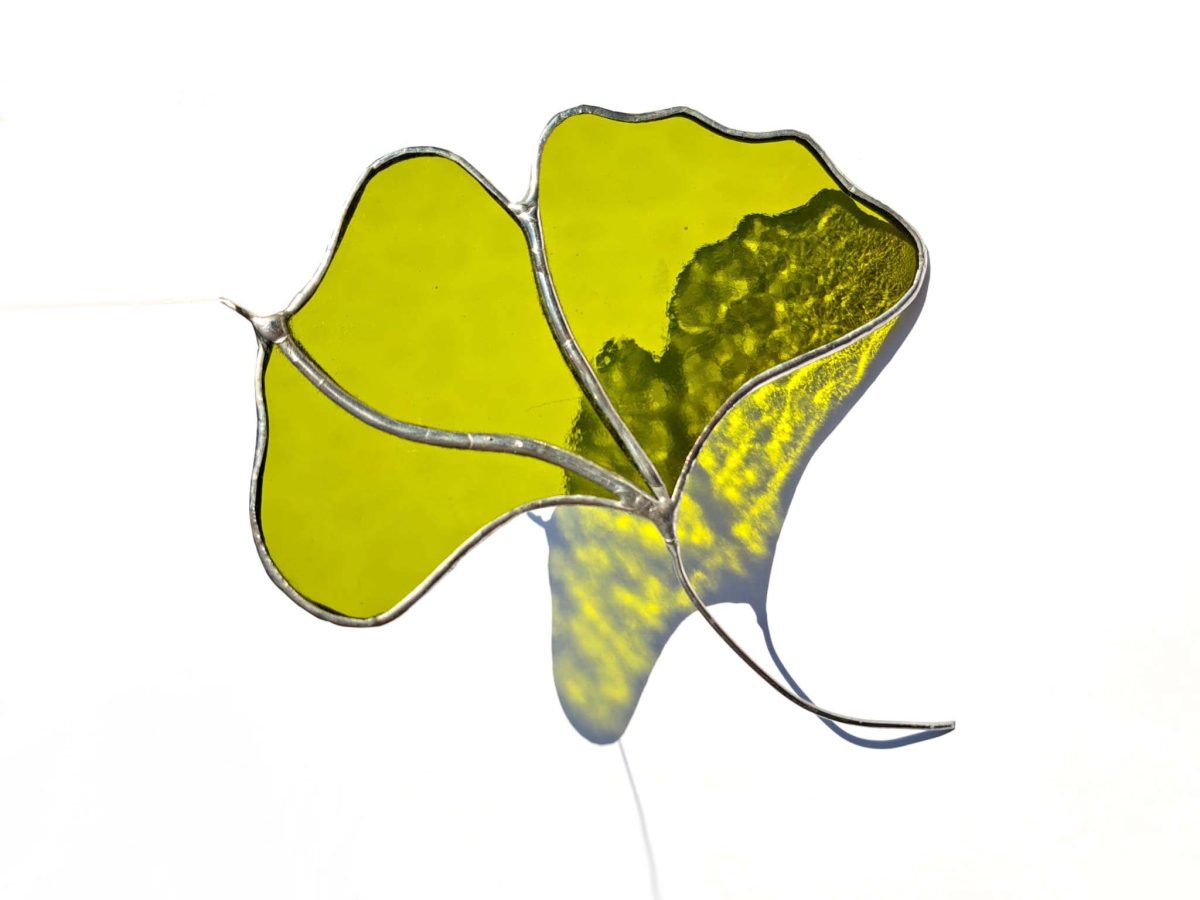
In this workshop, you can choose between two designs: a ginkgo leaf or a graphic garland. You will work with your chosen glass, a glass cutter, glass grinder, copper foil, and of course solder and a soldering iron. No prior experience with glass is needed to take part. You will be guided step by step through the entire making process.
You will go home with a stained glass window hanger.
In the Tiffany technique, custom-cut pieces of glass are ground and then wrapped in copper foil. The stained glass work is then assembled like a puzzle. After this, the copper foil seams are soldered together. Unlike traditional stained glass, this technique allows for more organic and dynamic designs.
Nanouck van Iersel designs, creates, restores, and repairs stained glass. All designs are made by hand using hand tools, allowing for almost endless possibilities in colour, form, structure, and the creation of beautiful line compositions.
Sustainability is a top priority, which is why Nanouck works exclusively with reclaimed glass, except for restoration work.
During her first studies in interior design at the Hout- en Meubilering College, she was introduced to light and its importance for people. After this, she continued her studies at the Willem de Kooning Academy. Through her experience with colour, light, and design, and her desire to combine these in a traditional craft, she discovered stained glass. “It gives atmosphere to a space and evokes a feeling: and honestly, who doesn’t love watching sunlight playing through coloured glass?”
The glass for this workshop is sponsored by Silent Art Glas in Lood groothandel.


Artists Lindsay van Vliet and Daan Wille have joined forces as Team Blazin. Both have specialised in calligraffiti, a fusion of calligraphy and graffiti.
Inspired by the renowned graffiti artist Shoe, they are all-rounders in giving workshops ranging from stencil like Banksy, doodle like Keith Haring, and of course calligraffiti. Together they also regularly create large-scale murals.
In this workshop, you will create your own artwork with your name on it, guided by them.
This workshop was first offered in 2015, in collaboration with the Street Art Museum Amsterdam. It was also presented at Craft in Focus New York in 2017 and 2019, and in 2024 and 2026 Lindsay gave the workshop at Ambacht in Beeld Brussels. Due to its success, it is back again in Amsterdam this year!
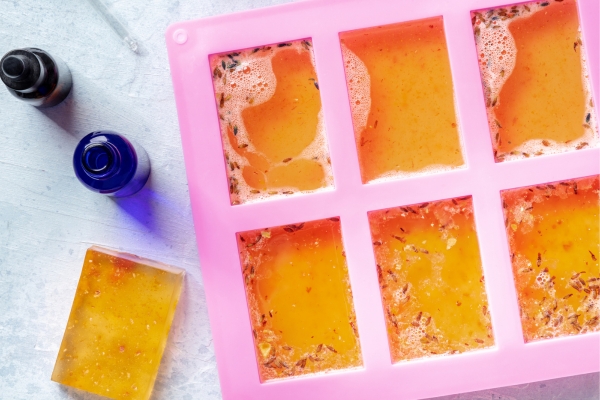
In this hands-on parent-child workshop, you will create two soap bars together using a melt-and-pour technique, fully customised to your own taste with a choice of colours, fragrances, and natural botanicals such as lavender blossoms and rose petals.
You will work with high-quality shea and glycerine soap bases, along with professional soap-making materials and tools that are safe and easy to use.
You will learn the basic principles of soap formulation, including melting, mixing, scenting, colouring, and shaping soaps. The focus is on experimentation, sensory experience, and creative expression.
At the end of the workshop, each duo will go home with two handmade soaps, beautifully packaged, along with the knowledge to continue making soap at home.
Duo workshop; you purchase 1 ticket per duo.
Farah of Sparkling Mosaic is a skincare educator, workshop developer, and entrepreneur with a deep passion for handmade, natural self-care. Her mission is to help people create their own skincare at low cost, using natural ingredients and without unnecessary chemicals; with only 5 to 6 ingredients instead of the 30+ often found in industrial products. What began as an internship in Paris and home experiments grew into a full practice in which she makes skincare simple, sustainable, and accessible to everyone.
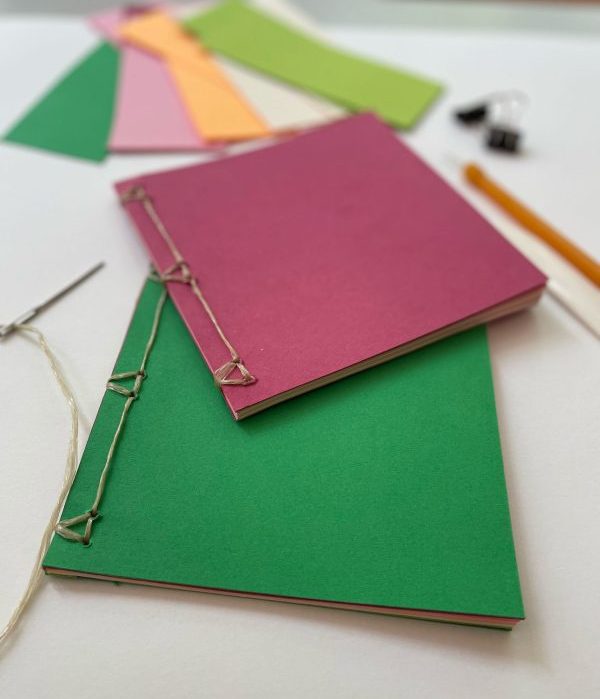
In this workshop for young and old, you will get hands-on experience making and binding a booklet using traditional Japanese techniques. This binding method was used for the famous Amsterdam School art and architecture magazine Wendingen. In it, artists shared their ideas, their inspiration, and their work.
You begin by selecting paper: which colours go well together, and which type of paper will you use for the cover? Then the folding and binding begins. Using a bone folder, needle and thread, and step-by-step instructions, you assemble your own booklet. And if you still have time left, you can draw inspiration from Amsterdam School artists and personalise your booklet.
You will go home with your own handmade booklet.
The artists of the Amsterdam School excelled in craftsmanship. As a reaction to industrialisation over 100 years ago, they returned to fully handmade art objects, often using natural materials. This happened across many disciplines: sculptors were part of the movement, as were ceramics and stained glass artists, woodcarvers, bookbinders, and many graphic artists. The total work of art was important, often meaning that multiple artists from different disciplines collaborated on, for example, a building or interior.
Museum Het Schip is located in a fantastical social housing complex in Amsterdam West, designed by architect Michel de Klerk. This expressionist housing block was built in 1919 for housing corporation Eigen Haard. Because of its distinctive shape, the building became known as “Het Schip” (“The Ship”). It is considered one of the highlights of the Amsterdam School, a movement in architecture and decorative arts that spread throughout the Netherlands and was closely intertwined with the rise of social housing provided by housing corporations.

Festival address:
NDSM Loods
NDSM-Plein 85
1033 WC Amsterdam
Postal address:
Stichting Ambacht in Beeld
Kalf 158
1509AH Zaandam
The Netherlands