During this 1-hour introductory batik workshop, you will create your own batik. Making a traditional batik usually takes several weeks, sometimes even months, so in this workshop the focus is on drawing with wax and painting with a brush. You will use a canting (wax pen) to draw with hot beeswax on cotton, afterwards the dye is applied, a technique known in Java as colet.
Batik originates from Indonesia, particularly the island of Java. It is a traditional technique for decorating fabric with wax and dye, where wax is applied to prevent certain areas from absorbing colour during dyeing. This results in vibrant, intricate designs.
You will go home with your own batik piece and instructions on how to remove the wax.
Sabine Bolkis a Dutch visual artist and batik researcher. Since 2009, she has been deeply involved in the study of Javanese batik. Her research has taken her to various batik-related locations, including the islands of Java, Madura, and Bali, as well as Malaysia, Singapore, and several European countries. From 2019 to December 2021, Sabine was a research associate at the Research Centre for Material Culture in Leiden, focusing on batiks in Dutch collections and archives. Her current research not only highlights the maker but also the wearer of batik. In 2023, she curated an exhibition at the Erasmus Huis in Jakarta (ID) titled “Masa Depan Batik I The Future of Batik”. In October 2025, this exhibition will be shown in the Netherlands.
Practical Information:
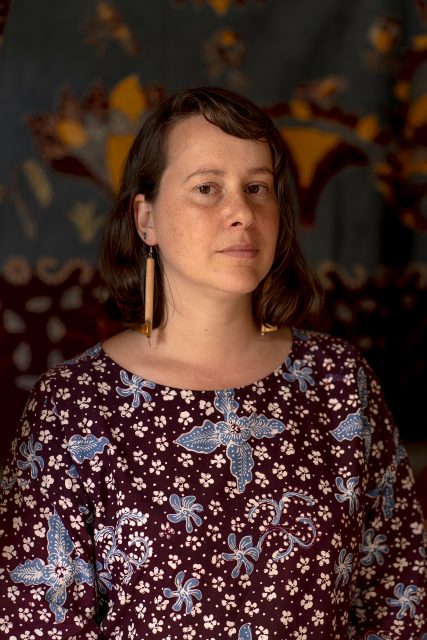
Sabine Bolk. Photo Eliza Bordeaux

In this one-on-one workshop, you will learn woodturning techniques to create a flat, round shape. A variety of wood types will be available for you to choose from.
You will go home with your finished pendant set in brass, complete with a cord just like in the photo – ready to wear right away.
Woodturning on a lathe is an age-old technique. The earliest lathes were powered by a bow (the fiedelbank), and later by foot (the spring pole lathe). Eventually, motor-powered lathes were introduced; these machines became larger and heavier and no longer fit in small spaces. It was not until after the Second World War that electrically powered lathes became more common, including smaller models. Nowadays, there is a renewed interest in woodturning.
In the Netherlands (Radius), Belgium (Vlaams Gilde van Houtdraaiers), and other surrounding countries, associations have been founded with the goal of promoting woodturning as a traditional craft.
Gerald Ligthart, of the Dutch Association of Woodturners RADIUS, is a Dutch woodturner who has gained recognition for his demonstrations of turning so-called “Chinese balls” complex wooden spheres considered a technical tour de force in the world of woodturning.
RADIUS consists of sixteen active regional chapters. The association publishes a full-colour quarterly magazine called AktieRadius and organizes an annual Woodturning Day at a central location in the Netherlands. This event features demonstrations, lectures, informational sessions, and the sale of woodturning tools and supplies by various vendors.
Practical Information:

Learn how to turn a wooden bowl on the lathe, with a maximum diameter of 20 cm. In this workshop, you will receive information about techniques and design.
You will go home with your own handmade wooden bowl.
This year, Mark is bringing two workbenches, so that two participants can take the workshop at the same time. Last year, this workshop sold out within 10 minutes, so do not wait if you want to get a taste of the traditional craft of woodturning!
Woodturning on a lathe is an age-old technique. The earliest lathes were powered by a bow (the fiedelbank), and later by foot (the spring pole lathe). Eventually, motor-powered lathes were introduced; these machines became larger and heavier and no longer fit in small spaces. It was not until after the Second World War that electrically powered lathes became more common, including smaller models. Nowadays, there is a renewed interest in woodturning.
In the Netherlands (Radius), Belgium (Vlaams Gilde van Houtdraaiers), and other surrounding countries, associations have been founded with the goal of promoting woodturning as a traditional craft.
Mark Steltenpool is a versatile Dutch woodturner, furniture maker, and restorer. His passion for woodworking began as a hobby and developed into a professional craft. He studied furniture making and restoration at the Hout- en Meubileringscollege in Amsterdam.
The Dutch Association of Woodturners RADIUS consists of sixteen active regional chapters. The association publishes a full-colour quarterly magazine called AktieRadius and organizes an annual Woodturning Day at a central location in the Netherlands. This event features demonstrations, lectures, informational sessions, and the sale of woodturning supplies by various vendors.
Practical Information:

In this fun and cozy workshop, you will work with beautifully coloured wool, water, and soap. You get to choose the colour of your fish, then let your creativity run free to make, for example, a rainbow fish! Each step is explained calmly so everyone can follow along easily. At the end of the workshop, you will proudly take home your own unique 3D fantasy fish!
Felting is a traditional craft technique in which wool fibres are bonded together to form a sturdy fabric without weaving or knitting. It is one of the oldest textile techniques in the world. There are two main types of felting: Wet felting uses wool fibres, water, soap, and friction. The combination of heat and agitation causes the tiny barbs on the wool fibres to interlock, forming a dense fabric. This technique is commonly used to make hats, bags, slippers, and art pieces.
Dry felting (also known as needle felting) uses special barbed felting needles. By repeatedly poking the needle into the wool, the fibres interlock and form shapes. This method is popular for creating small figures or decorative items.
Amber Paans is a felting instructor and visual artist, specializing in the wet-felting technique. Around 15 years ago, she discovered the art of felting with sheep’s wool and immediately fell in love with the craft. What began as a passion grew through years of self-study and attending inspiring masterclasses into her own felting studio: Ambrosia Naturals. In her studio in Zaandam, she offers various workshops in different felting techniques for both young and old. She also enjoys teaching in schools, passing on this beautiful craft to the new generation!
Practical Information:


Have you always wanted to design your own phone case? In this workshop, you will work with the wet-felting technique and beautiful sheep’s wool. The pouches are created using a 3D technique, formed around a mould. You will choose your own colours and patterns, so your pouch perfectly matches your style. The workshop is suitable for both beginners and more advanced participants each step will be explained clearly and calmly. Once your pouch is finished, you will receive a cord so you can wear it. It will need some time to dry, but after that, you will be able to show off your own unique, handmade phone pouch!
Felting is a traditional craft technique in which wool fibres are bonded together to form a sturdy fabric without weaving or knitting. It is one of the oldest textile techniques in the world. There are two main types of felting: Wet felting uses wool fibres, water, soap, and friction. The combination of heat and agitation causes the tiny barbs on the wool fibres to interlock, forming a dense fabric. This technique is commonly used to make hats, bags, slippers, and art pieces.
Dry felting (also known as needle felting) uses special barbed felting needles. By repeatedly poking the needle into the wool, the fibres interlock and form shapes. This method is popular for creating small figures or decorative items.
Amber Paans is a felting instructor and visual artist, specializing in the wet-felting technique. Around 15 years ago, she discovered the art of felting with sheep’s wool and immediately fell in love with the craft. What began as a passion grew through years of self-study and attending inspiring masterclasses into her own felting studio: Ambrosia Naturals. In her studio in Zaandam, she offers various workshops in different felting techniques for both young and old. She also enjoys teaching in schools, passing on this beautiful craft to the next generation!
Practical Information:

Let your creativity run wild in this workshop, where we will create a unique vase using the traditional wet-felting technique, with step-by-step guidance throughout the process. You will choose the colour of the sheep’s wool, and then we will shape the vase. No two vases are the same! After drying, you could, for example, fill your vase with dried flowers or a small plant. You will go home with your own handmade vase, completely tailored to your taste.
Felting is a traditional craft technique in which wool fibres are bonded together to form a sturdy fabric without weaving or knitting. It is one of the oldest textile techniques in the world. There are two main types of felting:
Wet felting uses wool fibres, water, soap, and friction. The combination of heat and agitation causes the tiny barbs on the wool fibres to interlock, forming a dense fabric. This technique is commonly used to make hats, bags, slippers, and art pieces.
Dry felting (also known as needle felting) uses special barbed felting needles. By repeatedly poking the needle into the wool, the fibres interlock and form shapes. This method is popular for creating small figures or decorative items.
Amber Paans is a felting instructor and visual artist, specializing in the wet-felting technique. Around 15 years ago, she discovered the art of felting with sheep’s wool and immediately fell in love with the craft. What began as a passion grew through years of self-study and attending inspiring masterclasses into her own felting studio: Ambrosia Naturals. In her studio in Zaandam, she offers various workshops in different felting techniques for both young and old. She also enjoys teaching in schools, passing on this beautiful craft to the next generation!
Practical Information:
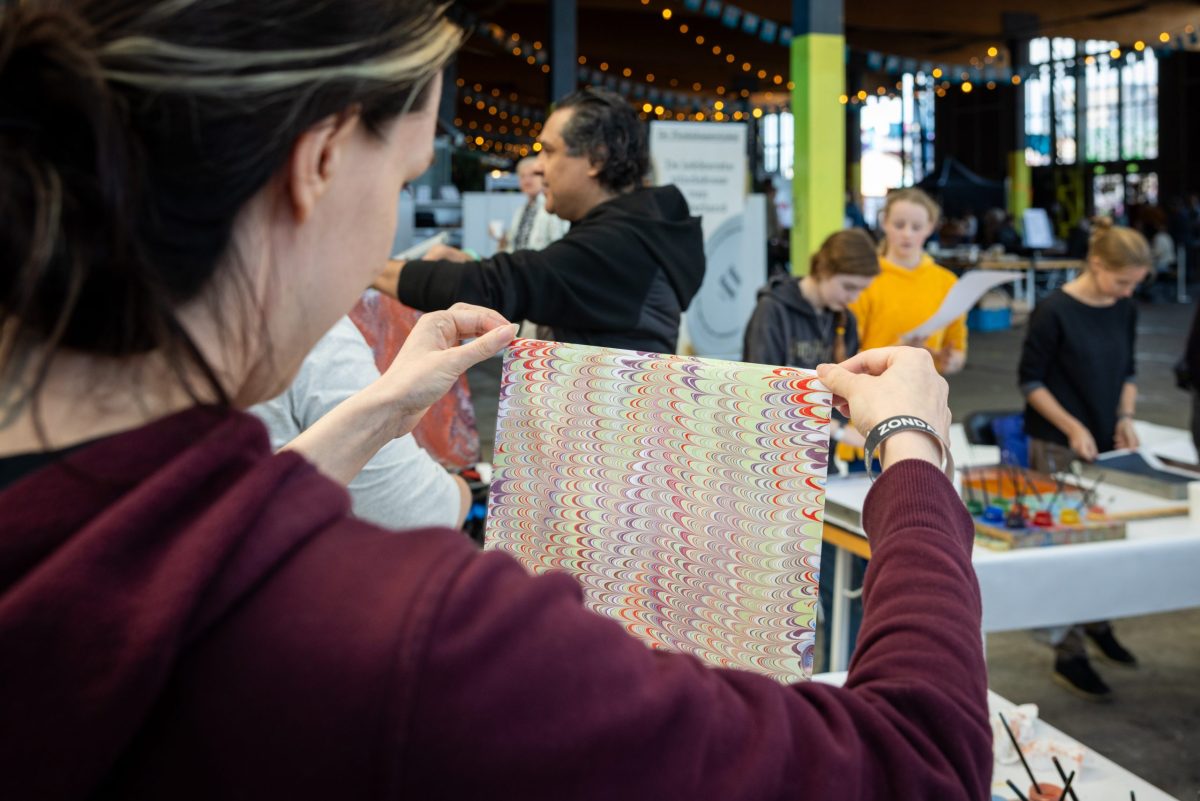
Ebru is an ancient painting technique, also known as paper marbling. It involves creating colourful patterns by applying pigments using various techniques to the surface of water (or a viscous liquid) and then transferring these patterns onto paper or other surfaces.
During the workshop, we will practice the most traditional way of the art of Ebru: using water, paint, and brushes—just as the Turkish ancestors did 1500 years ago. You will go home with your own unique Ebru artwork.
Okan Akin is an artist who was born and raised in Turkey. He completed his art education in 1991, specializing in textile design. He worked for five years as a teacher at a vocational high school in Turkey. In 1997, Okan moved to the Netherlands. In 2006, he founded Atelier Okan Akin in Amsterdam, in the art district of NDSM. He still works there today with great enthusiasm and passion as an artist.
“My ultimate challenge is applying and combining traditional art techniques in my contemporary work. Ebru art (paper marbling) is an example of this.”
Practical Information:

During this workshop you will learn, under the guidance of an experienced weaver, the techniques and materials needed to create a sturdy and decorative bowl. You will start by selecting the right willow wickers and learn how to weave them into the shape of a sunflower. Step by step, you will be guided through the process; from weaving the base to finishing the details.
At the end of the workshop, you will take home your own sunflower fruit bowl; ready to brighten up your kitchen!
Weaving with willow (Salix, Belgian red) is an age-old craft that has seen a resurgence in recent years. This technique uses flexible willow branches to create a variety of functional and decorative items. From baskets and bowls to garden furniture and art pieces, the possibilities are endless. Weaving requires skill and patience, with the willow carefully interlaced to form strong and aesthetically pleasing structures. Creative weaving offers space for personal expression and innovation, making each piece unique. The natural appearance and durability of willow make it a popular choice for both functional and decorative purposes. Moreover, working with natural materials supports a sustainable lifestyle.
Toon Nabuurs is a passionate weaver and active member of the Association for Weavers Netherlands and Belgium. In his own studio, Toon regularly gives lessons and workshops, where he shares his knowledge and love of weaving. Toon owns an osiery, a willow bed, where he cultivates the best materials for his projects. He masters various weaving techniques, including the 1-over-1 technique and the three-strand weave, with which he creates beautiful and durable pieces. His work combines craftsmanship with artistic expression, and he strives to make every project a unique work of art.
Practical Information:

Join the whole process of making a rope from the start till the end. You will learn about the importance of rope in Norway’s history. We will use an old technique that requires very few and simple tools. You can easily make the tools yourself at home with different materials. The participants will work together to make one rope, which can also be parted to take home. The fibers we use are from the Linden tree. We will actually make ropes in the same way as the Vikings did during the Middle Ages.
You will take home a piece of self made rope.
Norwegian rope making is a traditional craft that has deep historical roots in Norway, especially in its coastal and seafaring communities. Rope was essential for fishing, sailing, and farming
Ingunn Undrum is a 47 years old rope maker from Norway. She is very experienced in making ropes from different materials such as hemp, bast from the Lime tree, manila, skin and horsetail. This also involves the whole process of preparing the fiber, spinning yarn, twisting strand and closing the finished rope. Ingunn started as an apprentice in 1998 and worked together with her master for three years until she passed her final exam. Since then, she worked as a rope maker for 24 years and made thousands of meters of rope. Her costumers have been mostly traditional wooden sailing boat owners in Norway. Currently she is also an arts and crafts teacher at a local school.
Practical information

Photo: Lars A. Oma/Hardanger fartøyvernsenter.

Learn how to create a small textile work using natural materials dyed with plants. Dora will demonstrate a variety of embroidery techniques and share tips on combining colours, textures and materials. Working at your own pace, you will be guided by your intuition and the subtle beauty of natural colour to craft your own miniature piece of textile art.
All materials will be provided by Dora, including eco-printed fabrics made from local plants, fabrics with a colour gradient, wool and silk threads and wooden beads for added decoration.
No previous experience is necessary. Whether you are new to embroidery or looking to build on your existing skills, Dora will support you every step of the way.
You will take home your own piece of embroidery.
This craft is rooted in working with natural fibers, threads and plants. Nature is the greatest source of inspiration – its shifting cycles, hidden processes, and interconnections. Using locally foraged and home-grown plants, botanical dyes are extracted to create a subtle, harmonious palette on wool, linen, cotton and silk.
Through eco-printing with fresh leaves and flowers, delicate, often unexpected impressions are captured on fabric. These dyed and printed materials become the foundation for slow, intuitive textile work. They are shaped and layered with thread, structure and detail, often incorporating natural elements such as dried plants, beads or beeswax. By using techniques such as embroidery, weaving, knitting and pleating, there is profound connection with the communal traditions of textile-making, rooted in culture and collective memory. Each piece evolves slowly, stitch by stitch, inviting mindfulness and reflection.
Dora Tiho (Dora Cichocka) is a modern craftsperson working with plant dyes, fabrics and thread. She grew up in Upper Silesia, an industrial region in southern Poland, in a family of engineers. Regular trips to the nearby countryside and mountains – where her grandparents lived – introduced her to traditional crafts and the artistry of handmade work. Her two grandmothers – one a seamstress and lace maker, the other a self-taught painter – deeply influenced her creative path. Their skills and creativity fostered in her a lifelong appreciation for the workof human hands and the belief that making is a way of life. Today, Dora’s practice is rooted in botanical colour and textile traditions, seeking a slow, intimate dialogue with nature and culture. She has lived and worked in Amsterdam since 2007, bridging her Polish heritage with contemporary craft.
Practical information
Festival address:
NDSM Loods
NDSM-Plein 85
1033 WC Amsterdam
Postal address:
Stichting Ambacht in Beeld
Kalf 158
1509AH Zaandam
The Netherlands