Furniture restoration is a refined craft that combines tradition and skill, breathing new life into old, worn furniture without losing its character and story. Each scratch and discoloration tells a story, and it is the art of the restorer to respect these stories while restoring the furniture to its former glory.
Restoring furniture requires in-depth knowledge of wood, veneer, and historical techniques, combined with a subtle sense of aesthetics. Restorers are masters at repairing damaged furniture. They repair woodwork with precision and patience, fill cracks, and renew old finishes.
With a love for the craft and an eye for detail, each piece is carefully dismantled, repaired, and reassembled. This process combines craftsmanship and creativity to preserve not only the beauty but also the soul of a piece of furniture.
Ruud Beerens is a professional furniture restorer at his workshop, Beerens Antiekrestauratie, in Gemert. With years of experience, he specializes in the restoration and conservation of veneered furniture from the 18th and 19th centuries. He also expertly restores wooden objects from all historical periods, from the early Middle Ages to the present, including sculptures, clock cases, mirror frames, ornaments, and antique tools.
Ruud is happy to provide an inside look into the world of furniture restoration on Sunday. He is a vocational teacher of furniture restoration at Het Ambachtshuis Brabant in Gemert.


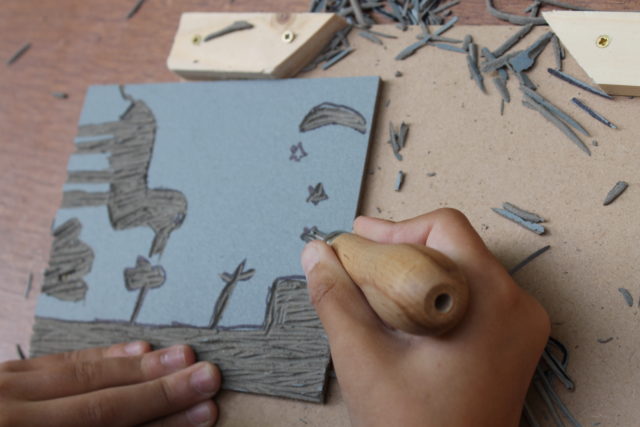
Step into the shoes of a true artist and create your own graphic artwork! In this workshop, you’ll experiment with color, shape, and lines. You’ll use carving tools and ink, and make the printing press work overtime to produce a beautiful linocut.
The artists of the Amsterdam School were true polymaths. In addition to stunning architecture, furniture, and everyday objects, many were also involved in typography and graphic design. They frequently used printmaking techniques to create posters or book covers. And now, you can do the same!
Whether young or old, everyone is welcome in this workshop. Special materials are available for children under eight to ensure their safety.
This workshop is hosted by Museum Het Schip, the museum dedicated to the Amsterdam School in architecture, decorative arts, and public housing.
The workshop runs continuously, and you can purchase a ticket to join whenever a spot is available.


Learn to make your own record player with sound artist Jacob Plooij!
In a short time, create your own phonograph with a pencil, a record, and a piece of paper.
Materials will also be available for you to collaborate on building one or two larger machines that will remain throughout the weekend.
Jacob will also bring a real wind-up gramophone with a large horn!
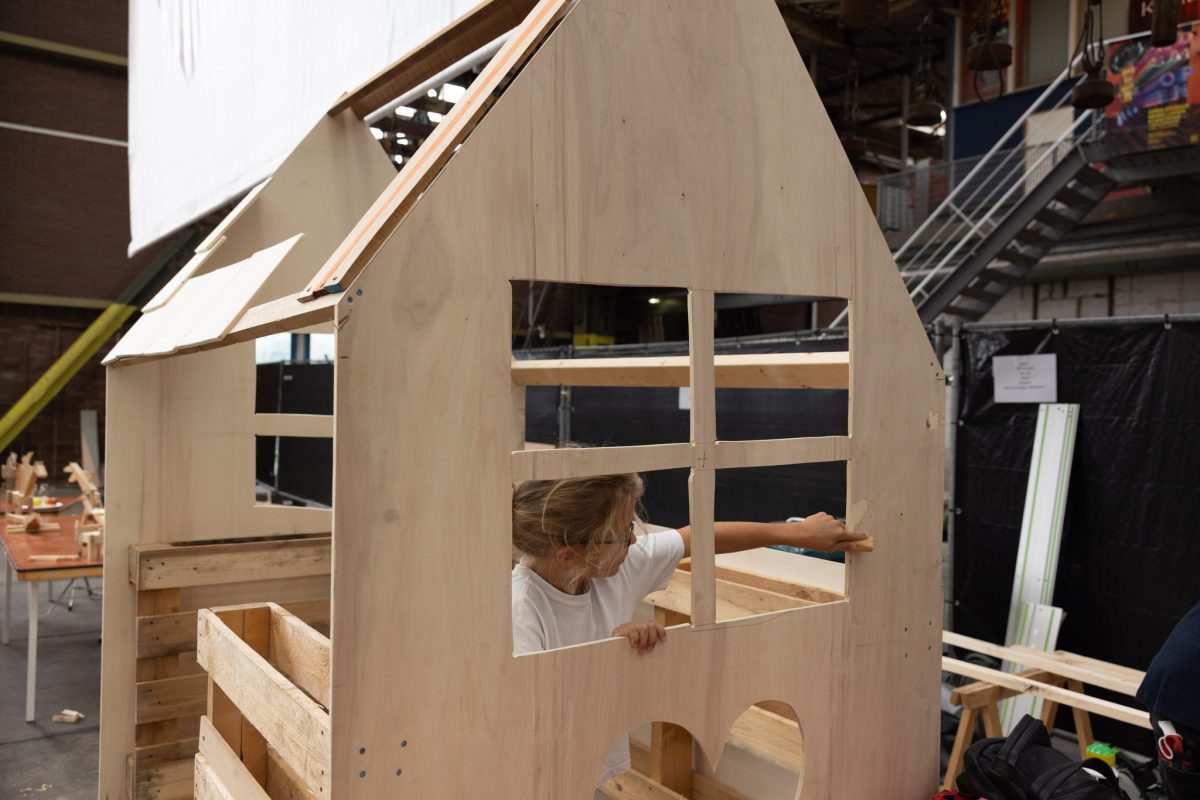
Under the guidance of a real carpenter and his team, you can help build a tiny, tiny house. For both younger and older children: sawing wood, planing, drilling holes, driving screws, and hammering nails. It’s super fun, even if you’ve never done it before, we’ll help you get started!
Ruud Dubel is a furniture maker and fine woodworker in Amsterdam. He loves fun, quirky, challenging, simple, and unexpected ideas and will be guiding the creative building process during the festival.
Will you come and join us in building?
Young children must be supervised by parents/guardians. Parents/guardians are responsible for their children at all times. The festival does not accept liability.

During the festival, children can create their own mosaics using various items, from waste materials to toys and trinkets that everyone typically has lying around.
There will be materials available for children to choose from to create their own mosaic. They can decide whether to fill in a drawn silhouette or sort colors to create a more realistic image.
Ultimately, the panels created by the children will form one colorful wall.
Ismaël studied installation art at KASK in Ghent and started making mosaics years ago using all sorts of discarded materials. He began with simple silhouettes filled with colorful materials, first on boards and then on the wall of his room. Because he enjoyed it so much, he eventually decorated the entire garden wall of his house.

Unique exhibition during Ambacht in Beeld Festival!
“100,000 Trees and a Forest of Thread” is a project where textile artist Sara Vrugt embroidered a forest. This artwork, spanning one hundred square meters, was created in 2020/21 in a public pop-up studio. Over a thousand participants shared nature stories and contributed embroidery stitches, collectively creating a forest of thread on canvas.
This artwork aims to reconnect people with the significance of nature in their lives. Concurrently, through crowdfunding, a real forest of one hundred thousand living trees has been planted, both in the Netherlands and in tropical regions.
After being displayed at various locations, the artwork will be placed outdoors in 2025, in the gardens of Museum Belvédère in Heerenveen. A ceremony will mark its transition to a final “life phase.” The canvas will integrate into nature; the fabric will degrade over time, and seeds embedded in the hem will eventually replace the embroidered trees. Thus, the spiral form will persist with living nature as its material.
Creating connections among people and fostering creativity are fundamental motives in Sara’s projects. Yet, an overarching theme has emerged: nature. Her goal was to engage people through art in planting more trees and raising awareness about our inseparable connection with the ecosystem – interbeing.
Buddhist monk Thich Nhat Hanh once said, “The same life force that flows through you, flows through me and all other living beings. We are all interconnected in a complex web; this is ‘interbeing.’ When we harm nature, animals, or other people, we harm ourselves, not in a metaphorical sense, but literally.”
Deforestation, biodiversity loss, heat stress – in the Anthropocene, humanity bears responsibility for these monumental crises. Sara reflects, “Deep down, we all feel that nature is essential to us. Yet, we often fail to act accordingly. I sometimes feel despair over human arrogance and the future of new generations. The large systems need to change, and as an individual, it can feel overwhelming. Nevertheless, every day we make significant choices, even with our fork and wallet. I compel myself to remain optimistic. Through this work, I aim to raise awareness. I believe that once you truly realize that the Earth is essentially your mother, you will care for her better. It may seem like a drop in the ocean, but many drops of water together will not evaporate. Planting one hundred thousand trees aims not only to create more forests but above all, to demonstrate that taking action is within our reach.”


To inspire a love for making things in children, the Crafts Bus offers fun workshops for kids aged 8 and up every Sunday, enthusiastically led by Bram Korte.
Craftsmanship is becoming less visible in society. By making something yourself, you’ll soon realize that it’s not that easy. And you also learn how fun it is to create something.
That’s the goal of the Crafts Bus: to instill a love for making things and to elevate the appreciation of craftsmanship back onto the agenda.
In collaboration with Ambachtelijk Vakmanschap Nederland.


Create your own sheet of paper from pure cotton! Cotton is the most sustainable paper due to its high cellulose content, making it a favorite among artists.
In this workshop, you’ll go home with a hand-scooped sheet of paper, optionally decorated with flower petals. Although the sheet will still be wet, it will be provided in a folder for you to take home.
Papermaking by hand was common until around 1720, after which a rotating sieve was used. All the steps—pulp making, scooping, couching, pressing, drying, and burnishing—are essential in a large papermaking machine. Understanding and mastering these steps are crucial for producing quality paper.
With over 23 years of experience, the Papierschepperij in Bruges offers demonstrations and workshops for both adults and children, either at their facility or on location.
Piet Moerman, born and trained in graphics, discovered his passion for papermaking during a visit to the book town of Redu, where he saw a papermaker at work. This experience stayed with him, leading him to order his first professional scooping frames from the “museum für papier und druck” in Basel. In 1999, he established a dedicated papermaking workshop in the center of Bruges. Today, the Papierschepperij boasts an exclusive collection of hand-scooped greeting cards, printed with designs by renowned Bruges calligraphers.


During the free drop-in workshop, you’ll discover the traditional ‘Staphorster Stipwerk’ and create your own stamped card.
‘Staphorster Stipwerk’ is a special, unique technique used to print and decorate fabrics and other materials. Initially, this technique was applied to fabrics used for the traditional clothing of Staphorst.
This printing process uses stamps made from items like wooden bobbins or corks, with nails, pins, and other bits of metal affixed to them. These stamps are dipped in paint and then applied to the material. Stamps with various motifs are combined to create patterns. Each ‘stipper’ (the name for someone who practices Staphorster Stipwerk) develops their own patterns. Some patterns and motifs are commonly repeated among ‘stippers,’ such as leaf and flower designs or folk art examples like the sun wheel, beehive, and six-pointed star.
Not only the motifs, but also the colors of the dots, carry specific meanings. Traditions around mourning heavily influence color choices, where blue, white, and green are mourning colors, and red is not used during mourning periods.
Staphorster Stipwerk is included on the national list of intangible cultural heritage.
The workshop instructors are all craftswomen who have completed the official vocational training in Staphorster Stipwerk.

Ibrahim is from Sudan and is a carpenter. He is very skilled in wood and worked in Sudan as a furniture maker, using recycled wood.
In this workshop, children of all ages can learn basic woodworking skills. You will build a small boat from wood and textiles, which will float in the water.
Festival address:
NDSM Loods
NDSM-Plein 85
1033 WC Amsterdam
Postal address:
Stichting Ambacht in Beeld
Kalf 158
1509AH Zaandam
The Netherlands