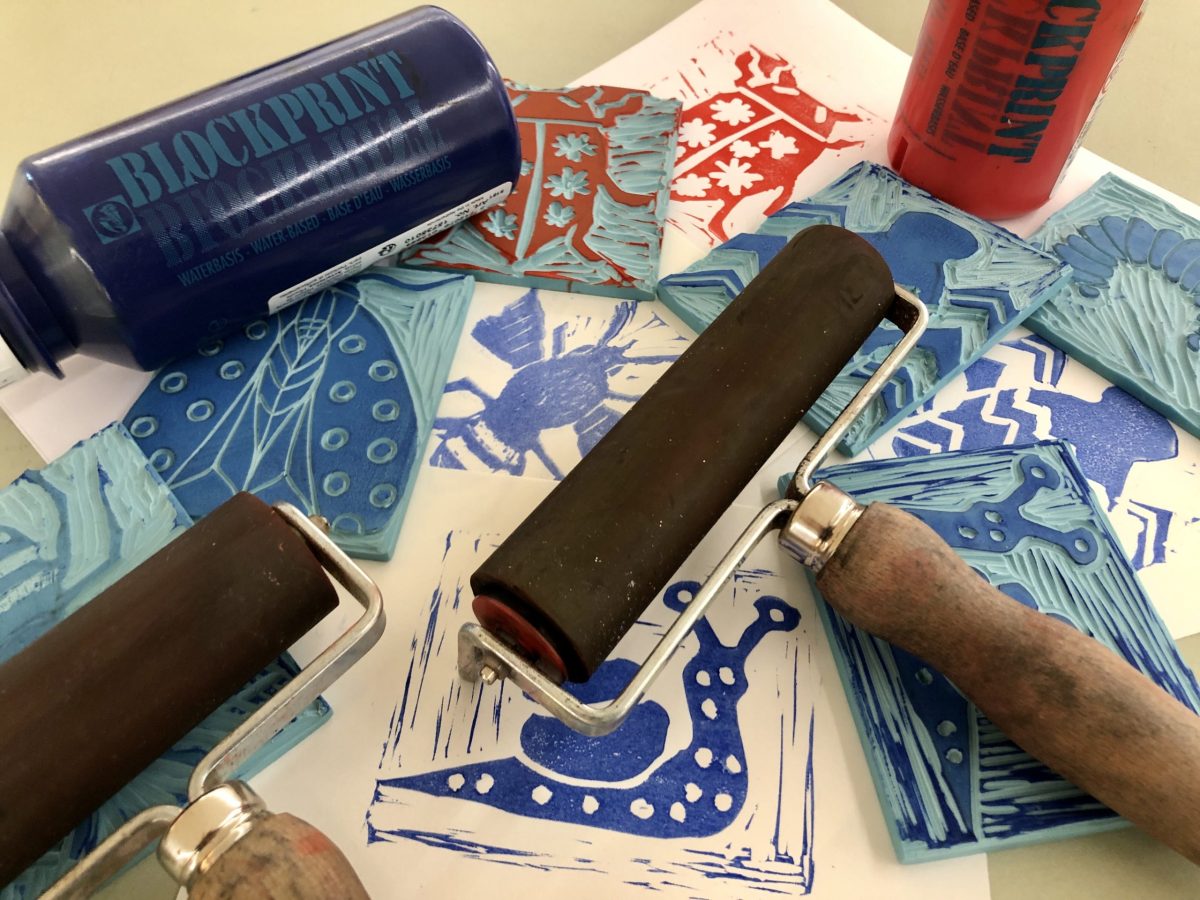
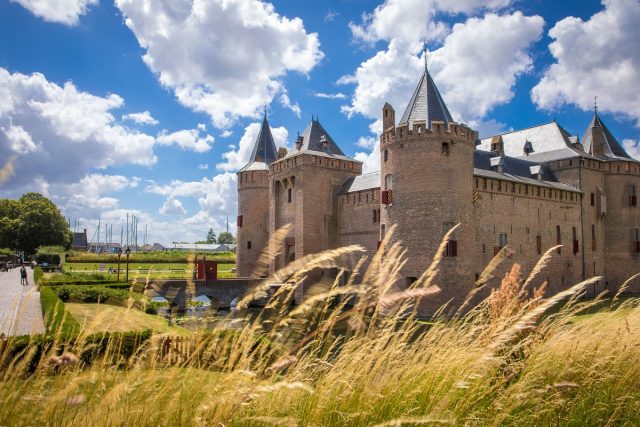
Around Muiderslot Castle, hundreds of species of insects live. During this workshop, they form the starting point for your own design. Create an insect that really exists or invent a new species. You will then discover step by step how to make a linocut print. You transfer your design onto a SoftCut plate, carve it out using different gouges, apply printing ink with a roller and make multiple prints on paper.
You will go home with a series of prints (approx. 6 x 10 cm) and your own printing plate, which you can use again later. In addition, you will leave one print behind for a collaborative artwork. Throughout the festival, a large fantasy garden will grow, created from the insects made by all participants.
Linocut is a graphic printing technique in which shapes are carved out using gouges. You first create a design and then remove the parts that should remain white. Everything that stays raised picks up the ink. You then roll ink onto the plate and make prints on paper. This creates an image that you can print again and again.
During this workshop, modern softcut plates are used: a flexible synthetic material that is easier to carve than traditional linoleum and allows for many fine details. Just like in the past, the focus is on observing, making and craftsmanship: you learn a craft by doing it yourself.
Janneke Gemmeken and Jonne Peters are museum and workshop educators at Rijksmuseum Muiderslot and together guide the Castle Workshop. As public historians, they believe that heritage truly comes to life when you can experience it yourself. That is why they develop and teach workshops where historical crafts, art, nature and the history of Muiderslot come together. Both are trained in various artistic and craft techniques, such as linocut, paper making, eco-printing and natural dyeing techniques.
Drawing on their knowledge of history and heritage, they continuously connect craft techniques with the stories of the castle. They are also inspired by the green surroundings. The castle gardens, plants and many insects often serve as the starting point for a workshop. In this way, Janneke and Jonne show participants how historical techniques can still inspire today and encourage reflection on the future. They connect the past, present and future through making.
Festival address:
NDSM Loods
NDSM-Plein 85
1033 WC Amsterdam
Postal address:
Stichting Ambacht in Beeld
Kalf 158
1509AH Zaandam
The Netherlands